Showing posts with label datrevenoj. Show all posts

2020-08-29

Frigyes Karinthy, en memoro

Okaze de datreveno de la morto de hungara verkisto kaj esperantisto Frigyes Karinthy (25-an de junio 1887 - 29-an de aŭgusto 1938), Antonio De Salvo sia bloge afiŝis:

Frigyes Karinthy – Esperanto-vivo

Referencata estas mia bibliografio/retgvililo:

Frigyes (Frederiko) Karinthy (1887-1938) en Esperanto

(Pri datrevenoj: la naskiĝtago de Karinthy estas ankaŭ la mia.)

Aldonata estas "p. 81 de “Esperanto de UEA” 2002-4, kun la raporto de la vizito de internacia grupo de esperantistoj al la tomboj de kulturaj personoj ligitaj al Esperanto, inter kiuj Frigyes Karinthy."

2019-02-02

James Joyce & Esperanto (4): datrevene

Jen nova afiŝo, okaze de la naskiĝtago de James Joyce:

James Joyce, 2 Februaro 2019, de Antonio De Salvo (Esperanto-vivo)

Enestas referenco al mia bibliografio ...
... kaj du pluaj referencoj:
Literatura Foiro, n-ro 275, 2015, p. 118-123 (kun foto)
Literatura Foiro, n-ro 276, 2015, p. 182-184
Enestas ankaŭ teksto "La ekstravaganca Joyce" el Bulteno de Triesta Esperanto-Asocio/ TEA, 2014-9/10, p. 2.

Ankaŭ du anglalingvaj citaĵoj--el Ulysses kaj Finnegans Wake--troveblas en tiu afiŝo kaj en mia bibliografio.

2018-12-27

Julian Tuwim, jud-pola poeto & Esperantisto (2)

La 27-a de decembro estas la datreveno de la morto de la pola juda poeto Julian Tuwim (1894-1953).

Kaj jen freŝa afiŝo de Antonio De Salvo:

Julian Tuwim (Esperanto-vivo)

Antaŭ ol verki en la pola, Tuwim publikigis siajn tradukojn el la pola en Esperanto. En la citita afiŝo vi trovos lian poemon "Litanio" en la pola, itala, kaj Esperanto, kun bibliografio de la verkoj de Tuwim en Esperanto.

2018-11-11

Éva Tófalvi pri Sándor Szathmári (3)

Jen en mia retejo:
  • Je la centjara datreveno de naskiĝo de Sándor Szathmári” (1997) de Éva Tófalvi, en Memorlibro: kolekto de la prelegoj dum la solena internacia konferenco organizita okaze de la tridekjariĝo de la universitata fako Esperantologio (Budapeŝto, 17/18-04-1997), ĉefred. Tamás Gecső, red. Zsuzsa Varga-Haszonits & Lariko Golden, kunlaboris Anita Renkecz (Budapest: Universitato Eötvös Loránd, Katedro pri Ĝenerala kaj Aplikata Lingvistiko / Eötvös Loránd Tudományegyetem, 1998), p. 346-350.
Tófalvi ĉi tie kaj alie resumas la skemon de la perdita, neeldonita, malutopia romano Hiába (Vane), laŭraporte verkita 1931-1932, sed ĉi tie, ŝi rakontas, kiel ŝi eltrovis kaj publikigis la manuskripton. Interalie, ŝi mencias, ke ŝi kunfondis la asocion Hungara Protestantisma Kultura Unuiĝo, kaj en 1989 ŝi prelegis pri tiu perdita romano de Szathmári.

Rilate, en mia retejo:
Restas al mi enretigi:

Éva Tófalvi, “Kontribuaĵo al la demando pri la estiĝo de Vojaĝo al Kozohinio,” Fonto, julio 1989; 9 (103): 3-11.

Jen en la hungara:

Szathmári, Sándor. Hiába: Jövő: Regény [Vane / In Vain]. Budapest: Szépirodalmi Könyvkiadó, 1991.

Galaktika, Jun 1987, #81
    38 Tófalvi Éva: Az író, mérnök és próféta
    40 Szathmári Sándor: Az asztrálfluidum
    47  Szathmári Sándor: Káin és Ábel

Por pluaj informoj preter ĉi tiu blogo, jen:

Sándor Szathmári (1897–1974): Bibliografio & Retgvidilo / Bibliography & Web Guide

2018-09-11

Jorge Luis Borges & "Poemo de la amikeco"


Je la 24-a de aŭgusto okazis la datreveno de la naskiĝo de la argentina verkisto Jorge Luis Borges (1899-1986). Tiam Antonio De Salvo publikigis kun sia traduko poemon anoniman atribuitan al Borges:

“Poema de la amistad” (Poemo de la amikeco)


Krom ĉi tiun blogon, aliru ankaŭ mian retejon:

Jorge Luis Borges en Esperanto

2018-03-13

Omaĝe al Imre Baranyai (Emba), 14 marto 1902 - 1961 (2)

Jen mi ĝisdatigas la retligojn de mia afiŝo Omaĝe al Emba:

Ekzilo kaj azilo (poemaro) de Emba
En aktuala retejo de Don Harlow:
Jen re-listigo de retpaĝoj (neŝanĝitaj) pri Emba:
Denove, jen miareteje:
Por anglalingvaj legantoj, okaze de la naskiĝtago de Emba, mi ĵus tradukis mian recenzon:

Review: Imre Baranyai (Emba), “Maria and the Group” (“Maria kaj la Grupo”) by R. Dumain

2018-01-22

Eŭgeno Miĥalski 121-jara

Okaze de la 121-a datreveno de la naskiĝo de Eŭgeno Miĥalski (21 januaro 1897 - 15 oktobro 1937), mi sonregistris deklamon de poemo ...

"Amaj melodioj: III" de Eŭgeno Miĥalski, Voznesensk, 11 Decembro 1923.

Ĉi tiu poemo aperis en la poemaro Prologo (1929) kaj troveblas ankaŭ en Plena Poemaro 1917-1937, red. William Auld, kun enkonduko de Krys Ungar (Antwerpen: Flandra Esperanto-Ligo, 1994), p. 63-64.

Ĉi tiu estas dum jardekoj unu el miaj favorataj lirikaj poemoj de Miĥalski, speciale la finaĵo:
Disburĝonis kaŝtanaj la floroj
kun kreiv-geedziga polen',
ĝi miksiĝis kun niaj odoroj
en mistera pasia solen'.
Dolĉe!

2018-01-09

Karel Čapek & Esperanto (16)

Hodiaŭ estas la naskiĝtago de Karel Čapek (9 januaro 1890 – 25 decembro 1938).

Hodiaŭ aperas ankaŭ afiŝo pri Karel Čapek de Antonio De Salvo ĉe blogo Esperanto-vivo, kiu inkluzivas retligojn kaj bibliografion, kiu ampleksas ankaŭ verkojn ne alireblajn interrete.

Pri tio tamen konsultu mian (ĉi tiun) blogon kaj kelkajn Esperantajn tradukojn el Čapek miareteje:
Lastatempe mi trovis la jenan, aldonendan al la listigo de Esperantaĵoj:

Karel Čapek - Fabelo "Solimana princidino", el Naŭ fabeloj (1932), el la ĉeĥa esperantigis Josef Vondroušek, "laŭtlegas Tadeusz Karaš (el Brajla skribo!) kaj lia edzino Ivana Karašová, ambaŭ membroj de la Sekcio de nevidantoj de Ĉeĥa Esperanto-Asocio"

2017-11-28

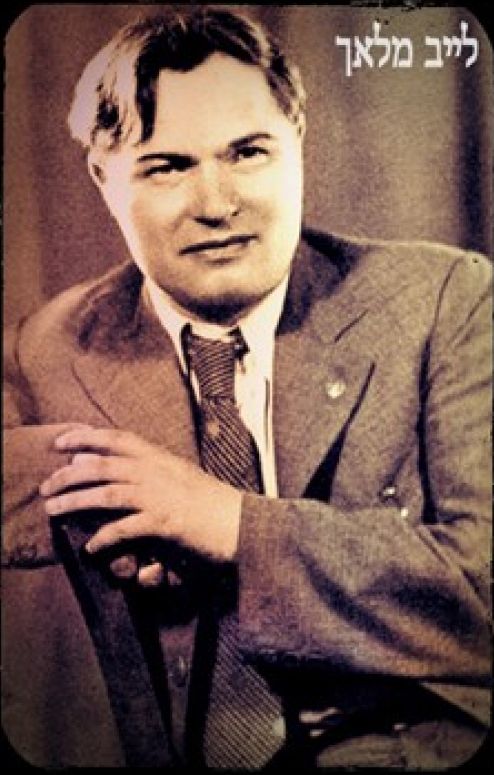
Leib Malach 27 November 1894 - 18 June 1936


I was surprised to find a tribute to Yiddish writer Leib Malach (originally Leib Salzman = Lejb Zalcman), posted on his birthday on Yiddishkeit's web site. It begins:
Leib Salzman (Lejb Zalcman), better known by his adopted name Leib Malach, was born November 27, 1894 in Zwoleń, Radom Gubernia. He moved as a teenager to Warsaw and worked at a variety of odd jobs there. Taken under the wing of the Yiddishist writer H.D. Nomberg, his writing began appearing in the Warsaw press.

He left Poland in 1922, settling and writing for the most part in Argentina, but traveled the world posting dispatches from his travels in the Yiddish press. He died suddenly after an operation in Paris on June 18, 1936.
None of Malach's works have ever been translated into English, except for one fragment of a notorious play. I learned of him via a 1939 Esperanto translation of his last play Mississippi (1936). I documented Misisipi on this blog and digitized a small part of the publication on my web site. But Yiddishkeit found this publication in the UCLA library and posted the image on the cover with its tribute and a caption:


"Malach's final and most performed play was Mississippi (cover of Esperanto translation shown here), which dealt with the 1931 Scottsboro trial. The play was written for Mikhl Weichert's Yung Teater in Warsaw, known for staging contemporary events like the trial of Sacco and Vanzetti."

And here is the original Yiddish play, in various formats: לייב מלאך

On the lower half of the tribute page is the following text, facing Phil Ochs' recording of his famous anti-racist song "Here's to the State of Mississippi":
In honor of Leib Malach’s most famous play, Mississippi, written in the immediate aftermath of the Scottsboro trial, listen to a song from Phil Ochs, written 30 years after the play’s Warsaw production. Here, Ochs brings the theme of justice denied in Mississippi up to 1965.
The slide show also features:
"Amol, Amol" (Once, Once)”: The cover of Malach’s epic poem "Amol, Amol," published in Warsaw, shortly before his emigration. Malach was a successful writer in a number of different genres.

From Spain to Holland: One of Malach’s many travel dispatches, this posthumously-published 1937 book describes Spain on the brink of civil war, fascist Germany, the leftist resistance in Vienna, and other travels throughout Western Europe.
Incidentally, the punchline to Phil Ochs' "Here's to the State of Misssippi" is "Mississippi find yourself another country to be part of."

2017-11-01

Zamenhof interview: Esperanto & Jewish Ideals

Now on my web site:

Esperanto and Jewish Ideals,” Interview for the Jewish Chronicle with Dr. Zamenhof, The Jewish Chronicle, September 6, 1907, pp. 16-18. Note also the advertisement for "kakao" (cocoa).

With Zamenhof’s translation of ‘La Gaja Migranto’ (published in Fundamenta Krestomatio de la Lingvo Esperanto, 1903), mentioned in the interview.

This interview was translated into Esperanto and published in two parts. Note that R. I. [ = Isidore?] Harris is given as the interviewer:
Intervjuo kun d-ro Zamenhof de R. I. HARRIS, elangligis N. Z. MAIMON, La nica literatura revuo 6/3 (n-ro 33), Januaro-Februaro 1961, p. 82-89.
Intervjuo kun d-ro Zamenhof (fino) de R. I. HARRIS, elangligis N. Z. MAIMON, La nica literatura revuo 6/4 (n-ro 34), Marto-Aprilo 1961, p. 121-127.
Here I noticed interesting details about Zamenhof's thoughts on the Jewish question that I don't recall from other statements. For example, when he describes his attempt to create a new Judaism for the 20th century, he makes two curious assertions: (1) he almost blames his fellow Jews for isolating themselves within the nations in which they find themselves, but (2) he rejects Reform Judaism for excessive accommodation to the gentiles, who don't accept Jews anyway, Zamenhof thus abjures assimilationism as lacking self-respect. His project of Hilelismo (Hillelism, which later morphed into Homaranismo, no longer Jewish-specific and somewhat akin to Ethical Culture) was meant to reject an obsolete territorial (and superstitious) traditional conception of Judaism and modernize it to reflect the ethical ideal (of which monotheism is a part) incorporated in it.

Zamenhof's conception of the causes and cure of ethnic conflict betray an incredible lack of political sophistication. This can be seen most clearly in his paper “International Language” presented to the First Universal Races Congress in 1911. Denying economic causes for national conflict, Zamenhof curiously argues:
Can we say, for instance, that so many millions of poor Russians hate the millions of poor Chinese on economic grounds, when they shed their blood so willingly to defend their Russian oppressors against the attacks of foreigners? Assuredly not, for the Russian soldier knows very well, when he kills a Chinese soldier, that the man would never do him as much harm as the "mailed fist" of his own compatriots. It is not economic causes that give rise to national hatreds.
There is a glimpse of political consciousness in the reference to a group's own oppressors, which immediately disappears. His entire argument is abstract. While correctly denying intrinsic, ineluctable differences between peoples at the basis of animosity, Zamenhof exhibits not an ounce of political or historical consciousness in understanding how these problems came to be or what drives them. What he does show in his various statements is his intimate familiarity with Eastern Europe and the dilemma of Jews in this hostile environment.

This interview in English is invaluable, as the most extensive documentation of Zamenhof's engagement with the Jewish question, outside of his writings in Russian, is in Esperanto. But again, his political cluelessness comes to the forefront.

Zamenhof, soberly and with absolutely no self-aggrandizement, proposed the most far-reaching ambitious projects, all of which failed except for Esperanto, which succeeded in creating an international community of speakers that has survived 130 years, including the century following Zamenhof's death. Zamenhof projected into the future on a grand scale, from the vantage point of a provincial Eastern European Jew chafing at the ghettoization and discrimination that he suffered.

2017-07-26

130a datreveno de la apero de Esperanto


Antaŭ 130 jaroj aperis la Unua Libro. Jen afiŝo de La Balta Ondo:

Esperanto – 130-jara!


Jen pere de TEJO:


2017-07-03

Franz Kafka, datrevene

". . . Mi estas tiel soleca, kiel . . . kiel Franz Kafka." -- Franz Kafka

Franz Kafka naskiĝis la 3-an de julio 1883 en Prago. Ĉi-datrevene afiŝis Antonio De Salvo:

Franz Kafka – Esperanto-vivo

. . . pri la vivo kaj verkaro kaj tradukoj (en Esperanto) de Kafka. Oni interalie trovos ligojn al tradukoj, ekz. tiuj de Vilhelmo LUTERMAN:

Franco KAFKO (Franz Kafka): Rakontaro

Kaj ne forgesu la krokodilan retejon de esperantista poeto Mauro Nervi:

The Kafka Project by Mauro Nervi

2017-06-20

Sándor Szathmári: 120-a datreveno / 120th birthday

Antaŭ 120 jaroj, la 19-an de junio 1897, naskiĝis Sándor Szathmári, hungara esperantisto, kiu meritas atenton kiel verkisto de mal/utopioj en rango kun Karinthy, Čapek, Zamjatin, Huxley, kaj Orwell.

Przemysław Wierzbowski kreis la jenan bildon, uzante foto-portreton de Szathmári fare de Eifert János, fama hungara fotisto.


120 years ago, 19 June 1897, the Hungarian Esperantist Sándor Szathmári was born, who as a writer of dystopia and utopia belongs in the ranks of Karinthy, Čapek, Zamyatin, Huxley, and Orwell.

2017-06-17

James Joyce & Esperanto (2): Bloomsday


Por Blumtago (Bloomsday) mi laŭtlegis "Giacomo Joyce" de James Joyce, laŭ traduko de Kris Long (25:30 minutoj). Mi fuŝis plurfoje, sed mi ne havas tempon kontroli la erarojn. Eble vi povos almenaŭ ĝui la muzikon de la traduko de Long:

Giacomo Joyce” (2017.06.16 — Bloomsday / Blumtago), laŭtlegas (kun eraroj) R. Dumain (Soundcloud: sonregistraĵo, 25:30 min.)

Mi trovis du pluajn Esperantajn tradukojn:

Eveline” [el Dublinanoj] far James Joyce, trad. Jack Wilson. 2009.

Araby” [el Dublinanoj] de James Joyce, trad. Jack Wilson. 2009.

Blumtago estas la 16a de junio, 1904, t.e. la tago de la tuta romano Uliso, spertita de Leopold Bloom. Iuj festas tiun datrevenon en pluraj landoj, ekz. en Usono kaj Hungario.

2017-05-13

As You Like It in Esperanto: Washington, DC, 1910

2010 was the 100th anniversary of the 6th Universal Congress of Esperanto in Washington, DC, which Zamenhof himself attended. It was reported in the daily press of all of the major Washington newspapers. I researched this and related matters extensively and reported on it during the centennial year, in an interview on National Public Radio, a talk with slide show at the annual national congress of Esperanto USA in the Washington area, and in a similar talk as a part of a symposium at the UN on Zamenhof's birthday, at which Esperanto-speaker George Soros made a surprise appearance.

Some of my documentation can be found in a special section of my web site:


The Esperanto press of course reported on the congress as well.  Here is my outline of the contents, with links to some specific items, of:

Amerika Esperantisto, vol. 8, no. 3, Oct. 1910

Note that Shakespeare's play As You Like It -- Kiel Plaĉas al Vi -- was performed in Esperanto translation by non-Esperantist actors on Tuesday, August 16, the third day of the conference.

A series of Shakespeare's plays was promised for the 1907 Universal Congress in Cambridge, UK:

Shakespeare in EsperantoThe New York Times, April 10, 1907

The Folger Shakespeare Library in Washington DC posted an article from its web site on Facebook on May 11:

As You Like It in Esperanto: Washington, DC, 1910, by Sarah Hovde, November 16, 2015


As they say, it's a small world, also because I live in the same neighborhood as the Folger Shakespeare Library, and my late beloved Evelyn, the 12th anniversary of whose death is today, was a Shakespeare buff and a volunteer there.

The library's catalog entry lists the date of the play's performance by the Hickamen Players as August 15, I will have to check other sources to confirm whether it was the 15th or 16th. Hovde extensively documents the performance, with links to reports in the American press. Bravo!

According to her report, this was the Hickman Players' first (and last) play performed in Esperanto, the first Esperanto play performed in the USA, and the first Esperanto translation of As You Like It.


The translation can be accessed and downloaded from Google Books:

Kiel plaĉas al vi: komedio en kvin aktoj de William Shakespeare; tradukis Dro. Ivy Kellerman [Reed]; speciale tradukita por, kaj ludita ce La Sesa Internacia Kongreso de Esperanto. Washington, D.C., USONO: La Sesa Internacia Kongreso de Esperanto, 1910.

Some time ago I was asked by Humphrey Tonkin to research what other documentation I could dig up on this. Maybe someday...

2017-05-10

Marjorie Boulton: 90-jaraĝa en 2014

Jen malnova novaĵo sed atentinda: raporto kun pluraj fotoj pri festo ĉe Oxford por literaturologo kaj esperantista verkistino Marjorie Boulton (naskiĝinta la 7-an de majo 1924):

Marjorie Boulton: 90-jaraĝa (La Brita Esperantisto, aŭtuno 2014)

2017-04-15

Zamenhof: 100 years after his death / 100 jaroj postmorte

April 14 (yesterday) was the 100th anniversary of the death of Ludwig Zamenhof. I will be writing more about him in the days ahead. There is a new web site devoted to him, his life, ideas, work, and this occasion, in 31 languages to date. Here is the English version:

Zamenhof: Creator of the international language Esperanto
The One Hundredth Anniversary of the Death of L.L. Zamenhof Commemorated under the auspices of UNESCO.

And here is the Esperanto version:

La 14a de aprilo (hieraŭ) estis la 100a datreveno de la morto de Ludoviko Zamenhof. Mi komentos pli pri li kaj liaj ideo proksimtempe. Jen nova retejo dediĉe al Zamenhof, liaj vivoj, ideoj kaj laboroj, kaj al ĉi tiu okazo, ĝis nun en 31 lingvoj. Jen la Esperanta versio:

Zamenhof: La iniciatinto de Esperanto 
Centa Mortodatreveno de L. L. Zamenhof Solenata sub la aŭspicio de Unesko

Also, here is the most up-to-date biography of Zamenhof in English, now freely downloadable:

Zamenhof: The Life, Works, and Ideas of the Author of Esperanto by Aleksandr Korzhenkov, abridged by the author (from Homarano: La vivo, verkoj kaj ideoj de d-ro L.L. Zamenhof; Kaliningrad-Kaunas: Sezonoj, 2009); English translation and notes by Ian M. Richmond. Esperantic Studies Foundation, 2009.

2017-04-05

Pri Frigyes Karinthy & Faremido post 100 jaroj

Jen referenco al mia publikigita eseo pri Frigyes Karinthy, kiun mi verkis en 2016 okaze de la centjariĝo de lia grava utopia romaneto Vojaĝo al Faremido:

Dumain, Ralph. “La vivo, verkaro kaj muzikaj robotoj de Frigyes Karinthy,” Beletra Almanako, n-ro 27, oktobro 2016, p. 97-112.

Interalie, mi analizas la verkon Vojaĝo al Faremido, kiun, suprize, oni evidente ne antaŭe pritraktis en Esperanto. Mi ankaŭ komparas tiun verkon kun Vojaĝo al Kazohinio de Sándor Szathmári, kiu nomis Karinthy sia "spirita patro."

Jen miareteje la “Konkludo” (p. 107), plejparte pri la hungara-kanadana verkisto Robert Zend (1929-1985), kiun inspiris Karinthy:

De Madách al Karinthy al Szathmári & Zend.

Mi ankaŭ mallonge resumas, kiel mi interesiĝis pri Karinthy. Fine de mia omaĝo, mi aldonas omaĝon de Mihály Babits pri Karinthy.

2016-07-26

Hungarian utopias: the latest news

Yesterday I received the latest issue of the journal Utopian Studies, which is a “special issue on the commemoration of the five hundredth anniversary of Thomas More's Utopia." And what did I find but this article?

Czigányik, Zsolt. “The Hungarian Translations of Thomas More's Utopia," Utopian Studies, vol. 27, no. 2, 2016, pp. 323-332.

The article mentions Madách, Jókai, Karinthy, and Szathmári. Also mentioned are Comenius (Jan Amos Komensky), Bessenyei, Babits, and Déry. Does it get any better than this?
Note also in the bibliography:

Hartvig, Gabriella. "Hungarian Gullivariads," in The Critical and Creative Reception of Eighteenth-Century British and Anglo-Irish Authors in Hungary (Pécs: University of Pécs, 2013), pp. 31-45.

This book is not in the collection of the Library of Congress.  I have, however, consulted this article:

Hartvig, Gabriella. “The Dean in Hungary,” in The Reception of Jonathan Swift in Europe, edited by Hermann J. Real (London; New York: Continuum, 2005), pp. 224-237.
Karinthy and Szathmári are discussed here.
I have no way of knowing whether the former article merely replicates the latter.

The following article is available online:

Czigányik, Zsolt. “From the Bright Future of the Nation to the Dark Future of Mankind: Jókai and Karinthy in Hungarian Utopian Tradition,” Hungarian Cultural Studies, vol. 8, 2015, pp. 12-23.
Discusses György Bessenyei, Karinthy, and briefly, Szathmári. The bulk of the essay is devoted to Jókai’s A jövõ század regénye (The Novel of the Century to Come).
I am encouraged now to pursue my objective on writing an article on Karinthy for Utopian Studies.

2016-03-07

Omaĝe al Kálmán Kalocsay (2)

La 27-an de februaro 1976 mortis nia giganto Kálmán Kalocsay. Do ni nun vivis 40 jarojn sen Kalocsay. Mi vizitis la retejon de la Amika Societo de Kálmán Kalocsay kaj sendis mesaĝon.

Mi ricevis respondon de István Mészáros, kun kiu mi jam longtempe korespondas pri hungarrilataj esperantaĵoj. Mi informiĝis, ke post la morto de Ada Csiszár la societo praktike ne funkcias. La malnova rondo de esperantistaj literaturemuloj ŝrumpas; maljunuloj mortas, nuntempe oni ne persone interagas kiel en antaŭa epoko.

Do jen konfirmiĝas mia hipotezo, ke la hungara Esperanto-movado suferas pro formorto aŭ personaj malfacilaĵoj de hungaraj esperantistoj, se ne priparoli la malaperon de ŝtata subteno. Sen la konservaj kaj disvastigaj klopodoj de hungarlandanoj, esperantologiaj esploroj suferos. Ne ĉiuj posedas la financajn rimedojn por vojaĝi tra la mondon por bezonataj materialoj.

Estas preskaŭ nekredeble, ke Hungario, iam esence la centro de la Esperanta kultura mondo, ne bone nuntempe tiel fartas. Mi nuntempe sentas ties valoron, post historia studado, pli forte ol kiam mi esperantistiĝis kiam 14-jarulo antau duonjarcento. Ankaŭ, sen Esperanto mi scius nenion pri hungara literaturo. (Kontraste, en fakoj de intelekta historio, sociteoria pensado, kaj filozofio hungaroj estas bone studataj kaj konataj al interesitoj anglalingvuje.)

Restas multaj demandoj pri hungaraj esperantistoj kaj ne-esperantistaj hungaraj intelektuloj rilate al hungara literaturo kaj la socikultura medio--ne ĉiukaze respondeblaj pere de publikigitaj anglalingvaj aŭ esperantlingvaj publikaĵoj. Pluvivu la historia memoro de Kalocsay and lia medio.