Showing posts with label Argentino. Show all posts

2019-12-24

Macedonio Fernández (3): poezia lingvaĵo kiel 'persona Esperanto'

Jen antologio da verkoj de Macedonio Fernández en anglaj tradukoj:

Macedonio: Selected Writings in Translation

Jen citaĵo el la Enkonduko:

The poetry of Macedonio Fernández is doubly strange: strange for the unaccustomed conceptions of birth and death, life and love on which it rests, strange for the metalanguage created for their expression. Juan Ramón Jiménez described the poetic language of Macedonio as “a personal Esperanto, the language of nowhere . . . the tongue of Dante, Blake, Hölderlin.”

— Jo Anne Engelbert

Jen mia traduko:

La poezio de Macedonio Fernández estas duoble stranga: stranga pro la nekutimaj konceptigoj de naskiĝo kaj morto, vivo kaj amo sur kiuj ĝi baziĝas, stranga pro la metalingvo kreita por ilia esprimado. Juan Ramón Jiménez priskribis la poezian lingvaĵon de Macedonio: “persona Esperanto, la lingvo de nenie . . . la lingvo de Dante, Blake, Hölderlin.”

Koincide, ĵus aperis afiŝo pri Juan Ramón Jiménez:

Juan Ramón Jiménez de Antonio De Salvo (Esperanto-vivo, 24 Decembro 2019)

2018-09-11

Jorge Luis Borges & "Poemo de la amikeco"


Je la 24-a de aŭgusto okazis la datreveno de la naskiĝo de la argentina verkisto Jorge Luis Borges (1899-1986). Tiam Antonio De Salvo publikigis kun sia traduko poemon anoniman atribuitan al Borges:

“Poema de la amistad” (Poemo de la amikeco)


Krom ĉi tiun blogon, aliru ankaŭ mian retejon:

Jorge Luis Borges en Esperanto

2017-11-28

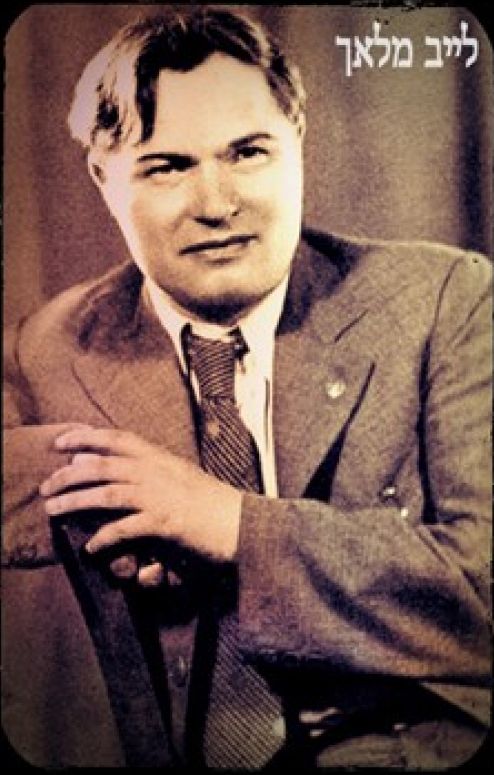
Leib Malach 27 November 1894 - 18 June 1936


I was surprised to find a tribute to Yiddish writer Leib Malach (originally Leib Salzman = Lejb Zalcman), posted on his birthday on Yiddishkeit's web site. It begins:
Leib Salzman (Lejb Zalcman), better known by his adopted name Leib Malach, was born November 27, 1894 in Zwoleń, Radom Gubernia. He moved as a teenager to Warsaw and worked at a variety of odd jobs there. Taken under the wing of the Yiddishist writer H.D. Nomberg, his writing began appearing in the Warsaw press.

He left Poland in 1922, settling and writing for the most part in Argentina, but traveled the world posting dispatches from his travels in the Yiddish press. He died suddenly after an operation in Paris on June 18, 1936.
None of Malach's works have ever been translated into English, except for one fragment of a notorious play. I learned of him via a 1939 Esperanto translation of his last play Mississippi (1936). I documented Misisipi on this blog and digitized a small part of the publication on my web site. But Yiddishkeit found this publication in the UCLA library and posted the image on the cover with its tribute and a caption:


"Malach's final and most performed play was Mississippi (cover of Esperanto translation shown here), which dealt with the 1931 Scottsboro trial. The play was written for Mikhl Weichert's Yung Teater in Warsaw, known for staging contemporary events like the trial of Sacco and Vanzetti."

And here is the original Yiddish play, in various formats: לייב מלאך

On the lower half of the tribute page is the following text, facing Phil Ochs' recording of his famous anti-racist song "Here's to the State of Mississippi":
In honor of Leib Malach’s most famous play, Mississippi, written in the immediate aftermath of the Scottsboro trial, listen to a song from Phil Ochs, written 30 years after the play’s Warsaw production. Here, Ochs brings the theme of justice denied in Mississippi up to 1965.
The slide show also features:
"Amol, Amol" (Once, Once)”: The cover of Malach’s epic poem "Amol, Amol," published in Warsaw, shortly before his emigration. Malach was a successful writer in a number of different genres.

From Spain to Holland: One of Malach’s many travel dispatches, this posthumously-published 1937 book describes Spain on the brink of civil war, fascist Germany, the leftist resistance in Vienna, and other travels throughout Western Europe.
Incidentally, the punchline to Phil Ochs' "Here's to the State of Misssippi" is "Mississippi find yourself another country to be part of."

2017-10-18

Witold Gombrowicz on Jorge Luis Borges

Jorge Luis Borges
This might be slightly out of the range of this blog, except that I have blogged in English as well as in Esperanto about both of these writers. But there's another connection, which relates also to interlinguistics, i.e. the history of artificial languages and particularly the ars combinatoria, which I've written about in connection with Borges. Gombrowicz, living in exile in Argentina, encountered Borges and had a low opinion of him, documented in his Diary:

Witold Gombrowicz on Jorge Luis Borges

The following sentence, from an entry in volume 3, 1962, is the reason for me mentioning this here:
What could arouse greater enthusiasm in pure-blooded writers than this kind of bloodless, literary, verbal, unseeing writer who sees nothing except his own mental combinations? [Boldface mine—RD]
Witold Gombrowicz
There is no indication that Gombrowicz has in mind a connection between Borges's combinatorial proclivities mentioned here and the combinatorial logic behind the ars combinatoria or the characteristica universalis, but I made the connection, and that's good enough for me.

2014-07-08

Xul Solar & Jorge Luis Borges revisited

In a previous post I mentioned last year's exhibit Xul Solar and Jorge Luis Borges: The Art of Friendship at the Americas Society in New York City.

You can view the Slideshow and buy the exhibition catalogue.

2014-05-08

Deklamo: "Spinoza" de Jorge Luis Borges en angla & Esperanta tradukoj

Jen freŝa sondosiero (kun tekstoj) de poemo "Spinoza" de Jorge Luis Borges deklamita de Ralph Dumain en angla & Esperanta tradukoj.

New sound file of R. Dumain reciting poem "Spinoza" by Jorge Luis Borges in English & Esperanto translations, with texts:

“Spinoza” by Jorge Luis Borges translated by Richard Howard & César Rennert, with Esperanto translation by Julius Balbin, recited by / deklamis / Ralph Dumain (sound file / sonregistraĵo). See web pages:

  • Spinoza” poem by Jorge Luis Borges, translated by Richard Howard & César Rennert
  • Spinozo” de Jorge Luis Borges, tradukis Julius Balbin
Mi deklamis ĉi tiun paron (sen sonregistro) kiam mi prelegis pri Borges ĉe la Zamenhof-bankedo de Esperanto-Societo de Vaŝingtono en decembro 2013.


2014-04-16

Jorge Luis Borges & Esperanto kiel kultura perilo

Jorge Luis Borges & Esperanto kiel kultura perilo

La 13an de decembro 2013 okazis la Zamenhof-bankedo de Esperanto-Societo de Vaŝingtono. Pro la loko de la venonta Universala Kongreso, delegito el la Argentina ambasadejo gastprelegis. Poste mi prelegis precipe pri la eminenta argentina verkisto Jorge Luis Borges.

Mi anoncis trioblan solenon. Krom la naskiĝtago de Zamenhof je la 15a de decembro, okazas la naskiĝtago de la judgermana poeto Heinrich Heine je la 13a. Cetere, la 13a markas, en 2013, centjaran datrevenon de eldono de La Parnaso de Popoloj de Antoni Grabowski.

La unua parto de mia prelego, pri Esperanto kiel kultura perilo, estis anglalingva. Pro miaj intensaj historiaj esploroj mia aprezo de la strebado de esperantistoj altiĝis. Rilate al mia daŭra laboro pri verkisto Sándor Szathmári, okupis min dum la jaro lernado pri hungara literaturo kaj engaĝo je sciencfikcio. Mi lernis ankaŭ pri la interrilatoj de la avangarda hungara beletra grupo Nyugat kaj Esperanto dum la intermilita periodo. Mi lernis multon per Esperanto kiun mi alikaze ne lernus. Cetere, ŝajnas ke malmultaj kleruloj en Usono eĉ en beletra fako konas hungaran literaturon.

En Esperanto oni trovas abundon de tradukoj el la malpli konataj literaturoj de la mondo, de malpli disvastigitaj lingvoj kaj influhavaj kulturoj. Fakte, mi legis fremdlingvajn verkojn per Esperanto kiuj ne haveblas en anglalingvaj tradukoj, el la ĉina, finna, ĉeĥa, hungara, kaj jida.

Ekzemple, mankas en la angla ajna plena traduko el la jida verkaro de Lejb Malaĥ, kiu famiĝis pro verko pri la sekssklava komercado en Bonaero, Argentino. Li vizitis ankaŭ Usonon kaj verkis pri la ŝtata persekutado de negroj en la Sudo, en dramo Misisipi, kiu ne haveblas en angla traduko sed en Esperanto jes.

Hispanlingva literaturo, speciale latinamerika, estas populara en Usono. Tamen ekzistas verkistoj tute nekonataj kaj netradukitaj anglalingven. Dankon al Esperanto, mi konatiĝis kun literaturo de la afrikdeven-kolombia poeto Miguel A. Caycedo.

Ekzistas en Esperantaj tradukoj antologioj da argentina fikcio kaj poezio. La plej konata tradukisto estas Ergoto de Bonaero (Adam Hrynkiewicz) el Buenos Aires (Bonaero).

Mi parolis skize pri la Esperanto-movado en Argentino. Zamenhof mem revis pri Argentino. En sia broŝuro Hilelismo li informis al la rusa judaro pri la eblo elmigri al Argentino, kiu estis por li dum lia cionisma periodo dezirinda celo por kolonio. Ekde la jaro 1889, la lingvo Esperanto aperis en Argentino. Oni komencis instrui ĝin en Bonaero, fare de pola enmigrinto. En decembro 1916, José Prat kaj grupo de entuziasmuloj kuniĝis kaj fondis organizon, t.e. Argentina Esperanto-Asocio, la unua vera landa asocio. En la jaro 1939, ĵus antaŭ komenco de la dua mondmilito, alvenis al Bonaero kiel rifuĝinto Eŭgene Adam (“Lanti”). En la sama momento kiel Lanti, alvenis ankaŭ fama esperantisto Tibor Sekelj.

En la Usona Parlamenta Biblioteko troveblas numeroj de gazeto Argentina Esperantisto de 1931 ĝis 1946. Mi trafoliumis tiun kolekton, skanis kaj enretigis tri artikolojn. *

Fine de la anglalingva parto de mia prelego, mi resumis la haveblecon de verkoj de kaj pri Borges en la angla, en Esperanto, ankaŭ Interrete. Estas ankaŭ miaj podkastoj pri Esperanto ĉe Think Twice Radio kaj plua materialo miareteje kaj miabloge.

Mi parolis en Esperanto por la dua parto de mia prelego, pri Borges. Kiel dekumjarulo mi eltrovis Borges, t.e. fine de la 1960aj jaroj. Lia ĝenroj estas la novelo, eseo, kaj poezio. Li mem transformis tiujn ĝenrojn en originalajn vojojn. Tiam kaptis mian intereson lia unika speco de fikcio, plena da metafizikaj puzloj kaj filozofiaj pens-eksperimentoj. Oni povas mencii ankaŭ lian priokupadon pri gauĉoj, analoge al la sovaĝa historio de Usono—Wild West—sed tiam mi ne multe pensis pri tio. Tamen la rilato inter primitiveco kaj avangardo estas ŝlosilo al Borges. Elstara en Borges estas liaj temoj kaj lia erudicio aŭtentika kaj blaga, inventita (kun. abundaj referencoj al neekistantaj verkoj). Karakterizas la fikcion de Borges metafizika anksio, maltrankvilo, la minaco ke la mondo dissolviĝos aŭ kolapsos en nerealon, sonĝon, kaoson. Mi listigis 15 temojn trovatajn en lia verkaro.

Kiel je diversaj aliaj interesoj de mia junaĝo, mi lasis Borges post la mez-‘70aj jaroj. Dum lastaj jaroj mi revenis al Borges kaj gajnis novan aprezon de lia genio. Mi rimarkis subtilaĵojn nerimarkitajn antaŭe; mi perceptis genion ne nur en la stilo, ne nur en erudŭcio, sed en detaloj, en la kompleksa implica logika strukturo de la plej elstaraj rakontoj.

Mi resumis la plej favoratan novelon de Borges, la majstroverkon “La Kongreso”n. Ĝi interesus esperantistojn pro la utopia projekto starigi universalan lingvon.

Mi finis mian prelegon per deklamo en Esperanto de la poemo “Spinozo,” unu el du tiutemaj de Borges.

Pluaj informoj kaj traduko de “La Kongreso” kaj traduko de mia anglalingva komentaro pri “La Kongreso” troveblas en eseo “Pri kongresoj en Bonaero” de Giulio Cappa en Beletra Almanako, n-ro 19, februaro 2014, p. 82-107. Aperos en la sama revuo plua eseo/recenzo de mi pri Borges.

* El Argentina Esperantisto:

2013-12-30

Borges en Esperanto (11): Bibliografio

Finfine mi kompilis bibliografion/retgvidilon pri la argentina verkisto Jorge Luis Borges en kaj pri Esperanto kaj artefaritaj lingvoj:

Jorge Luis Borges en Esperanto

Utiligu ĉi tiun retpaĝon por aliri tekstojn interrete. La retligoj estas ĝisdatigitaj; ne ĉiuj retpaĝoj indikitaj en antaŭaj afiŝoj plu ekzistas.

La bibliografio ne estas kompleta. Por pluaj informoj konsultu laŭeble la bibliografion en la antologio:

La sekreta miraklo (1986); kompilis kaj redaktis István Ertl, tradukis el la hispana Jorge Camacho, Giulio Cappa, Tomasz Chmielik, Fernando de Diego, Liven Dek, István Ertl, Higinio García, Kris Long, Gonçalo Neves, Joxemari Sarasua, Francisco Veuthey.

Mi ĵus ricevis ekzempleron, pri kiu mi raportos plu.

En Esperanto atentu personan memuareton pri Borges, miareteje:

Miaj renkontoj kun Jorge Luis Borges” de Pierre Ullman.

 Jen lastatempe enretigitaj verkoj de Borges:

    Mi trovis pluajn tradukojn en malnovaj revuoj, kaj eventuale enretigos kelkajn, speciale tiujn verkojn kiuj ne aperas de la sama tradukintoj en la supre menciita antologio.

    Mi prelegis pri Borges ĉe la Zamenhof-bankedo de la Esperanto-Societo de Vaŝingtono, la 13an de decembro. Mi intencas verki eseon en Esperanto pri la filozofia enhavo de lia verkaro.

    2013-05-30

    Macedonio Fernández reviewed

    Macedonio Fernández, The Museum of Eterna's Novel (The First Good Novel), translated from the Spanish with an introduction by Margaret Schwartz, preface by Adam Thirlwell (Rochester, NY: Open Letter, 2010).

    In a previous blog post, I quoted briefly a couple of passages about Xul Solar. Here is a more extensive excerpt:

    From “Prologue to the Never-Seen”

    And here is my review of the novel, together with a table of contents I composed:

    The First Good Meta-Novel?

    Here is an excerpt from my review related to the prologue excerpted (see prior link):

    He makes some tongue-in-cheek references to futurism. He jocularly ponders reader reception, the role of the audience. Without the seductive music of language and an audience, there would be more beautiful works of art, several Cervantes, Heines, etc. Again we find an attack on realism. I find this interesting, if unconvincing, not only for the reference to Heine and other great artists, but for my (and Borges’) interest in combinatorics. There is also an amusing musing about the creation of neologisms, with reference to the artist and language inventor Xul Solar. Invention for Macedonio precedes and supersedes what we call reality.
    Jorge Luis Borges was greatly influenced by Macedonio, though I am not certain in what ways. What he thought about the multiplication of works of art as Macedonio indicates, I do not know. I can see how Borges used this idea, but I can also see how Borges would have found the mere manipulation of combinatorics wanting.  File this in The Twilight Zone under ars combinatoria.

    2013-05-04

    Macedonio Fernández & Xul Solar

    Also, there's a new German word in Spanish that I consulted Xul Solar about in his workshop "Languages in repair." It's an amended adjective, but new, not like mended boots. [ . . . . ]

    [. . .] I give the book to the public just to turn around and put it through the linguistic workshop of that singular artist, Xul Solar, who will make it into one, definitive word.

    *   *   *
    . . . the only genuine way to practice futurism is to put it off for later.
    — Macedonio Fernández, The Museum of Eterna's Novel (The First Good Novel), translated from the Spanish with an introduction by Margaret Schwartz, preface by Adam Thirlwell (Rochester, NY: Open Letter, 2010), pp. 40-41

    2013-05-02

    Xul Solar

    "Xul Solar was the adopted name of Oscar Agustín Alejandro Schulz Solari (born December 14, 1887 – April 9, 1963), Argentine painter, sculptor, writer, and inventor of imaginary languages." He was also a friend of Borges. On his invented languages (from Wikipedia):
    He invented two fully elaborated imaginary languages, symbols from which figure in his paintings, and was also an exponent of duodecimal mathematics. He said of himself "I am maestro of a writing no one reads yet." One of his invented languages was called "Neo Criollo", a poetic fusion of Portuguese and Spanish, which he reportedly would frequently use as a spoken language in talking to people. He also invented a "Pan Lingua", which aspired to be a world language linking mathematics, music, astrology and the visual arts, an idea reminiscent of Hermann Hesse's "glass bead game". Indeed, games were a particular interest of his, including his own invented version of chess, or more precisely "non-chess".
    See also:

    Alejandro Xul Solar

    Xul Solar Museum

    Xul Solar on Language as Unity

    Do you know Xul Solar?

    Borges and Xul Solar

    "Borges’s Cosmic Ally" By LARRY ROHTER, The New York Times, April 18, 2013.


    2010-12-24

    Lejb Malaĥ pri Misisipi: de la jida al Esperanto

    Antaŭ pli ol jaro mi skanis & enretigis la jenan:

    Misisipi de Lejb Malaĥ (1894-1936) (Antaŭparolo & Biografio)

    Poste mi kopodis iom esplori pli pri Malaĥ en la angla lingvo. Oni povas legi ĉi tiun jidan dramon en Esperanto sed ne en la angla. Unu mia precipa rimedo informi al diversaj anglalingvaj publikoj estas verki pri historiaj, kulturaj, literaturaj, aŭ filozofiaj temoj en rilato kun Esperanto.

    Do finfine mi ĵus verkis anglalingvan blogeron (tuj antaŭe) ĉi-teme.

    Malaĥ restis aŭ vojaĝis en diversaj landoj de Pollando ĝis Argentino ĝis Usono ĝis Palestino ĝis Francio. Li vekis publikan konscion pri la juda sklaviga sekskomerco en Argentino en 1926 per sia dramo Ibergus (Remuldado). Lia lasta publika verko estis Misisipi, kiun oni tradukis el la jida en la hebrean kaj laŭraporte la francan. En 1934/5 oni ludis la teatraĵon pli ol 300 fojojn en Pollando.

    La esperantisto I. Jurysta priskribas en la antaŭparolo siajn motivojn por la traduko. Li forte kondamnas la usonan rasapartigan sistemon kaj la persekutadon de usonaj negroj. Li montras la klasbatalan perspektivon. Inter alia, li diras:
    Tradukinte tiun ĉi verketon el la juda lingvo Esperanten, mi celas per ĝi montri la fratecan kunsenton kaj simpation de subpremata kaj persekutata popolo al samsorte malamata raso. Miaopinie, ĝuste en la nuna epoko, kiam la ĉiondetruanta faŝismo kaj naciismo penas disigi la homaron per incitado de plej malnoblaj instinktoj de popol‑ kaj rasmalamo, necesas pli ol ĉiam vekadi la klaskonscian solidarsenton inter ĉiuj laboruloj de ĉiuj rasoj sur la tuta terglobo por detrui per komunaj fortoj kaj bari la vojon al la freneziĝanta rasismo.
    Ĉi tiun Jurysta verkis en 1939, sojle de la mondmilito. Post ses jaroj, lia popolo kaj kulturo estus ekstermitaj. Post aldonaj 20 jaroj, la usona rasapartiga sistemo estus leĝe renversata.

    Do mi kaptas la okazon rememorigi la verkiston Malaĥ, kaj ni fieru ke oni konservas spurojn de lia vivo per Esperanto.

    (Dekstre: Lejb Malaĥ)

    A Yiddish play you can read in Esperanto but not in English

    I'm talking about . . .


    "Misisipi" de Lejb Malaĥ (1894-1936) (Antaŭparolo & Biografio) 

    The foreword and biographical sketch, written in Esperanto, taken from this 1939 Esperanto translation, can be found on this web page. I have yet to find much about this play in English. Here's a tidbit:
    Leib Malach (Malekh or Malaj; b. 1894 Zvolin, Poland; d. 1936 Paris) was the pseudonym of Leib Zaltsman; Malach, his mother's first husband's surname, means “angel” in Hebrew. During World War I he published his first literary pieces, a ballad in the Warsaw Yiddish daily Varshever Togblat. In 1922, Malach moved to Argentina, and in 1926, he traveled throughout South America and settled for a year and a half in Brazil. Malach's last play to be produced during his lifetime, Mississippi, was translated into Hebrew, French and Esperanto.
    SOURCE: Yiddish South of the Border: An Anthology of Latin American Yiddish Writing; edited by Alan Astro, with an introduction by Ilan Stavans (Albuquerque: University of New Mexico Press, 2003), p. 92.
    Here you can also find an excerpt from Malach's play "Remolding" (pp. 92-98). See also Jacob Botoshanski, Director's Prologue to Leib Malach's play "Remolding" (pp. 89-91). (This anthology's table of contents can be easily viewed and copied, here.)

    There is a paragraph on Malach in the Jewish Virtual Library.


    You can learn more about Malach's incendiary works in The Jewish White Slave Trade and the Untold Story of Raquel Liberman by Nora Glickman. Malach's 1926 play Ibergus (Remolding) was instrumental in combating the Jewish white slave trade in Buenos Aires and ejecting the sex trade underworld from the Yiddish theater.

    Here is more on this scandalous commerce and its spillover into the Yiddish theater:

    Caftens, Kurvehs, and Stille Chuppahs: Jewish Sex Workers and their Opponents in Buenos Aires, 1890-1930 by Mir Yarfitz (Perush, Vol. 2, 2010)

    Here is more background on Remolding:

    The King of Lampedusa and Remolding by Joel Berkowitz

    Farmitlung and Shtadlones in Latin American Yiddish Literature by Alan Astro

    Here is an abbreviated introduction to Astro's anthology:

    Seeking Mameloshn Down South by Ilan Stavans

    If you can read Spanish, you're in luck:

    Nora Glickman, “Regeneración” de Leib Malach y la trata de blancas, Buenos Aires: Pardés, 1984.

    Otherwise, you'll have to read Malach's works in the Yiddish originals.

    There are additional biographical details accompanying the Esperanto translation Misisipi. In 1934 or 1935 this play was performed on more than 300 occasions in the major theaters of Poland (I assume in the Yiddish original.) The play was also translated into Hebrew.

    The Esperanto translator, I. Jurysta, sets the stage by portraying the horrendous conditions under which Black Americans live in the Jim Crow South, including the rule of lynch-law. The play itself is based on the real-life "Scottsboro Boys" case of the 1930s. Jurysta is unsparing in his indictment of white racism and the capitalist system, as he is perplexed by the rising tide of fascism and nationalism in Europe.
    Translating this work from the Yiddish language into Esperanto, I aim to demonstrate the fraternal fellow-feeling and sympathy of a suppressed and persecuted people for a hated race undergoing the same fate. (My translation)
    Malach died in 1936. The translator wrote these lines in 1939. Within six years, the Jewish population of Eastern Europe would be exterminated and its culture with it. It would take an additional 20 years for the passage of civil rights legislation in the USA to begin to put an end to Jim Crow.
    The only writer of history with the gift of setting alight the sparks of hope in the past, is the one who is convinced of this: that not even the dead will be safe from the enemy, if he is victorious. And this enemy has not ceased to be victorious.

    — Walter Benjamin, “Theses on the Philosophy of History”, 1940