Showing posts with label komunikado. Show all posts

2018-10-30

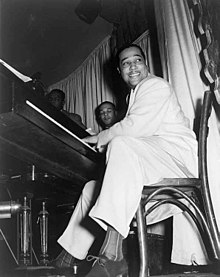
Duke Ellington: music as Esperanto / muziko kiel Esperanto

usona ĵazmuzikisto
"What is music to you? What would you be without music? Music is everything. Nature is music (cicadas in the tropical night). The sea is music, the wind is music. The rain drumming on the roof and the storm raging in the sky are music. Music is the oldest entity. The scope of music is immense and infinite. It is the ‘esperanto’ of the world."

    ~~ Duke Ellington

"Kion por vi signifas muziko? Kia vi estus sen muziko? Muziko estas ĉio. Naturo estas muziko (cikadoj en la tropika nokto). La maro estas muziko, la vento estas muziko. Pluvo tamburanta sur tegmento kaj la ŝtormo furioza en la ĉielo estas muziko. Muziko estas la plej praa estaĵo. La amplekso de muziko estas vasta kaj senlima. Ĝi estas la 'Esperanto' de la mondo."

    ~~ Duke Ellington (trad. R. Dumain)

Atentu ankaŭ mian tradukon de alia diraĵo de Ellington:


2018-06-10

Frigyes Karinthy in Dinosaur Comics

I just discovered this comic by Ryan North: Dinosaur Comics: Six Degrees of Separation. Frigyes Karinthy originated this concept in 1929. As North gives unrestricted permission to re-publish his comic, here it is:


Jen Dinosaŭr-Komiksoj: the temo de ĉi tiu estas la koncepto 'ses gradoj de aparteco' iniciatita de la hungara verkisto (kaj esperantisto!) Frigyes Karinthy en 1929. La unua bildo enkondukas la koncepton; la ceteraj konsistas el ŝercoj pri Karinthy, kun vortludo pri la nomo 'Frigyes' (kiun la verkinto North evidente ne scias korekte prononci). En la anglalingva mondo Karinthy estas konata nur per ĉi tiu koncepto kaj per lia memuaro Vojaĝo ĉirkau mia kranio (1939; anglalingve A Journey Round My Skull). 

2015-07-25

Srikanth Reddy's poem ‘Fundamentals of Esperanto’ unabridged

My previous post about Srikanth Reddy's poem included a link to the text and sound file of an extract from this poem. Here is a link to a sound file of the complete poem 'Fundamentals of Esperanto'.

For the most part I do not find this poem particularly poetic; it sounds like prose artificially divided into verses.

Note also Reddy's poem 'Corruption' with commentary by Andrew Wessels. Reddy's poem 'Corruption (II)' appears at Versoteque in streamed format, with an error: 'words' is rendered here as 'adverbs'. An excerpt from 'Corruption (II)' appears in The Conlanger's Library. Reddy recites both poems accompanying a post 'Found poetry' by Lydialyle Gibson.

All three poems were published in the volume Facts for Visitors (Berkeley, CA: University of California Press, 2004).

Probal Dasgupta's Esperanto translations of all three poems appear in the literary journal Beletra Almanako # 23, junio 2015.

Supre vi trovos retligojn (tekstojn kaj sonregistraĵojn) al la anglalingvaj originaloj de tri poemoj de Srikanth Reddy. Tradukoj de Probal Daŝgupto 'Elementoj de Esperanto', 'La koruptiĝo', kaj 'La koruptiĝo (II)' aperas en Beletra Almanako n-ro 23, junio 2015, p. 62-67, sub titolo 'Poemoj el ĝemela planedo pri Esperanto kaj pri la lingvaneco'.

2014-07-07

George Psalmanazar revisited

Mi jam blogis pri George Psalmanazar. I already blogged about George Psalmanazar in Esperanto. Here is an interesting article on the famous charlatan:

Made in Taiwan?: An Eighteenth-Century Frenchman’s Fictional Formosa by Benjamin Breen, The Appendix, Vol. 1, no. 4, October 2013.

This is a popular article with some impressive illustrations. Breen links Psalmanazar's fabrications to contemporaneous imaginary vojages of Jonathan Swift and others, including fictions passed off as fact, and to the ideological themes of the day. Apparently Psalmanazar "inspired" Swift. At the end, there is a reference to Jorge Luis Borges' story "Pierre Menard".

Breen also published a scholarly article:

Breen, Benjamin. "No Man Is an Island: Early Modern Globalization, Knowledge Networks, and George Psalmanazar’s Formosa," Journal of Early Modern History 17 (2013) 391-417.

From the abstract:
The divergence between Psalmanazar’s personal credibility and the longevity of his invented facts sheds light on the nature of evidence and information networks in early modern globalization. This episode highlights the imperfect and contested nature of early modern communication network.
There is a fantastic computerized reconstruction of early modern knowledge networks:

Mapping the Republic of Letters: Electronic Enlightenment Correspondence Visualization

This is the most comprehensive work on Psalmanazar:

Keevak, Michael. The Pretended Asian: George Psalmanazar's Eighteenth-Century Formosan Hoax. Detroit: Wayne State University Press, 2004.

2014-04-16

Srikanth Reddy: ‘Fundamentals of Esperanto’ (poem)

Here is an amusing poem:

Fundamentals of Esperanto’ by Srikanth Reddy, PBS Art Beat, June 15, 2009

. . . with a sound file of the author reciting his poem.

2011-12-15

Zamenhof!


Tiel mi kaj krokodila amiko ofte intersalutis en Buffalo.

Hodiaŭ estas la glora Zamenhof-Tago, pri kiu vi povas legi ankaŭ krokodile en Vikipedio:

Zamenhof Day - Wikipedia, the free encyclopedia

Mi solenas per daŭrigo de miaj laboroj en la arkivo de Literatura Mondo, ekz.:

"Zamenhof eraris" de Georgo Verda, Literatura Mondo, novembro 1934 (#9), p. 168.

La aŭtoro (pseŭdonimo?) komencas per la konstato ke "la paciga rolo de Esperanto estas nura iluzio." Sekvas amaraj asertoj pri la esperantistoj mem. Li dankemas, ke Esperanto ankoraŭ ne venkis, ĉar se jes, "la homaro estus delonge pereinta en reciproka buĉado." Mi ridegas kaj paradokse ĝojas legante ĉi tion. (Ĉu ne oni diris la saman en La Petveturista Gvidlibro pri la Galaksio?)

Nu, la aŭtoro devis ankaŭ alfronti la minacon de faŝismo, kiu jam jukis subigi la mondon, kaj li trovis, evidente, tiu sama etoso penetranta la Esperanto-movadon. La aŭtoro lamentas mankon de internigo de la interna ideo, kaj speciale kulpigas la "neŭtralan" movadon pro manko de unuigaj ideoj. Li konkludas:

"Ĉu ne estus plej logike kaj praktike, se la esperantistoj dividu sin en kelkajn frakciojn, konforme al siaj apartaj mondrigardoj?"
Almenaŭ en tiuj specifaj sferoj Esperanto povus trovi siajn verajn samideanojn kaj efektivigi interkomunikadon, interpaciĝon, kaj unuiĝon.  Anstataŭ konstante interbatalanta, interfrapanta "granda rondo familia" , stariĝus pli fratecaj, pacemaj rondetoj.

Nu, jen pruvo, ke esperantistoj nek estis nek estas unuforme naivaj, malrealismaj revuloj. Fakte, esti esperantisto, eĉ "nura" esperantoparolanto, en la 1930aj jaroj, postulis fortan kuraĝon.
2011-06-04

Adorno & Esperanto? : phonetics, photograph, cinema, phonograph as universal languages

Some interesting metaphorical history here.

For the Record: Adorno on Music in the Age of Its Technological Reproducibility
Thomas Y. Levin
October, Vol. 55. (Winter, 1990), pp. 23-47.

. . . particularly on pp. 35-38, where Esperanto is discussed. See the original text for illustrations.

At first glance there is a striking similarity between Adorno's evocation of a post-lapsarian utopia and the universal language topos that accompanied early cinema. [27] The parallel logic in what one could call the Esperantist conception of the cinema is evident, for example, in D. W. Griffith's claim in a 1921 interview that "A picture is the universal symbol, and a picture that moves is a universal language. Moving pictures, someone suggests, 'might have saved the situation when the Tower of Babel was built.' " [28] Just as cinema was heralded as a transparent, unproblematically accessible (because visual) alternative to national languages, an analogous discourse of democratization and univocal, natural signs accompanied the prehistory and invention of the phonograph. During the first half of the nineteenth century, phonography—defined in the OED as "a system of phonetic shorthand invented by Isaac Pitman in 1837"—was heralded as a "natural method of writing" [29] and was arduously defended by worker's groups as a means of making writing more widely accessible. [30] In the same vein, the "phonautographe," invented by Léon Scott de Martinville in 1857, was an attempt to produce, as the machine's subtitle explained, an "Apparatus for the Self-Registering of the Vibrations of Sound." The resulting "natural stenography" would be, according to the title of Scott's book on the subject, sound writing itself. [31] Illiteracy would thus be eliminated by substituting hearing and speaking for reading and writing. Indeed, one of the most popular uses of the early phonographs—which, one should recall, could both play and record—was acoustic correspondence. The "phono-post" speaking postcards, which one recorded and sent through the mails, made writing superfluous, a fact stressed by advertisements that invited potential users to drop their dictionaries and "Speak! Don't write any more! Listen!"

Unlike the visual Esperanto of the cinema, however, the possibility of universal language held out by the gramophone is just that: only a possibility, a hope. While the traces of the gramophone are just as indexical as the cinematic signifiers, they are not, as Adorno is careful to point out, readily intelligible like photographs. Rather, they are both indexical and enigmatic. In this regard they can claim both of the contradictory qualities of the hieroglyph: "universal" and "immediate" by virtue of their "natural," necessary relation of sign to referent, and also esoteric, recondite and requiring decoding, due to their surface inaccessibility. [32] Phonograph records are, to quote an astonishing early anticipation of Adorno's techno-cryptogrammic characterization, "cabalistic photographs [by means of which] sound can outlive itself, leave a posthumous trace, but in the form of hieroglyphs which not everyone can decipher." [33] Despite their shared millenarian formulations, the universal language rhetoric accompanying early cinema is thus far indeed from the post-Babelian figure employed by Adorno in his recuperation of gramophonic reification by means of what is almost a theology of indexicality. The latter must be located, rather, in a very different tradition: the hieroglyphics of nature articulated in German romanticism and, in particular, as mediated by Walter Benjamin.

___
27. As Miriam Hansen has pointed out, this metaphor of universal language, which was "used by journalists, intellectuals, social workers, clergy, producers, and industrial apologists alike . . . drew on a variety of discourses (Enlightenment, nineteenth-century positivism, Protestant millennialism, the Esperanto movement, and the growing advertising industry) and oscillated accordingly between utopian and totalitarian impulses" (Miriam Hansen, "The Hieroglyph and the Whore: D. W. Griffith's Intolerance," The South Atlantic Quarterly 88 (Spring 1989), p. 362. For more on the universal language discourse in early cinema, see also Hansen's "Universal Language and Democratic Culture: Myths of Origin in Early American Cinema," in Myth and Enlightenment in American Literature: In Honor of Hans-joachim Lang, ed. Dieter Meindl, et al. (Erlangen: Universitätsbund Erlagen-Nürenberg, 1985), pp. 321 -51.

28. D. W. Griffith, "Innovations and Expectations," in Focus on Griffith, ed. Harry M. Geduld (Englewood Cliffs, N.J.: Prentice-Hall, 1971), p. 56.

29. See Pitman's 1840 treatise, Phonography; or, Writing by Sound; Being a Natural Method of Writing, Applicable to all Languages, and a Complete System of Shorthand (London: S. Bagster & Sons, 1840).

30. This accounts for its appearance as a topic of debate at the 1867 congress of the International Worker's Association in Lausanne, a discussion that is summarized in G. Duveau, La Pensée ouvrière sur l'éducation pendant la Révolution et le Second Empire (Paris: Domat-Montchrestien, 1947), pp.115- 16.

31. Edouard-Leon Scott de Martinville, Le Problème de la parole s'écrivant elle-même: La France, l'Amérique (Paris, 1878). Earlier Scott had published a study of stenography entitled Histoire de la Sténographie depuis les temps anciens jusgu'à nos jours (Paris: Ch. Tondeur, 1849).

32. As an early nineteenth-century scholar has pointed out, ancient hieroglyphs were also, in fact, phonographic: "Hieroglyphic characters are either ideographs, that is, representations of ideas, or phonographs, that is, representationsof sounds" (Hincks, On Hieroglyphics, cited in OED

33. Emile Gautier, Le Phonographe: son passé, son présent, son avenir (Paris: Ernest Flammarion, 1905), p. 28. The implication in Gautier's remark that some people might be able to "read" the gramophone record is curiously confirmed by the case of Tim Wilson, a thirty-three-year-old Englishman who made the rounds of British and American talk shows in 1985 demonstrating his particular ability to identify unlabeled records, ostensibly by reading the patterns of the grooves (DPA press release, October 1985).
OK, most of this will be impenetrable gobbledegook to most of you, though it fits in to my research interests. But note that the universal language idea became popular for the first time in the 19th century, and as a master metaphor persisted into the early 20th century. The popular universal interest in a universal language dovetails with various media, symbolic codes, notations, etc. that could function as "universal languages". Of course, people still use the word "Esperanto" neutrally, positively, or pejoratively in a metaphorical sense, but we're in a different era. I wonder if it was the 1930s that killed off this earlier sensibility, both metaphorically as well as literally.

2008-08-06

Kiu regas la konceptojn?

Verkite 30 Oct 2007:

La kampo de komunikado:
Kiu regas la konceptojn?
Le Monde Diplomatique en Esperanto
de Armand MATTELART

[RESUMO:] Por kio utilas komunikado? Oni provas kredigi al ni, ke ĝi povas unuigi kaj pacigi la mondon. Ke sufiĉus tutmondiĝo kaj tutglobiĝo de komerco - danke al aparte la parigo de komputilo kaj telefono, kaj al disvolvo de Interreto – por ke la sociaj, politikaj aŭ militaj konfliktoj kvietiĝu kaj malaperu. Temas kompreneble pri mito. Disvastigata de tiuj, kiuj regas la konceptojn. El tio fontas la ega graveco de la nuntempe okazanta vortobatalo.
Jen interesa artikolo, interalie pro devojiĝo de la ĉefa temo.

(1) Degenero de lingvaĵo kaj penskapablo; interesaj esprimoj, ekz.:
Dum la vorto-merkato pli kaj pli reduktiĝis al la vortoj de la merkato, pliintensiĝis la ŝrumpo de la konceptoj, kiujn ni uzas por nomi la staton kaj la estonton de la mondo.
Kaj:
La fragila grundo de la vortoj favorigis prosperon de amneziaj neologismoj, kiuj produktas «realeco-efektojn» tra la agomodeloj, kiujn ili enkadrigas kaj prezentas kiel sole eblaj. La plurjarcenta mond-unueciga movado troviĝis senigita je sia historio kaj konflikta geopolitiko, kaj reduktita je fenomeno apenaŭ malpli ol 20-jara.
(2) Referenco al verkisto Jorge Luis Borges & artefaritaj lingvoj:
La «tutmonda socio de informado» apogiĝas je trietaĝa historio. Kerne de tiu «novlingvo» ĉefas la nocioj «socio de informado» kaj «tutmondigita socio de informado», elstarigitaj kiel dominaj paradigmoj de socia ŝanĝo kaj garantiaĵoj de pli travidebla mondo. Tiu paro aperas en la 17a kaj 18-a jarcentoj kun la pensmaniero de numereblo kaj mezureblo kiel prototipoj de ia vera diro. Ĝia pli aktuala historio komenciĝis ĉe la fino de la dua mondmilito kaj daŭris dum la du sekvantaj jardekoj. Ĝia mallongdaŭra historio, la tempo-spaco kiun historiistoj nomas «nun-ismo» funkciis sub influo de konkurado al aktualeco.

Neniu pli bone parolis pri la longdaŭro ol la argentina verkisto Jorge Luis Borges, kiam li referencas al la mito de konstruo de artefarita lingvo, kundividata de iuj kiel fundamento de universala komunumo kaj de perfekta komunikado. Jen la kongreso imagita de Don Alejandro Glencoe en El libro de arena (La libro de sablo). Jen la ĥimero de arbitra konstruo de analiza lingvo la John Wilkins en Enketoj. La inventinto de kibernetiko Norbert Wiener en 1948 nomumis Leibniz sankta patrono de tiu nova scienco, ne nur ĉar tiu inventis la binaran kodon kaj diferencialan kalkulon, sed ĉar, tra sia projekto pri aŭtomatigo de rezonado, ankaŭ li provis krei «artefaritan» lingvon, lingva characteristica, senigitan je la naturaj malvirtoj, el kiuj fontas miskompreno kaj misakordo, lingvon kiu kapablu kontribui al kreado de universala komunumo.