Showing posts with label Leibniz. Show all posts

2019-12-24

Louis Couturat (2): Leibniz, logic, & artificial language

Now on my web site: a section of Louis Couturat's essay 'The Principles of Logic' in Logic (1913) by Arnold Ruge et al, with a focus on univocity & reversibility in an artificial language, with examples from Ido:

Logic and Language (The Principles of Logic) by Louis Couturat

Couturat's essay reflects the philology (ancestor of modern linguistics) of the time, with notions about the evolution of natural languages and so on. I am not familiar enough with the language Ido to judge its application if any of univocity with respect to the lexicon (semantics), or if the grammar is more logical than Esperanto in ways other than word derivation, not that I am familiar with word derivation in Ido either. Word derivation in Esperanto is inconsistent and less than logical, and the prepositions still carry some idiomatic uses over from Esperanto's source languages. Note also that Couturat is concerned here strictly with logic and precision. There is no consideration of aesthetics, artistic uses, or the speech community of an artificial language, which is where Ido's ancestor, Esperanto, most successfully pitched its tent.

On my web site see also:

Histoire de la Langue Universelle par Louis Couturat & Léopold Leau (1903)

"Leibniz, Couturat kaj la Teorio de Ido" de Tazio Carlevaro

“Lingvoplanado” (Language Planning) de Rudolf Carnap

You will find also updated and additional links on Couturat's work on Leibniz and logic.

2018-12-11

Novalis and ars combinatoria

I had some harsh words for Novalis--in Esperanto--when I blogged about his Notes for a Romantic Encyclopaedia: Das Allgemeine Brouillon (published in English translation in 2007) eight years ago. It turns out though, that there is quite interesting philosophical content in Early German Romanticism. Here is an essay that highlights among other things Novalis' philosophical engagement with the ars combinatoria:

Redding, Paul. "Mathematics, Computation, Language and Poetry: The Novalis Paradox," in The Relevance of Romanticism: Essays on German Romantic Philosophy edited by Dalia Nassar (Oxford; New York: Oxford University Press, 2014), pp. 221-238.

Various essays in this book demonstrate that Novalis and his colleagues (note especially Friedrich Schlegel) were not mere mathematical and philosophical dilettantes. Early German Romanticism is now being taken seriously in the anglophone world for its philosophical and not merely literary and literary-critical contributions. Its engagement with German idealism is receiving concentrated attention. I am not prepared to comment on his use of the ars combinatoria. This essay though is a must-read on the subject.

2017-06-04

James Joyce vs the characteristica universalis

Who needs a perfect language? It’s already perfectly imperfect by Charlie Huenemann (Aeon)

The author piggybacks off Umberto Eco's The Search for a Perfect Language (1995), discussing the characteristica universalis projected by Leibniz and John Wilkins' attempted realization of the concept. (Note a reference new to me: Language, Mind and Nature (2007) by Rhodri Lewis.)

This is a story I've known since I was 14 years old many decades ago.

Huenemann moves on to a resurrection of this dream by Rudolf Carnap, a key figure of the logical positivists.  Huenemann thinks that Carnap slipped up in his dismissal of Heidegger as nonsense. Huenemann extols the creativity of language beyond the strict confines of logic, citing the examples of William Shakespeare, James Joyce and Maya Angelou.

This little article is unfortunately characteristic of the poorly conceived intellectual fluff that Aeon offers all too often. A better explanation--even a brief one--of the underlying assumptions of the projects of both Leibniz and Joyce would have been far more illuminating, as would the posited contrast between the attempt to squeeze all of cognition into formal logic and what the creative extensions of language actually accomplish. (And Maya Angelou, really?)

The Wikipedia article on characteristica universalis yields surprisingly rich information. See also my bibliographies....

Philosophical and Universal Languages, 1600-1800, and Related Themes: Selected Bibliography

... and ...

Leibniz & Ideology: Selected Bibliography

2014-06-18

Artefaritaj lingvoj per Maria

Artefaritaj lingvoj ĉe blogo Esperanto de Maria ne montras freŝajn informojn, sed montras belajn bildojn en eleganta prezento de projektoj el la epoko de filozofiaj lingvoj.


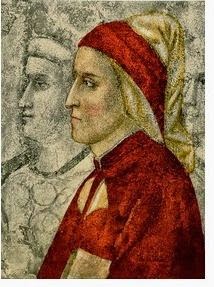
Dante


Jan Amos Komensky


Leibniz

Ramón Llull

  
John Wilkins


2014-02-01

Jean-Pierre Brisset & logophilia

Brisset no doubt returned to Port Royal and to the General Grammar before Saussure. In fact, the title of his principal linguistic work acknowledges the debt: The Logical Grammar. It is as if Brisset had successfully blended Grammar and Logic in order to finally create that portmanteau science which others before him had dreamed of, beginning with Leibniz and his project of a universal characteristic. Yet, in the first phase of his research, he restricts himself to monoglossia, and at no point becomes involved in inventing his own Esperanto. Like all the other logophiles, Brisset will only be able to find universality in what already exists. In spite of his ‘logical’ requirement, his work remains essentially founded upon an insurmountable empiricism, and attached to a research which remains flush with a chaos of the language that he is only concerned with ordering.


SOURCE: Pierssens, Michel. The Power of Babel: A Study of Logophilia, translated by Carl R. Lovitt (London; Boston; Henley: Routledge & Kegan Paul, 1980), p. 65.

2013-06-12

Ars combinatoria, Hegel & Marx

For the sake of complete cross-referencing, here is a post from another blog I have not previously referenced on this one:

Philosophical languages, Romantic historicism, Hegel, Marx (posted on 6 August 2008, from a piece originally written 8 July 2006)

. . . which is a commentary on:

Cook, Daniel J. “Marx’s Critique of Philosophical Language,” Philosophy and Phenomenological Research, 42 (June 1982): 530-554.

See also my web page:

Hegel on Ars Combinatoria & Characteristica Universalis 

There are many critiques of his historical phenomenon, but Hegel is rarely brought into the equation.

2012-01-14

Logiko & la Memorarto / Logic and the Art of Memory

Pri:

Rossi, Paolo. Logic and the Art of Memory: The Quest for a Universal Language; translated with an introduction by Stephen Clucas. London; New York: Continuum, 2006. (Translation of the 2nd ed., 1983; orig. 1960)

Vi povas legi ĉerpaĵon ĉe la retejo de Continuum. Jen bonega faka libro pri la tuta intelekta fono de la movado por filozofia universala lingvo, kun pluraj gravaj tradukitaj tekstoj el tiu periodo. La memorarto estas malaperinta intelekta "teknologio", kun radikoj en la Mezepoko kaj koneksoj al la burĝonado de scienco kaj sistemigo de scioj: ĝi gravis antaŭ la amasa presado de libroj en la moderna periodo. Kaj jen (anglalingve), la enhavtabelo:

Translator's Introduction
Preface
Preface to the second edition
I. The Power of Images and the Places of Memory
II. Encylopaedism and Combinatoria in the Sixteenth Century
III. Theatres of the World
IV. The Imaginative Logic of Giordano Bruno
V. Artificial Memory and the New Scientific Method: Ramus, Bacon, and Descartes
VI. Encyclopaedism and pansophia
VII. The Construction of a Universal Language
VIII. the Sources of Leibniz's Universal Character
Appendices
I. The Liber ad memoriam confirmandam of Ramon Lull
II. An anonymous vernacular treatise of the fourteenth century
III. Two fifteenth-century manuscripts on the ars memorativa
IV. Documents on the activities of Pietro de Ravenna
V. Three late sixteenth-century manuscripts on the ars memorativa
VI. Petrarch as teacher of the art of memory
VII. An unpublished text by Giulio Camillo
VIII. Memory exercises in seventeenth-century Germany
IX. The article on 'L'art mnemonique' from Diderot's encyclopaedia
X. D'Alembert and 'real characters'
Notes
Index

2011-12-31

Leibniz, race, nation . . . & universal language!

I am amazed when two entirely separate interests unexpectedly intersect. In this case, I had just acquired a book on the issue of racism in early modern philosophy. (I am footnoted in the essay on Spinoza.) I turned to this essay on Leibniz:

Fenves, Peter. “Imagining an Inundation of Australians; or, Leibniz on the Principles of Grace and Race,” in Race and Racism in Modern Philosophy, edited by Andrew Valls (Ithaca: Cornell University Press, 2005), pp. 73-89.

The editor Andrew Valls summarizes Fenves' argument on p. 10. To add to it: Leibniz is mistakenly identified as a pioneer in the advocacy of 'race' as a concept, where in actuality he never endorsed François Bernier's work. The closest he came to advocacy of noxious distinctions was in his youthful proposal to unite the powers of Europe in a campaign of conquest of the 'semi-beasts' of the non-Christian world and even to indoctrinate them as servile conscripts in this campaign. Liebniz's views of language are relevant here, and may be damning in a way that we would not otherwise realize. The concept of race, though, is not at issue. Leibniz's mature philosophy makes the concept of race practically unworkable, as, according to the monadology the classification of individuals and their conceptual subsumption into larger groups becomes metaphysically problematic. Furthermore, he revises his notions of non-Christian non-Europeans, taking the example of 'Australians', and argues that as rational beings they could be converted to Christianity.

This is certainly interesting, and as far as the military campaign is concerned, even more damning than what most people know about Leibniz's proposal for the invasion of Egypt as a deflection from the prospect of war in Europe. But the unexpected twist here is that there is a connection to Leibniz's interest in a universal language (and his advocacy of national languages and national particularity, e.g. with respect to German) and even to the taxonomy of the most successful inventor of an a priori artificial language, John Wilkins!

Who knew? But you can read the relevant extract for yourself:

Leibniz on Language, Race, and Nation

2011-08-14

Ars combinatoria, Ramón Llull, Leibniz: reminder / rememorigo

This is a reminder that my documentation of this subject matter is to be found in a variety of places in addition to this blog. Esperanto versions of this text follow the English-language text.

Jen rememorigilo pri mia dokumentado de ĉi tiu temaro diversloke interrete. Vi trovos la Esperantajn teksterojn post la anglalingvaj.

My blog Studies in a Dying Culture exists in two incarnations. I customarily refer only to individual posts or the first in a series in the older version, from the newer version or my various bibliographies and web guides, individual web pages, and newer blog posts. I have not posted relevant entries for some time in the current version. The relevant categories, in any case, are:

ars combinatoria
artificial languages
Jorge Luis Borges
Leibniz

You will also notice a number of entries on Marcelo Dascal. There are also stray references to Esperanto on that blog.

Mia anglalingva blogo Studies in a Dying Culture ekzistas en malnova, statika versio kaj aktuala dinamika formato. Ĝenerale oni trovos referencojn al individuaj afiŝoj aŭ al komenca afiŝo en serio en la malnova blogo. En la aktuala referencu la kategoriojn listitajn supre. Notu ankaŭ la afiŝojn pri filozofo Marcelo Dascal kaj kelkajn pri Esperanto.

My main bibliographies, web guides, and other main pages of relevance are / Jen miaj precipaj gvidiloj, bibliografiaj, kaj alispecaj retpaĝoj:

Also of relevance are these / Jen rilataj retpaĝoj:

2011-08-13

Ars combinatoria in contemporary art & literary theory & practice

Here is a sampling of recent projects in the visual arts, literary creation, literary and cultural theory incorporating ideas from the legacy of the ars combinatoria.

Jen kolekteto de lastatempaj projektoj de arto, literaturo, kaj kulturteorio (per legaĵoj anglalingvaj) kiuj utiligas la intelektan heredaĵon de ars combinatoria.

Orderly disorder: post-human creativity
Dr. Rolf Hughes

On the 'death of the author', 'metacreation', emergence, creativity, complexity. Opposes the Romantic, creative individual to the ars combinatoria of these post-humanist conceptions.

Spring Cleaning: from Bad to Rotten Words Project
Lulú De Panbehchi
Ars Combinatoria Project, Dr. Artur Matuck
May 5th, 2009

Combining Llull, Oulipo, Lyotard, et al in the Internet environment.

On the Dissolution Through Sameness in Emptiness In: Decodierung:Recodierung, Triton Verlag Wien, 2000.
Toni Kleinlercher

On literary forms inspired by Llull, Leibniz, etc.

Between a Creative Scotland and a Cultural Scotland: Pat Kane chapter for 'Radical Scotland: Arguments for Self-Determination
Thoughtland (blog), 11 March 2011

On the question of "creative industries" in Scottish cultural policy. The ideas of Paulo Virno are referenced, apparently pertaining to the vacillation between indeterminate, chaotic nature of human experience and the retreat to stereotypical formulae, i.e. "reaction-halting behaviours, obsessive tics, the drastic impoverishments of the ars combinatoria".

Ars Combinatoria at Transmediale

Jonathan Gray, 7 February, 2011

Ars Combinatoria (Transmediale)

Inspired by Leibniz, "The Ars Combinatoria project is about creating new works with public domain or openly licensed images, sounds and texts. it was launched at Transmediale in 2011 by Jonathan Gray and Adam Green."

Leibniz’s Funny Thought
Jonathan Gray, 30 August, 2009

Inspired by Leibiz's conception of "knowledge theater". ". . . Leibniz’s idea for a ‘new sort of exhibition’ is laid out in a short piece from 1695 called Drôle de Pensée, or ‘a funny thought’, which was written after he saw a machine which ‘walked on water’ at an exhibition in Paris."

Ars Combinatoria
Jens Hoffmann

On the German artist John Bock.

2010-11-22

Ars combinatoria, speculative computing, & creativity

Lately, and for some time, I've been writing about some loosely related topics drawing in the history of interlinguistics, ars combinatoria, steampunk, 'pataphysics, Oulipo, alternative history . . . In the past I've covered the mathematical, logical, scientific strain of thought that comes out of this, from Leibniz and his contemporaries on. I've also covered the literary/artistic side, but this time I want to focus on very interesting work combining the formal sciences, particularly computing theory, and the creative literary and other arts. Speculative computing is one of the buzzwords to attend to. The most interesting links in this area are referenced below.

Alfred Jarry's 'Pataphysics and its descendant Oulipo form a significant part of the story of creative applications of combinatorics in literature. Otherwise, the most oft repeated, cited, and influential thinkers and writers are Ramón Llull, Hermann Hesse, and Jorge Luis Borges.

REFERENCES:

Ars Combinatoria: Or, Hegel’s Logic as Chronotope for the Digital Age by Christopher Vitale, 22 Nov 2009

Ars Combinatoria: Mystical Systems, Procedural Art, and the Computer by Janet Zweig

Recombinant Poetics: Emergent Meaning as Examined and Explored Within a Specific Generative Virtual Environment (1999) by William Curtis Seaman
An Eternal Engine by Wayne Clements [on Llull, Swift, Borges, & computer-generated writing]

Ludic Algorithms” [PDF] by Bethany Nowviskie

July 2010 draft [DOCX format]
Comments by Bill Turkel
Imaginary Solution #1: Dr. Kremlin’s Disc
Playing With Technology in History, April 29-30, 2010, Niagara-on-the-Lake, Canada. Abstracts with links to papers
Playing History

Speculative Computing: Instruments For Interpretive Scholarship by Bethany Paige Nowviskie
PhD dissertation, Department of English, University of Virginia, May 2004
(Progenitors: Ramon Llull, Hermann Hesse, Peter Suber’s Nomic; nods to Swift & Leibniz)

"Text" and "Network", Reconsidered (2007)
by Florian Cramer

2010-08-04

Novalis, filozofia reakciulo

Mi ne scias, kiom oni tradukis aŭ verkis pri Novalis (Georg Philipp Friedrich von HARDENBERG, 1772-1801) en Esperanto. Estas artikolo en Vikipedio. Estas ankaŭ ĉi tiuj tradukoj:

Elektitaj Poemoj kaj Fragmentoj, trad. Willi Nüesch. Berno, 2007.

"Maria-kanto," en Kantoj kaj Arioj tradukitaj de Heino Lorenz. Luzern, 1980. 
 Nu, lastatempe oni eldonis en angla traduko (unuafoje), filozofia ĉefverko de Novalis. Jen la informoj kaj recenzoj (pardone, anglalingve):

Novalis [Friedrich von Hardenberg]. Notes for a Romantic Encyclopaedia: Das Allgemeine Brouillon; translated, edited, and with an introduction by David W. Wood. Albany: State University of New York Press, 2007. (Intersections: Philosophy and Critical Theory)
Adler, Jeremy. "Novalis and Philo-Sophie," The Times Literary Supplement, April 16, 2008.

Kneller, Jane. Novalis, David Wood (ed., tr.), Notes for a Romantic Encyclopaedia: Das Allgemeine Brouillon [review], Notre Dame Philosophical Reviews, 2008.09.05.
La verko estas Notoj por Romantika Enciklopedio. Temas pri lia projekto “magia idealismo”, t.e. la poezigo de scienco. Mi ĉerpe tradukas el la recenzo de Adler:
Kune kun Friedrich Schlegel, Novalis taksis la mision de Germanujo en moderna Eŭropo dialektika renverso de la Franca Revolucio: la meditema ĝermana Geist respondu kaj transcendu la materiismajn troigojn de la Teroro. . . . La prelego de Novalis “Kristanujo aŭ Eŭropo” (1799), kvankam laŭ konsilo de Goethe ne publikigita en la fonda revuo de germana Romantismo Athenaeum, konsistigas la plej potencan politikan manifeston de la unua Romantika skolo. Kerne sidas enciklopedia vizio de eŭropa diverseco kies radiko estas Mezepoka, kiam kontraŭaj ŝtatoj estis spirite unuiĝintaj sub Katolika hegemonio, epoko kiun Novalis taksas ora epoko. . . .
La nomo de ĉi tiu “scienco de la sciencoj” reeĥas la Encyclopédie de Diderot, sed Novalis celas superi la francan modelon per enmeto de dinamismo . . . studi la "rilatojn" . . . efikojn de la sciencoj unu al la aliaj al kreo de “scienca Biblio” . . . . La metodo renversas sciencan metodon, ekz. en pretendo de Novalis transformi la induktismon de Bacon al dedukta metodo . . . . Kiel la notlibro de Freiberg notas: “La kombina analizado de fiziko eble estus la pera arto de inventado kiun celis Francis Bacon”.

La “cirkloj” kiujn imagas Novalis en sia “kombina analizado” estas inspiritaj de la mezepoka ars combinatoria, kiu daŭre allogis germanajn pensulojn ĝis Leibniz kaj Kant. La samcentraj radojn kiujn Ramon Lull konstruis kiel inventilo de novaj ideoj ankaŭ servas kiel modelo Novalis kaj provizas motoron por rekombinado de ekzistantaj ideoj por krei novajn.

Do jen programo de reakcia mistika obskurantismo en moderna epoko. Preferinda estas la ludado per ĉi tiaj ideoj fare de verkisto Jorge Luis Borges. Kontrolu en ĉi tiu blogo pri Borges en Esperanto (kaj en Ido!), kaj ankaŭ konsultu miajn gvidilojn:


Philosophical and Universal Languages, 1600-1800, and Related Themes: Selected Bibliography

Jorge Luis Borges: Selected Study Materials on the Web [Elektitaj Verkoj por Studado]

Hermann Hesse, Esperanto, Klera Utopio, Universala Lingvo / Intellectual Utopia, Universal Language

2009-06-02

Louis Couturat, Leibniz, & international languages

Louis Couturat (1868-1914) is not historically beloved in the Esperanto movement, as he was a prime mover behind Ido, a reformed version of Esperanto that split the movement. Couturat nevertheless was a significant figure not only in the international language movement, but in intellectual history, philosophy, logic, and Leibniz scholarship in particular.

Some information can be found in my:

Philosophical and Universal Languages, 1600-1800, and Related Themes: Selected Bibliography

Here I am highlighting Couturat's works of greatest interest to me, with indications of their most current available editions, in English wherever possible. My bibliography overlaps but does not completely coincide with the Wikipedia entry.

De l'Infini mathématique was first published in 1896, and has been reprinted several times.

Two seminal works on Leibniz are La Logique de Leibniz (1901) and Opuscules et Fragments Inédits de Leibniz (1903). See The Logic of Leibniz, a translation in progress by Donald Rutherford.

Histoire de la langue universelle (1903), came out in a 2nd edition in 1907. Also in 1907 Les nouvelles langues internationales was published. There is a reprint edition:

Histoire de la langue universelle, beigebunden ist Les nouvelles langues internationales, by Louis Couturat, Léopold Leau; mit einem bibliographischen Nachtrag von Reinhard Haupenthal. Hildesheim; New York: G. Olms, 1979. xxx, 576, 110 p.

L'Algèbre de la logique appeared in 1905. Note that the English translation is available online courtesy of Project Gutenberg:

The Algebra of Logic, authorized English translation by Lydia Gillingham Robinson, B. A., with a preface by Philip E. B. Jourdain, M. A. (Cantab.) Chicago; London: The Open Court Publishing Company, 1914.

Dover Publications reprinted this translation is 2005. The publisher's description:

In an admirably succinct form, this volume offers a historical view of the development of the calculus of logic, illustrating its beauty, symmetry, and simplicity from an algebraic perspective. Topics include the principles of identity and the syllogism, the principles of simplification and composition; the laws of tautology and of absorption; the distributive law and the laws of duality, double negation, and contraposition; the formulas of De Morgan and Poretsky; Schroder's theorem; sums and products of functions; solution of equations involving one and several unknown quantities; the problem of Boole; Venn diagrams; tables of consequences and causes; and formulas peculiar to the calculus of propositions.
Another seminal work appeared in 1905: Les Principes des Mathematiques: avec un appendice sur la philosophie des mathématiques de Kant. This has been reprinted; the most recent edition I know of is: Paris: A. Blanchard, 1980.

In 1912 a compilation of various authors, Logik, came out in German. An English translation was subsequently published:

Logic, by Arnold Ruge, Wilhelm Windelband, Josiah Royce, Louis Couturat, Benedetto Croce, Federigo Enriques and Nicolaj Losskij; translated by B. Ethel Meyer. London: Macmillan, 1913. x, 269 p.

Of recent vintage is the publication of this important correspondence:

Correspondance sur la philosophie, la logique et la politique, 1897-1913 par Bertrand Russell, avec Louis Couturat ; édition et commentaire par Anne-Françoise Schmid ; transcription et notes sur la langue internationale par Tazio Carlevaro. Paris : Kimé, 2001. 2 v. (734 p.)

Carlevaro is an Esperantist, a co-author of Esperanto en Perspektivo (1974).

Couturat's correspondence with Giuseppe Peano (important mathematician and creator of the language Latino Sine Flexione) has been published (letters in French with introduction in Italian):

Carteggio: 1896-1914. Giuseppe Peano, Louis Couturat; a cura di Erika Luciano e Clara Silvia Roero. Firenze : L.S. Olschki, 2005. lxix, 254 p.

An important conference proceedings (with bibliography) came out in 1983:

L'oeuvre de Louis Couturat: (1868-1914) : ... de Leibniz à Russell. Paris: Presses de l'Ecole Normale Supérieure, 1983. 130 p. Contents:
Actualité de Couturat / Maurice Loi -- Leçon inaugurale au Collège de France / Louis Couturat -- Couturat et la conception kantienne de la géométrie / Mario Laserna -- Couturat et la critique des conceptions du temps et ses contemporains Lechalas, Bergson, Evellin / Hervé Barreau -- Louis Couturat et Georg Cantor / Pierre Dugac -- Une remarque sur le problème de la subalternation dans "La logique de Leibniz" de Louis Couturat / Franz Schupp -- Philosophie et science dans la pensée de Louis Couturat / Ubaldo Sanzo -- La correspondance inédite Couturat-Russell / Anne-François Schmid -- Louis Couturat et les mathématiques de son époque / Jean Dieudonnée -- Un promoteur des recherches interdisciplinaires / Alexandre Giuculescu.
The Wikipedia entry contains links to other bibliographies as well as additional references. Aside from other philosophical, mathematical, and logical work, Couturat produced further publications on Ido and international languages.

2008-08-06

Kiu regas la konceptojn?

Verkite 30 Oct 2007:

La kampo de komunikado:
Kiu regas la konceptojn?
Le Monde Diplomatique en Esperanto
de Armand MATTELART

[RESUMO:] Por kio utilas komunikado? Oni provas kredigi al ni, ke ĝi povas unuigi kaj pacigi la mondon. Ke sufiĉus tutmondiĝo kaj tutglobiĝo de komerco - danke al aparte la parigo de komputilo kaj telefono, kaj al disvolvo de Interreto – por ke la sociaj, politikaj aŭ militaj konfliktoj kvietiĝu kaj malaperu. Temas kompreneble pri mito. Disvastigata de tiuj, kiuj regas la konceptojn. El tio fontas la ega graveco de la nuntempe okazanta vortobatalo.
Jen interesa artikolo, interalie pro devojiĝo de la ĉefa temo.

(1) Degenero de lingvaĵo kaj penskapablo; interesaj esprimoj, ekz.:
Dum la vorto-merkato pli kaj pli reduktiĝis al la vortoj de la merkato, pliintensiĝis la ŝrumpo de la konceptoj, kiujn ni uzas por nomi la staton kaj la estonton de la mondo.
Kaj:
La fragila grundo de la vortoj favorigis prosperon de amneziaj neologismoj, kiuj produktas «realeco-efektojn» tra la agomodeloj, kiujn ili enkadrigas kaj prezentas kiel sole eblaj. La plurjarcenta mond-unueciga movado troviĝis senigita je sia historio kaj konflikta geopolitiko, kaj reduktita je fenomeno apenaŭ malpli ol 20-jara.
(2) Referenco al verkisto Jorge Luis Borges & artefaritaj lingvoj:
La «tutmonda socio de informado» apogiĝas je trietaĝa historio. Kerne de tiu «novlingvo» ĉefas la nocioj «socio de informado» kaj «tutmondigita socio de informado», elstarigitaj kiel dominaj paradigmoj de socia ŝanĝo kaj garantiaĵoj de pli travidebla mondo. Tiu paro aperas en la 17a kaj 18-a jarcentoj kun la pensmaniero de numereblo kaj mezureblo kiel prototipoj de ia vera diro. Ĝia pli aktuala historio komenciĝis ĉe la fino de la dua mondmilito kaj daŭris dum la du sekvantaj jardekoj. Ĝia mallongdaŭra historio, la tempo-spaco kiun historiistoj nomas «nun-ismo» funkciis sub influo de konkurado al aktualeco.

Neniu pli bone parolis pri la longdaŭro ol la argentina verkisto Jorge Luis Borges, kiam li referencas al la mito de konstruo de artefarita lingvo, kundividata de iuj kiel fundamento de universala komunumo kaj de perfekta komunikado. Jen la kongreso imagita de Don Alejandro Glencoe en El libro de arena (La libro de sablo). Jen la ĥimero de arbitra konstruo de analiza lingvo la John Wilkins en Enketoj. La inventinto de kibernetiko Norbert Wiener en 1948 nomumis Leibniz sankta patrono de tiu nova scienco, ne nur ĉar tiu inventis la binaran kodon kaj diferencialan kalkulon, sed ĉar, tra sia projekto pri aŭtomatigo de rezonado, ankaŭ li provis krei «artefaritan» lingvon, lingva characteristica, senigitan je la naturaj malvirtoj, el kiuj fontas miskompreno kaj misakordo, lingvon kiu kapablu kontribui al kreado de universala komunumo.

2007-03-30

Leibniz & logikaj lingvoj

La filozofo Leibniz estas bone konata ankaŭ pro ties kontribuo al la historio de universala lingvo, t.e. al la filozofiaj lingvoprojektoj de la frumoderna filozofia kaj scienca epoko.

Pri la temo konsultu mian plejparte anglalingvan bibliografion:

Philosophical & Universal Languages, 1600-1800: Bibliography

Notu ankaŭ pluan artikoleton en Vikipedio: Alfabeto de homa pensado.

Jen pluaj fontoj, anglalingvaj:

Jaap Maat's homepage
Leibniz's rational grammar

Leibniz's Philosophy of Mind (Stanford Encyclopedia of Philosophy)
3. Language and Mind

Leibnitiana
Leibniz Society of North America Newsletter
Leibniz - EarlyModernTexts.com
Leibniz (George MacDonald R0ss)
Leibniz-Edition (germana)