Leib Malach 27 November 1894 - 18 June 1936
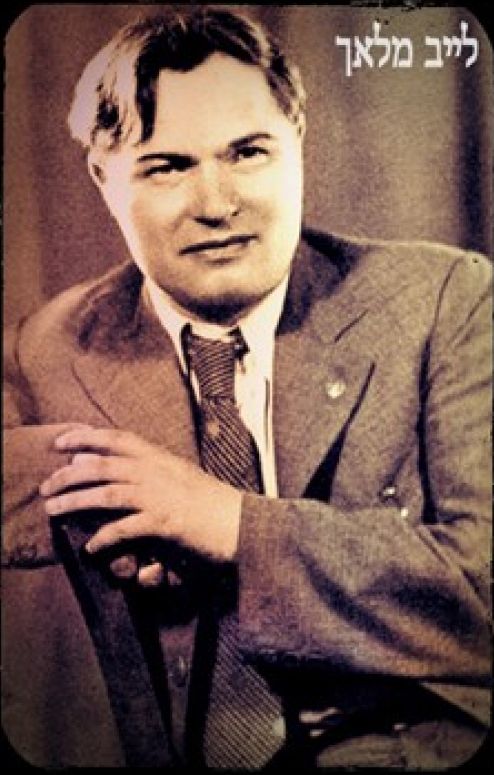
I was surprised to find a tribute to Yiddish writer Leib Malach (originally Leib Salzman = Lejb Zalcman), posted on his birthday on Yiddishkeit's web site. It begins:
Leib Salzman (Lejb Zalcman), better known by his adopted name Leib Malach, was born November 27, 1894 in Zwoleń, Radom Gubernia. He moved as a teenager to Warsaw and worked at a variety of odd jobs there. Taken under the wing of the Yiddishist writer H.D. Nomberg, his writing began appearing in the Warsaw press.None of Malach's works have ever been translated into English, except for one fragment of a notorious play. I learned of him via a 1939 Esperanto translation of his last play Mississippi (1936). I documented Misisipi on this blog and digitized a small part of the publication on my web site. But Yiddishkeit found this publication in the UCLA library and posted the image on the cover with its tribute and a caption:
He left Poland in 1922, settling and writing for the most part in Argentina, but traveled the world posting dispatches from his travels in the Yiddish press. He died suddenly after an operation in Paris on June 18, 1936.

"Malach's final and most performed play was Mississippi (cover of Esperanto translation shown here), which dealt with the 1931 Scottsboro trial. The play was written for Mikhl Weichert's Yung Teater in Warsaw, known for staging contemporary events like the trial of Sacco and Vanzetti."
And here is the original Yiddish play, in various formats: לייב מלאך
On the lower half of the tribute page is the following text, facing Phil Ochs' recording of his famous anti-racist song "Here's to the State of Mississippi":
In honor of Leib Malach’s most famous play, Mississippi, written in the immediate aftermath of the Scottsboro trial, listen to a song from Phil Ochs, written 30 years after the play’s Warsaw production. Here, Ochs brings the theme of justice denied in Mississippi up to 1965.The slide show also features:
"Amol, Amol" (Once, Once)”: The cover of Malach’s epic poem "Amol, Amol," published in Warsaw, shortly before his emigration. Malach was a successful writer in a number of different genres.Incidentally, the punchline to Phil Ochs' "Here's to the State of Misssippi" is "Mississippi find yourself another country to be part of."
From Spain to Holland: One of Malach’s many travel dispatches, this posthumously-published 1937 book describes Spain on the brink of civil war, fascist Germany, the leftist resistance in Vienna, and other travels throughout Western Europe.


 Posts
Posts

