Showing posts with label bildoj. Show all posts

2014-10-01

Jiří Kořínek (3)

Jiří KOŘÍNEK naskiĝis la 1-an de oktobro 1906, do hodiaŭ estus lia 108a datreveno.

Jen du pluaj bildigoj de poemoj de Jiří Kořínek fare de Paulo Silas:


2014-09-30

Jiří Kořínek pri bibliotekoj (2)


Mi jam blogis pri “Universitata Biblioteko” de Jiří Kořínek, kiu troveblas miareteje. Sed jen grafikaĵo kiun konstruis Paulo Silas.

2014-08-23

William Auld: "En Barko Senpilota" (3): personaj rememoroj

Nelonge post ke mi kompetentis legi Esperantan literaturon mi komencis legi la poemojn de William Auld. Mi aĝis malpli ol 20 jaroj. Tiam la ekzistencialecaj poemoj kiajn oni trovus ĉe La Infana Raso kaj Humoroj plaĉis al mia sensibilo.

En 1975 mi bonŝancis studi kurson ĉe universitateto en Barrie, Ontario, Kanado kiun instruis William Auld.

Interalie, li uzis sian epopeon La infana raso. Laŭmemore, li detenis sin kaj ne deklamis la ĉapitron pri koito. Eble li ne volis tenti nin per la alvoko "Malfermu al peniso mia". Mi kredas, tamen, ke eble laŭtlego embarasus lin. Mi nebule memoras, ke kvankam li oponis kontraŭ puritanismo, ne plaĉis al la aktuala efektiviĝo de seksa liberiĝo; mi supozas ĉar Auld perceptis ĝin tro senpersoneca.

Nu, eble al Auld mankis sufiĉa tempo ripozi inter lecionoj, ĉar kiel entuziasmulo mi ofte ĝenis lin per demandoj. Sed evidente li ĝuis la kunecon de esperantistoj. Barrie estas nur urbeto ĉe lago. (Ni unufoje naĝis tie.) Ĉiutage ni vespermanĝis ĉe restoracio, kaj Auld insistis pagi por la tuta grupo. Jen foto:


Iufoje ludis iu muzikisto el Aŭstralio; Auld elkriis ion post iu kanto. Aliokaze studentino ludis la pianon. Auld enketis: "Ĉu vi povas ludi bluson?"

Unufoje, la prezidanto de la universitato invitis lin al sia hejmo vespere. Auld trovis pravigon eskapi el tiu invito. Li diris al ni: "Tiu medio estas tro burĝa; mi estas vagabondo!"

Do vi konstatas, kia amikeca kaj sindona homo Auld estis.

Kompreneble, el generacio hipia, mia spertaro kaj perspektivo diferencus de tiu de Auld, despli de la maljuneca etoso de la nordamerika (usona kaj kanada) esperantistaro. Ĝenerale, aliaj prioritatoj dum la 1970aj jaroj delogis min de pluraj favorataj verkistoj (kaj muzikistoj) de miaj fruaj jaroj, plejparte en la krokodila mondo sed kompreneble ankaŭ en Esperantujo. Al pluraj interesoj (mi referencas la krokodilajn) mi revenis en la 1990aj jaroj kun nova perspektivo. Kun historia konscio mi lernis apreci la atingojn de antauŭloj pli bone. Sed jen ĝeneraligo. Mi revenu al Auld.

Fine de 1986, la Esperanto-movado en Vaŝingtono reviviĝis, kaj mi fariĝis estrarano. Mia propra engaĝo je Esperanto intensiĝis. Tiam mi kontaktis Auld. Jen priskribo:

William Auld, William Blake, & Mi

Kaj jen letero de Auld responde al la mia:

William Auld: Letero al R. Dumain, 1987.01.26 (bildo de la originala)

Mi devas trovi sekvajn leterojn. Auld aprobis mian fondon de la Ateista Tutmonda Esperanto-Organizo (ATEO) kaj donis permeson republikigi laŭ mia peto du poemojn. Li ankaŭ esprimis naŭziĝon pri la aktuala reakcia politiko reganta (en Usono kaj Britio).

Kaj Auld sendis al mi, kun la jena enskribo, ekzempleron de En Barko Senpilota:


2014-08-04

Esperanto Day at the British Library


Esperanto 26 is Esperanto's birthday, i.e. the date the first book ("Unua Libro") was published in 1887. The British Library commemorates this occasion this year:

Through the world a mighty voice is ringing… by Olga Kerziouk, British Library, 25 July 2014

Note links to other Esperanto pages on the British Library site. The British Library contains holdings on aspects of Esperanto, including the Universal Esperanto Congresses featured here, among them the ill-fated 1914 conference (see postcard above) nullified by the outbreak of World War I, and the British contribution to the Esperanto movement.

2014-07-08

Xul Solar & Jorge Luis Borges revisited

In a previous post I mentioned last year's exhibit Xul Solar and Jorge Luis Borges: The Art of Friendship at the Americas Society in New York City.

You can view the Slideshow and buy the exhibition catalogue.

2014-06-19

Postcards from Bialystok


“Postcards from Bialystok” – my third comic book by Joanna Karpowicz is a product of collaboration with The Ludwig Zamenhof Center in Bialystok, Poland. The format is that of the graphic novel. There is some beautiful work here as the outcome of soaking up the history and atmosphere of Bialystok. Naturally, our dear Ludwig and his fellow Jews play a major role.

2014-06-18

Artefaritaj lingvoj per Maria

Artefaritaj lingvoj ĉe blogo Esperanto de Maria ne montras freŝajn informojn, sed montras belajn bildojn en eleganta prezento de projektoj el la epoko de filozofiaj lingvoj.
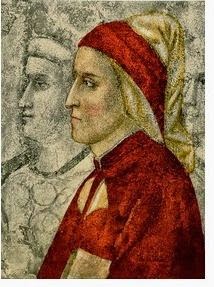


Dante


Jan Amos Komensky


Leibniz

Ramón Llull

  
John Wilkins


2013-08-04

Kaino & Habelo & Ĥanoĥ & Byron & Blake

La mito de Kaino kaj Habelo estas fondo fekunda por renversado. La angla romantika poeto Lord Byron fifamiĝis pro sia versdramo Cain, A Mystery (=Kaino, Misterdramo; 1821), kiu simpatias la starpunkton de Kaino.

La ŝlosila libro pri ĉi tiu verko estas:

Steffan, T. G. (Truman Guy), komp. Lord Byron’s Cain: Twelve Essays and a Text with Variants and Annotations. Austin: University of Texas Press, 1968. xvii, 509 p.

Estas ja interesa afero, ke Cain estis tradukita al Esperanto tre frue dum ĝia ekzisto, jam en 1896, de pionira verkisto / tradukisto Abram (Antoni) Kofman!

Oni povas aliri skanaĵojn de Kain: Mistero - Nurnbergo, 1896 ĉe la Esperanto-Fako de Aŭstria Nacia Biblioteko.

Ŝajnas, ke ĉi tiu herezaĵo estas la unua traduko de Byron en Esperanto!

Ankaŭ kurioze, la dua traduko de Byron en Esperanto devenas de Apokrifa temo: Heaven and Earth (1821), jene:

Ĉielo kaj Tero: Mistero, tradukis Eugène Noël. Nancy'o: Thomas, 1906. 54 p.

La temo devenas de la Apokrifo Libro de Ĥanoĥ. Interalie, temas pri sekskuniĝo inter falintaj anĝeloj kaj homaj virinoj.

Nu, renversado de ortodoksaj religiaj mitoj kaj revolucia utiligo de mitoj estas troveblaj je verkistoj de tiu periodo de angla romantikismo. Plu interese, post ke Byron renversas Genezon, William Blake renversas Byron!

[La kadavro de Habelo trovita de Adamo & Eva],
ĉ. 1826, London, Tate Gallery

La koncerna verko estas The Ghost of Abel (1822) [La Fantomo de Habelo], malfrua verko gravurita sur du platoj (alklaku retligon supre). Por pli facile legi la tekston, alklaku la tekston The Ghost of Abel. Ne ekzistas Esperanta traduko. Tio certe estus ne tro malfacile farebla; temas pri mallonga verko sen la obskuraj roluloj de la privata mitologio de Blake.

En La Fantomo de Habelo Blake ne restarigas la ortodoksan koncepton. Komence li nomas Byron-on profeto, kiu ne kaptiĝu en dubo. La Dio de Venĝado ne estas la reala Dio, kaj la krio de la sango de 'Habelo' ne devenas de la reala Habelo: la voĉo de venĝo estas la voĉo de Satano. La 'renverso' de Byron fare de Blake kongruas kun la kontraŭortodoksa kristanismo de Blake, laŭ kio la oficiala religio estas falsa religio de subpremado.

La pentraĵo supre estas aparta verko.Tiu bildo estas uzata en artikolo interpretanta la Biblian miton. Mi enretigis la unuan paĝon:

Kie estas via frato, Habel?” de Vinko Oŝlak

 En la artikolo Blake ne estas plu menciata.

Nu, jen mia gvidilo al Blake en Esperanto:

William Blake en Esperanto 

Jen plua fonto pri Byron, Blake, Kaino, kaj  Ĥanoĥ:

Blake in His Time [Blake en sia epoko], red. Robert N. Essick & Donald Pearce. Bloomington; London: Indiana University Press, 1978. Specife:

Leslie Tannenbaum, "Blake and the Iconography of Cain," p. 23-34.

G. E. Bentley, Jr., "A Jewel in an Ethiop's Ear," p. 213-240. Pri Libro de Ĥanoĥ.

2013-06-16

Planlingva Mapo

Mi ne scias la devenon, sed per esperantisto ĉe Facebook mi trovis la retlokon de ĉi tiu grafikaĵo.


2013-05-04

Markos Soŭza: La krimuloj de Drº Zamenhof

Markos Soŭza: La krimuloj de Drº Zamenhof

(vortoj de Markos Soŭza, deveno de bildo nekonata)

2013-05-02

Xul Solar

"Xul Solar was the adopted name of Oscar Agustín Alejandro Schulz Solari (born December 14, 1887 – April 9, 1963), Argentine painter, sculptor, writer, and inventor of imaginary languages." He was also a friend of Borges. On his invented languages (from Wikipedia):
He invented two fully elaborated imaginary languages, symbols from which figure in his paintings, and was also an exponent of duodecimal mathematics. He said of himself "I am maestro of a writing no one reads yet." One of his invented languages was called "Neo Criollo", a poetic fusion of Portuguese and Spanish, which he reportedly would frequently use as a spoken language in talking to people. He also invented a "Pan Lingua", which aspired to be a world language linking mathematics, music, astrology and the visual arts, an idea reminiscent of Hermann Hesse's "glass bead game". Indeed, games were a particular interest of his, including his own invented version of chess, or more precisely "non-chess".
See also:

Alejandro Xul Solar

Xul Solar Museum

Xul Solar on Language as Unity

Do you know Xul Solar?

Borges and Xul Solar

"Borges’s Cosmic Ally" By LARRY ROHTER, The New York Times, April 18, 2013.


2013-03-14

Ralph Dumain leads seminar on "Voyage to Kazohinia" at CUNY (1)


Above is the poster for my seminar.

Below are the various announcements on CUNY (City University of New York) blogs:

Ralph Dumain on "Voyage to Kazohinia"

CUNY Academic Commons: Possible Worlds, Alternative Futures: The Utopian Studies Seminar of CUNY
March 7: Seminar with Ralph Dumain on Voyage to Kazohinia

Some Resources in Preparation for Thursday’s seminar

Podcast by Ralph Dumain
The Center for the Humanities:Possible Worlds, Alternative Futures: Utopianism in Theory and Practice
Ralph Dumain on "Voyage to Kazohinia"
Here is a quick snapshot of an electronic bulletin board (posted at various places in the building) advertising the event:


Here is a photograph taken at the seminar, courtesy of Neil Blonstein:


I began with a 10-minute introduction. A lively discussion followed, the attendees, consisting mostly of professors and graduate students, all of whom asked key questions and contributed important thoughts on the subject. The event was a smashing success. I will write up a full report.

2012-12-15

Zamenhof! En garde!


"Mi trapikis krokodilojn dum 153 jaroj kaj mi trapikos vin."

2012-05-18

John I. Francis: "La Tento de Kul"


Antaŭ pluraj jaroj mi tradukis mian favoratan novelon de John Francis anglalingven:
"The Temptation of Kul"
Finfine, helpe de alia esperantisto, mi enretigis la originalon, ne el la libro, sed el iama gazeto Belarto (n-ro 1, aprilo 1958) kun la originalaj ilustraĵoj de Jan Schaap:
"La Tento de Kul"
Antaŭ pluraj jaroj la literatura rondo de la Esperanto-Societo de Vaŝingtono diskutis ĉi tiun novelon je mia iniciato. La grupo tiuokaze konsistis el mi kaj tri esperantistinoj. Ili ne ŝatis ĝin. Eble venontfoje la rezulto estos alia.

2012-03-04

Litertipo Zamenhof


Jen ekspliko anglalingva de litertiparo "Zamenhof" ĉe MyFonts:
Zamenhof is a family of five fonts that can be used singly or in combination to create a variety of bold, yet elegant, display styles. Inspired by Russian hand-lettering that appears to have been based on Jakob Erbar’s Phosphor, Zamenhof is essentially a Latin interpretation (with Cyrillic and Greek) of a Cyrillic interpretation of a Latin type design, with many changes along the way. (For example, all the Latin-only letters are quite different between the two designs: D, F, G, J, K, N, Q, R, S, U, V, W, Y, Z.)
The Inline and Inverse styles of Zamenhof are the basic fonts and can be used effectively on their own. The Plain and Outline fonts — which I recommend using only in combination with the main designs — were created specifically to be combined with Inline and Inverse, as underlay and overlay layers, respectively. (You will need an application that supports layers, such as Adobe InDesign or Photoshop.)
Zamenhof supports most European languages as well as modern Greek, and of course, Russian and other languages that use the Cyrillic alphabet. Needless to say, as Zamenhof is named after the father of Esperanto, it also supports Esperanto (as do all fonts from CastleType).

2011-03-25

Lou Harrison, graphically & poetically / grafike & poezie

Joys & Perplexities: Selected Poems of Lou Harrison. Winston-Salem, NC: The Jargon Society, 1992. xx, 123, [2] pp. (Jargon; 110) Book design by Lou Harrison and Carter Scholz; interior decorations by Lou Harrison; typography by Carter Scholz; jacket design by Jonathan Williams. After-quotes by Lou Harrison, John Cage, Virgil Thompson. Back cover biographical entry by Ned Rorem.

This beautifully designed and illustrated poetry collection retailed for $20. I found it in an unclassified bargain bin in Strand Books in New York City for $1. From the back matter: here's some background on the book:
With Lou Harrison as its source, it's not at all surprising that there would be a confluence of publishers. The University Library at the University of California, Santa Cruz, its special Collections, which house the Lou Harrison Archive, and the Cabrillo Music Festival, Lou a major force in its founding thirty years ago, join in inspired collaboration with the Jargon Society to publish this book of Lou's poetry.

— Rita Bottoms, Special Collections, University Library, University of California, Santa Cruz

The text of this book is set in Pluma Book. "Pluma" is Esperanto for "of the pen," and the alphabet possesses a complete set of Esperanto characters. The title page and cover are set in Pluma Book and Uncial Commoncase. Both fonts are used for the first time in this book. They are based on drawings by Lou Harrison, and were rendered for the Computer by Carter Scholz.
Here is another sample of the typeface, found on the web:


The poems are in English with Esperanto translations of two poems at the end:

Nova Odo ("New Ode", tr. Bruce Kennedy)

La Kvar Patronoj de la Palestro ("The Four Patrons of the Palaestra")