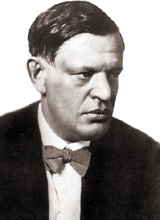
Showing posts with label Robert Zend. Show all posts

2019-04-14

Robert Zend denove en Beletra Almanako


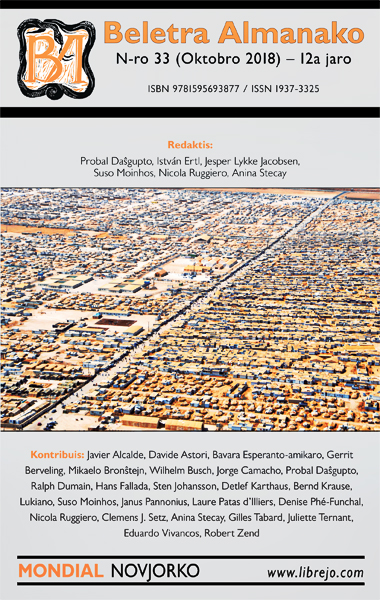
Beletra Almanako n-ro 33 (oktobro 2018) enhavas mian tradukon "Sur la teraso" [On the terrace], rakonto de la hungara-kanada verkisto (kaj favoranto de Esperanto) Robert Zend (paĝoj 83-85).

Rolas du dioj kiuj diskutas la strangajn rilatojn kun siaj kreaĵoj. Jen la nekutima fantaziemo de Zend.

Mi antaŭe afiŝis pri apero de alia mia traduko de rakonto de Zend, en Beletra Almanako, n-ro 30 (oktobro 2017):

'Enkonduko al nepublikigita manuskripto kun la titolo "Elektitaj sonĝoj"', p. 91-95.


2018-02-22

Robert Zend en Beletra Almanako #30

En la aktuala numero de Beletra Almanako, n-ro 30 (oktobro 2017), aperas mia traduko de rakonto el novelaro de la hungara-kanada avangarda plurĝenra aŭtoro Robert Zend:

Robert Zend: 'Enkonduko al nepublikigita manuskripto kun la titolo "Elektitaj sonĝoj"' (trad. Ralph Dumain), p. 91-95.

Ĉi tiu rakonto taŭge enkondukas la ĉeftemon de la novelaro–la reciproka interrilato de tagluma vivo kaj dumnokta sonĝado.

La originalo estas:

“Introduction to an unpublished manuscript entitled Selected Dreams” (18 June 1975), in Daymares: Selected Fictions on Dreams and Time, edited by Brian Wyatt, foreword by John Robert Colombo, afterword by Northrop Frye (Vancouver: Cacanadadada Press, 1991), pp. 4-8.

This piece appropriately introduces the main theme of this volume–the complementarity of daily living and nocturnal dreaming. My translation has been published in the new issue of the Esperanto literary journal Beletra Almanako, n-ro 30.

More on multi-genre, multimedia Hungarian-Canadian author Robert Zend:

2018-01-01

Hungarian & other Esperantist authors at Nobel Books

"The Nobel Books (NB) is a literary portal which is intended to collect, archive and disseminate information and books which Nobel Laureates and world authors have published for literary contributions to humanity."

European Authors – Welcome to the Nobel Books.

This site doesn't play when it comes to listing Hungarian authors. Included are Julio Baghy, Kálmán Kalocsay, István Nemere, Tivadar Soros, Sándor Szathmári, and Robert Zend. All but Zend wrote in Esperanto. Zend was an Esperantist though wrote in Hungarian and English. Frigyes Karinthy was an Esperantist, wrote almost entirely in Hungarian. George Soros (son of Tivadar) is a native speaker of Esperanto.

Esperantists Marjorie Boulton and Baldur Ragnarsson are also in this list.

2017-08-22

Robert Zend, Hungarian-Canadian writer (1929-1985): selected poems in English & Esperanto (2)

Another post about my recording / Denove pri mia deklamo:

Robert Zend, Hungarian-Canadian writer (1929-1985): selected poems in English with Esperanto translations by Ralph Dumain

My recording with a detailed breakdown of contents is now announced on the Zend site / Mia sonregistraĵo kun detala enhavlisto estas anoncita ĉe la retejo de Zend:

The Robert Zend Website - Listen

A link to my recording can also be found on the Esperanto page / Retligo al mia sonregistraĵo troveblas ankaŭ jene:

Zend in Esperanto - The Robert Zend Website

2017-08-20

Robert Zend’s novel novel 'Nicolette' (2)

I previously blogged about my recent review:
Robert Zend’s Novel Novel Nicolette: Not Quite a Review by R. Dumain
My review is now linked on the Zend site:
Nicolette - The Robert Zend Website
... with this excerpt:
Reading the novel felt to me like reading an amalgam of Kurt Vonnegut Jr. and James Joyce. Joyce is layered and dense in both structure and language. Vonnegut’s prose is easy to read and deceptively simple, though the content is rich. Zend’s prose is easy to read and the “plot” (once pieced together) is simple, but the structure, which I have merely outlined, is highly complex. Zend does not impose formal constraints on the text as the Oulipo writers do, yet the formal structure of the text puts it in a comparable experimental camp. This structure comprises the real content and interest of the novel, amplifying the psychological states that accompany relationships and the creative process.
Mia anglalingva recenzo de la avangarda romano Nicolette de la hungara-kanadana verkisto (kaj adepto de Esperanto) Robert Zend nun troveblas referencita ĉe la retejo de Zend (jen retligoj supre) kun ĉerpaĵo el mia recenzo.

2017-08-13

Robert Zend, Hungarian-Canadian writer (1929-1985): selected poems in English & Esperanto

Following upon the details of my podcast / Sekve de la detaligo de mia podkasto pri Zend...

... I have recorded and uploaded to Soundcloud recordings my recording of Zend's poems featured in my podcast along with my Esperanto translations... /

Jen sonregistraĵo (ĉe Soundcloud) en kiu mi deklamas la precipajn poemojn kaj kvazaŭpoemojn kiujn mi utiligis en mia podkasto, ĉi-okaze ne nur en la angla sed kun miaj tradukoj en Esperanto:

Robert Zend, Hungarian-Canadian writer (1929-1985): selected poems in English with Esperanto translations by Ralph Dumain.
Recorded 12-13 August 2017. 32 min.

00:00: English introduction
01:46: Esperanto introduction / enkonduko

IDENTITY / IDENTECO:
03:58: (On identity), October 1, 1980, in Beyond Labels
04:48: (Pri identeco) 05:23: In transit, October 30, 1970, in Beyond Labels
06:02: Transire
06:44: Fused personality, October 20, 1981, in Beyond Labels
11:02: Kunfandita personeco

SOURCES & INSPIRATIONS / FONTOJ & INSPIROJ:
17:08: Sign (for Ferenc Karinthy), in From Zero to One
18:27: Signo (por Ferenc Karinthy)

MYTH & RELIGION / MITO & RELIGIO
20:04: Office Memo, in From Zero to One
21:05: Oficeja Memorando
22:06: God Dead?, January 13, 1967, in Beyond Labels
23:00: Dio mortinta?
24:08: 5980 A.D., in Stellar #6: Science-Fiction Stories
25:14: 5980 A.D. [en Esperanto]

METAPHYSICS /METAFIZIKO:
26:44: A Love Letter, February 7, 1963, in Beyond Labels
27:59: Amletero
29:28: About Souls, April 17, 1969, in Beyond Labels
29:57: Pri animoj
30:34: Enigma, January 10, 1967, in Beyond Labels
31:08: Enigmo


LINKS / RETLIGOJ:

2017-08-08

Robert Zend (1929-1985): my podcast (3)

In my first post about my podcast on Robert Zend, Hungarian-Canadian writer and Esperantist ...

5/26/17 Robert Zend: Between Budapest & Toronto, Between Zero & One, Between Dream & Reality

... I broke down the podcast into its major segments. From the 14-minute to 40:30-minute mark you will find my recitation of poems or excerpts from Zend illustrating the themes mentioned.  Below are the themes and the works I recite.

Note that on these pages you will also find my Esperanto translations for all of these items. My master Esperanto Zend page is:

Robert Zend en Esperanto

Themes:

A. Identity:
1. [In a country where everyone is searching for identity], October 1, 1980, in Beyond Labels
2. In Transit, October 30, 1970, in Beyond Labels
3. Fused Personality, October 20, 1981, in Beyond Labels

B. Sources & inspirations:
4. Between One and Two (by Frigyes Karinthy), quoted in From Zero to One
5. Sign (for Ferenc Karinthy), in From Zero to One
6. On Karinthy, excerpt from Preface: Labels, in Beyond Labels
7. Dedication to Ardôs, from Oāb, Book 2

C. Myth & religion:
8. Office Memo, in From Zero to One
9. God Dead?, January 13, 1967, in Beyond Labels
10. 5980 A.D., in Stellar #6: Science-Fiction Stories

D. Metaphysics
11. A Love Letter, February 7, 1963, in Beyond Labels
12. About Souls, April 17, 1969, in Beyond Labels
13. Enigma, January 10, 1967, in Beyond Labels

At the end of my podcast (50-minute mark) I recite the poem "Sky Blue" (March 27, 1964), from Beyond Labels.

2017-08-07

Robert Zend’s novel novel 'Nicolette' reviewed

Now on my web site, in English only:
I documented Zend in my previous posts, including my podcast on Zend. I have only just read this experimental novel, so I am adding this piece to the mix.  The complex, non-linear structure of this novel and the various forms utilized within it are characteristic of Zend's imagination.

Por anglalingvaj legantoj, jen mia recenzo, plejparte provo je resumo, de eksperimenta avangardforma romano de la hungara-kanadana verkisto Robert Zend, kiu estis ankaŭ esperantisto. Jen mia unua diskuto pri Nicolette.

2017-06-27

Robert Zend (1929-1985): my podcast (continued)

I recently blogged about my podcast on Robert Zend, Hungarian-Canadian writer and Esperantist:

5/26/17 Robert Zend: Between Budapest & Toronto, Between Zero & One, Between Dream & Reality

As I mentioned in my previous post on the subject, "An Overview of Zend in 50 minutes"--an announcement of my podcast --now headlines The Robert Zend Website's audio page as a result of the family's enthusiastic response. This now links back to my blog post "Robert Zend: Between Budapest & Toronto, Between Zero & One, Between Dream & Reality," to the podcast itself (sound file, 51 min.), and to my web site, The Autodidact Project.

And now, the home page of The Robert Zend Website features my podcast:
And click below to take in a fifty-minute podcast on Robert Zend, a great overview of his works, themes and influences: Robert Zend:Between Budapest & Toronto, Between Zero & One, Between Dream & Reality by Ralph Dumain, May 26 2017


2017-06-14

Robert Zend (1929-1985): Hungarian-Canadian writer . . . & Esperantist

Robert Zend
Here is the 13th episode of my podcast series Studies in a Dying Culture, under the auspices of Think Twice Radio:

5/26/17 Robert Zend: Between Budapest & Toronto, Between Zero & One, Between Dream & Reality
Robert Zend (1929-1985) was a Hungarian-Canadian multimedia writer, who emigrated from Hungary in 1956 and established himself in Toronto, Canada. I present an overview of his works, themes, and influences. I illustrate Zend's themes of exile & identity, sources & inspirations, myth & religion, metaphysical notions, & the interplay of dream & reality with poems, prose fragments, & summaries of short fiction. Finally, I recount my engagement with Zend, my project of translating his work into Esperanto, the enthusiastic support of the Zend family for this project & the revelation that Zend himself was an Esperantist. [51 minutes: sound file]
This is the latest in a logical progression of podcasts on Hungarian literature, utopianism, and Esperanto.

Key markers in this podcast:
  • 0 min.: Introduction.
  • 5 min.: Who was Robert Zend?
  • 8 min.: Zend's themes & works & where to find them.
  • 14 min.: Recitation of poems or excerpts from Zend illustrating the themes mentioned.
  • 40:30 min.: Outline of key pieces from Daymares.
  • 47 min.: My discovery of Zend & the Esperanto connection.
  • 50 min.: Zend poem: "Sky Blue".
I have been translating some of Zend's work into Esperanto, some of which will appear with an essay on Zend in the Esperanto literary journal Beletra Almanako.

Here are key links, entry points into Zend's world:
"An Overview of Zend in 50 minutes"--an announcement of my podcast --now headlines The Robert Zend Website's audio page as a result of the family's enthusiastic response.

2017-04-05

Pri Frigyes Karinthy & Faremido post 100 jaroj

Jen referenco al mia publikigita eseo pri Frigyes Karinthy, kiun mi verkis en 2016 okaze de la centjariĝo de lia grava utopia romaneto Vojaĝo al Faremido:

Dumain, Ralph. “La vivo, verkaro kaj muzikaj robotoj de Frigyes Karinthy,” Beletra Almanako, n-ro 27, oktobro 2016, p. 97-112.

Interalie, mi analizas la verkon Vojaĝo al Faremido, kiun, suprize, oni evidente ne antaŭe pritraktis en Esperanto. Mi ankaŭ komparas tiun verkon kun Vojaĝo al Kazohinio de Sándor Szathmári, kiu nomis Karinthy sia "spirita patro."

Jen miareteje la “Konkludo” (p. 107), plejparte pri la hungara-kanadana verkisto Robert Zend (1929-1985), kiun inspiris Karinthy:

De Madách al Karinthy al Szathmári & Zend.

Mi ankaŭ mallonge resumas, kiel mi interesiĝis pri Karinthy. Fine de mia omaĝo, mi aldonas omaĝon de Mihály Babits pri Karinthy.

2016-05-26

Frigyes Karinthy: the Hungarian Swift & his musical robots

This is my latest podcast, recorded in Buffalo, New York, May 7, 2016:

5/7/16 Frigyes Karinthy: the Hungarian Swift & his musical robots

Frigyes Karinthy (1887-1938), known in our English-speaking world as the creator of the concept of "six degrees of separation" in 1929, was one of the great innovative geniuses of modern Hungarian literature, as a translator and original writer of literary parodies, poems, plays, stories, novels, and essays with a satirical bent and a penchant for fantasy. Out of over 20 volumes of original works in Hungarian only a small fraction have been published in English and/or Esperanto translation. (Karinthy himself was an Esperantist.) This year marks the centennial of Karinthy's 1916 utopian novella "Voyage to Faremido," in which Jonathan Swift's Gulliver undergoes his fifth fantastic voyage, this time to a realm of intelligent robots that speak or sing a language based on musical notes and from their vantage point of greater perfection present a counter-narrative of humanity's flawed evolution. I review Karinthy's life, work, ideas, and influence, with emphasis on "Voyage to Faremido" and its evident influence on Sándor Szathmári's "Voyage to Kazohinia."

To listen (56:55) click here; to download right-click here.

Postscript: I also mention Hungarian-Canadian poet and multimedia artist Robert Zend, who referred to Karinthy as his "spiritual father"--as did Szathmári. Also, I contrast Karinthy's approach to philosophy and literature with the views of Hungarian Marxist philosopher György Lukács, who never mentioned Karinthy as far as I can determine. I end with quotes from Karinthy's published "Letter to H. G. Wells" (July 1925) and from Mihály Babits on Karinthy's greatness.

2016-05-25

Vojaĝo al hungara literaturo

Mi resumas mian historion kiel esperantisto rilate al mia aktuala longdaŭra projekto pri hungara literaturo en lastatempa publikaĵo:
Vojaĝo al hungara literaturo, tereno nekonata” de Ralph Dumain, en Kontakto, n-ro 271 (2016: 1), p. 12-15. La redaktoro mencias R. Dumain & hungaran literaturon ĉe p. 3 & 8.
Jen PDF-dosiero de mia eseo en bela formato laŭ apero en Kontakto.

Baldaŭ post mia esperantistiĝo en 1968, mi komencis legi beletron en Esperanto, plejparte originalan, sed ankaŭ iom tradukan. Kompreneble mi legis multajn verkojn de hungaraj esperantistoj, ankaŭ la tradukon fare de Kalocsay de La Tragedio de l’ homo de Imre Madách. El la originalaj esperantaj verkoj plej gravis al mi la verkaro de Sándor Szathmári, pro la filozofia perspektivo, pri racio / malracio kaj utopio / malutopio.

Frue en 2012 mi relegis la romanon Vojaĝo al Kazohinio de Szathmári (en la angla), en konekso kun la unua usona eldonigo de la angla traduko, por kiu mi verkis reklamtekston kiu aperis en la libro. En junio mi kontribuis al simpozio pri Kazohinio ĉe la hungara konsulejo en Novjorkurbo. En marto 2013 mi instruis seminarion pri Kazohinio en rilato kun fako Utopiaj Studoj ĉe Universitato de Novjorkurbo. De tiam mia projekto ampleksiĝis. Mi relegis Madách, konatiĝis pri aliaj hungaraj verkistoj, esploris la literaturan kaj intelektan historion hungaran, ankaŭ historion de hungara marksismo kaj sociteoria pensado. Mi konstatis, ke miacele la ŝlosila hungara verkisto esplorenda estus Frigyes Karinthy (1887-1938).

*     *     *

Mi supozas, ke Giorgio Silfer nun laŭdas min pro legado de mia eseo:

Invit' al Njugatesko premieros dum ARTE” (Esperanta Civito: (HeKo 601 5-B, 21 majo 2016)
Kiel povas okazi, ke ne hungara, sed transnacia esperantisto okupiĝas pri la temo? "Mi ne estas escepto: estas normale ke la studo pri la esperanta literaturo kondukas al Hungario, al certa Hungario. Tiurilate mi povas mencii interalie la laŭdindan laboron de Ralph Dumain en Usono" klarigas prof. Silfer.
Temas pri prezentota teatraĵo kiu interligos la hungarajn verkistojn de Nyugat kaj la esperantistajn verkistojn de Literatura Mondo:
La premiero de "Invit' al Njugatesko" okazos la 2an de aŭgusto 2016 kadre de Arta Renkonto Transnacia en Esperanto (la unua ARTE) en Budapeŝto, sub la aŭspicio de la Esperanta Civito.
Mi ja feliĉas, ke ĉi tia afero okazos. Miaflanke, mi esperas instigi konstatiĝon pri Karinthy ĉi-jare, okaze de la 100-a datreveno de apero de lia utopia novelego Vojaĝo al Faremido, apenaŭ konata en Usono kaj la anglalingvaj medioj. La 25-a de junio estas la naskiĝtago kaj de Karinthy kaj de mi.

2016-02-21

Frigyes Karinthy & Imre Madách (1)

I will write a version of this post in Esperanto, but as I am attempting to promote Karinthy in both English and Esperanto, I will begin with English. Actually, my last post was in Esperanto; this one specifically addresses the linkage between Karinthy and Madách, the latter's work concerned being The Tragedy of Man. It is not by chance that writers inspired by Karinthy were inspired also by Madách: examples are the Hungarian Esperantist writer Sándor Szathmári and the Hungarian-Canadian writer Robert Zend, both of whom referred to Karinthy as their "spiritual father."

Karinthy himself was invested in Madách, but the relevant works have not been translated into English or Esperanto. Hence I must cite the original Hungarian sources, and perhaps someone will take an interest in translating the relevant texts. I cannot read Hungarian, so I cannot address the content directly.

First, there is Karinthy's rewriting of the Tragedy. Here is a bibliographic reference:

Azemberke tragédiája Madách Imrike után Istenkéről, Ádámkáról és Luci Ferkóról. A versikéket írta Karinthy Frigyes. [Acsonkán fennmaradt kézirat kiegészítő részeit írta Karinthy Ferenc] Budapest: Új Idők, 1946. 42 pp.

The actual text can be found here: AZ EMBERKE TRAGÉDIÁJA ....

... and is embedded here:

MADÁCH IMRE

       ... in Így írtok ti (válogatás) [The way you write: selections].

The poem was recently illustrated by a Hungarian cartoonist, still in Hungarian but with a brief English introduction:

Karinthy Frigyes: The Tragedy of Little Man (Comic) by Antonia Nyilasi
This comedy, The tragedy of little man was written by Karinthy Frigyes following Madách Imre's dramatic poem The tradegy of the Man. Story about God and creation of the world, Adam and Eve, and the falling angel Lucifer. Lucifer guides Adam and Eve through the ages from the ancient age through today and the future while looking for the sense of Life.
Frigyes's son Ferenc, also an important writer, filled in the gaps in Frigyes's manuscript.

Karinthy wrote about Madách on several occasions. So far I have found these also; there may be more:

This one is from Nyugat (1923): Karinthy Frigyes: Madách. I.

I found three references in ....

Szavak pergőtüzében válogatta és a szöveget gondozta UNGVÁRI TAMÁS...

... specifically:
And finally, there is:

Tragédia-átfordítások Karinthy Frigyes írásaiban (Szeged–Budapest, 2011)
"Karinthy gyermekkorától rajongója volt Madách művének, ezért válhatott belőle »[...] talán minden idők legmélyebb Madách-értője«. Tizenhárom esztendősen írta naplójába a következő feljegyzést: »Madáchot isteni ihlet szállta meg, [...] hogy olyan igazán, olyan hatalmasan tud beszélni.«"
I hope that one day we can see an account (with translations) of the Karinthy-Madách connection in English and Esperanto.

2016-02-20

Revivu Karinthy!

Dum la pasinta jaro mi esploras hungaran literaturon (malmulte konatan en Usono kaj eble tra la tuta anglofona mondo) pere de Esperanto kaj la angla lingvo. Mi resumas miajn esplorojn en artikolo "Vojaĝo al hungara literaturo, tereno nekonata" aperonta en literaturtema numero de revuo Kontakto.

Tie mi menciis, ke por mi, ŝlosila hungara verkisto estas Frigyes Karinthy (1887‑1938), kiu ankaŭ estis esperantisto! Ne estas hazardo, ke kaj amiko de Karinthy hungara esperantista verkisto Sándor Szathmári kaj hungara-kanada verkisto Robert Zend inspiriĝis kaj de Imre Madách kaj de Karinthy. Karinthy ankaŭ meritas pli da videbleco en la anglaparolanta mondo ne nur pro siaj satiraj kaj filozofiemaj verkoj sed ankaŭ speciale pro siaj malutopiaj verkoj Vojaĝo al Faremido kaj Capillaria (kiuj ricevis Esperantajn kaj anglalingvajn tradukojn) kaj pro sia utiligo de sciencfikciaj ideoj. Estus bone re-reliefigi atenton al Karinthy en Esperantujo sed eble pli bone revivigi la ŝajne forgesitan Karinthy en anglalingvujo.

Ĉiacele mi kompilis gvidilojn al literaturo de kaj pri Karinthy en Esperanto kaj en la angla:


Frigyes & Ferenc Karinthy in English

Mi havas pluajn tekstojn en Esperanto kaj en la angla kiujn mi enretigos.

La plejmultaj anglalingvaj tradukoj el hungara literaturo kiujn mi legas, devenas de la hungaria eldonejo Corvina dum la sovetia epoko kaj ne estis/-as ĝenerale haveblaj en usonaj librovendejoj kaj ne nepre en bibliotekoj. Krom kelkaj verkoj troveble interrete, kaj krom la malutopiaj romanoj kaj la memuaro Vojaĝo ĉirkaŭ mia kranio, estas malnova anglalingva antologio el la verkaro de Karinthy: Grave and Gay (= Serioze & leĝere, 1973).

Krom tio, el revuo The New Hungarian Quarterly, vol. III, n-ro 6, aprilo-junio 1962, mi skanis elektitaĵaron el la verkaro de Karinthy, kaj la plej ampleksan resuman eseon pri Karinthy en la angla trovitan de mi:

"Frigyes Karinthy, Humorist and Thinker" by Miklós Vajda [= ...humuristo & pensisto]

Rimarku, ke pasis pluraj jardekoj post tiuj eldonoj. Nu, ni ne lasu Karinthy forgesita en ajna lingvo!

2015-11-26

Robert Zend on Frigyes Karinthy / pri Karinthy (2)

See also my previous posts on Robert Zend and my new web page. / Rigardu ankaŭ miajn antaŭjn ĉi-rilatajn afiŝojn kaj mian retpaĝon pri Robert Zend:

Robert Zend (Hungarian-Canadian writer, 1929-1985): Dedications, Works, Links


*     *     *

"The title of this book is a tribute to Frederic Karinthy (1888 - 1938), great Hungarian writer, humorist and philosopher, my spiritual father. The quoted passage [following] comes from the poetic essay “The One and the Nothing” of his volume Who Asked You?"

SOURCE: Zend, Robert. From Zero to One, translated by Robert Zend and John Robert Colombo (Mission, BC: The Sono Nis Press, 1973), pp. [7-8].

"La titolo de ĉi tiu libro estas omaĝo al Frederiko Karinthy (1888 - 1938), eminenta hungara verkisto, humuristo kaj filozofo, mia spirita patro. La citita ĉerpaĵo [sube] devenas de la poezia eseo “La Unu(ec)o kaj la Nulo" el lia volumo Kiu demandis al vi?

   --  Robert Zend (trad. R. Dumain), el De Nulo al Unu (1973).

*     *     *


*

"I DEDICATE THIS BOOK to all my Ardôs (spiritual fathers and mothers):

"Johann Sebastian Bach, Béla Bartók, Ludwig van Beethoven, Lucian Blaga, William Blake, Jorge Luis Borges (photo on page 35), Pieter Bruegel, Giordano Bruno, Charlie Chaplin, Beatrice Corrigan, Maurits Cornelius Escher (whose ‘Drawing Hands’ inspired page 213), Dr. Northrop Frye, József Füsi, Márta Gergely, Jesu, Tibor Kardos, Frigyes Karinthy (photo on page 21), Leonardo da Vinci (portrait on page 98), Lucretius, Imre Madách (photo on page 40), René Magritte, Thomas Mann, Christian Morgenstern, Sándor Petöfi, Luigi Pirandello, Rainer Maria Rilke, August Rodin, Arthur Schopenhauer, Socrates, Panni Surányi, Jonathan Swift, Egerton Sykes, Immanuel Velikovsky, Mihály Vörösmarty, Richard Wagner, Sándor Weöres (photo on page 27), my father, Henrik (photo on page 85) and my mother Stephanie, etc.;"

SOURCE: Zend, Robert. Oāb, Book 1 & 2. Toronto: Exile Editions Ltd, 1983, 1985. [Book Two begins on downloadable PDF file p. 99.] Karinthy image: Book One, p. 21 (text also on that page) [PDF file: p. 22]. Dedication: Book Two, p. 212 [PDF file: p. 210].

"Mi dediĉas ĉi tiun libron al ĉiuj miaj Ardôs (spiritaj gepatroj) ... [listo sekvas]"

   --  Robert Zend (trad. R. Dumain), el Oāb (1983, 1985).

Supre estas desegnaĵo de Frigyes Karinthy; sur la sama paĝo en la libro (1-a volumo) troveblas teksto. La dediĉo devenas de la 2-a volumo. Atentu inter la spiritaj gepatroj Karinthy kaj Imre Madách, ankaŭ aliajn famajn hungarajn verkistojn, kaj aliajn verkistojn, komponistojn, artistojn, ktp. Mi aparte rimarkas William Blake, Jorge Luis Borges, Giordano Bruno, Charlie Chaplin, M. C. Escher, René Magritte, Rainer Maria Rilke, Jonathan Swift.

Kiel usonanoj diras: "jen mondo malgranda." Zend ekziliĝis el Hungario al Kanado en 1956, iĝis parto de la kanada literatura, kultura, kaj intelekta sfero kaj komencis verki ankaŭ anglalingve. Li vizitis kaj amikiĝis al Jorge Luis Borges. Li estis amiko de Marcel Marceau. Lin inspiris la hungara tradicio, aparte Madách kaj Karinthy (kiuj interesas min), ankaŭ artistoj kiuj ege min interesas--Blake, Escher, Magritte.

Ju pli mi esploras, des pli mi konvinkiĝas, ke la ŝlosila verkisto, kiun mi devas studi, estas Karinthy.
2015-11-19

Robert Zend on identity / pri identeco

In a country
where everyone
is searching for
identity,
I am
an alien
for I'm already
identical.

            October 1, 1980

     -- Robert Zend (Hungarian-Canadian writer, 1929-1985), from Preface: Labels, in  Beyond Labels (Toronto: Hounslow Press, 1982), pp. 1-10.

En lando
kie ĉiu
serĉas
identecon,
estas mi
fremdulo
ĉar jam mi estas
identa.

            1 oktobro 1980

     -- Robert Zend (hungara-kanada verkisto), elangligis Ralph Dumain, el poemaro Preter Etikedoj

Robert Zend on Frigyes Karinthy / pri Karinthy

"Among the many Hungarian writers of that age, quite a few kept their integrity. There was one, especially, who wasn't willing to accept any label, either for himself or for others. His name was Frigyes Karinthy. He didn't identify with any group; he belonged nowhere, but this non-belonging meant for him an extremely strong belonging to Man, to Mankind, to Humanity. As a humorist, he was tremendously popular, but as a philosopher, he hardly had any followers then. Today, most Hungarians are enthusiastic about his profound ideas. He was (and remains) my spiritual father, the Master who first inspired me to feel, to think, to express myself, to be considerate, to have high ideals, to understand others as if they were me: in other words, to write. At least that's what it means for me to be a writer. (Of course, it means many other things too, but this is the foundation on which all those other things are built.)"

    -- Robert Zend (Hungarian-Canadian writer, 1929 - 1985), from the Preface: a Statement delivered Saturday, October 3, 1981, at the Panel Discussion on Exile, a Program of the International Writers' Congress, "The Writer and Human Rights," in aid of Amnesty International; in Beyond Labels (Toronto: Hounslow Press, 1982), pp. 1-10.

See also: Camille Martin, Robert Zend - Part 5. Hungarian Literary Roots: The Budapest Joke and Other Influences. Rogue Embryo: a blog about poetry, collage, photography, whatnot. February 9, 2014.

"Inter la multaj hungaraj verkistoj de tiu epoko, pluraj konservis sian honestecon. Estis unu, aparte, kiu ne akceptus ajnan etikedon, por si mem aŭ por aliaj. Lia nomo estis Frigyes Karinthy. Li ne identigis sin kun ajna grupo; li apartenis nenie, sed ĉi tiu ne-aparteno signifis por li fortegan apartenon al la Homo, al la Homaro, al Homeco. Kiel humuristo li estis ege populara, sed kiel filozofo li apenaŭ gajnis adeptojn. Aktuale la plejmulto da hungaroj estas entuziasma pri liaj profundaj ideoj. Li estis (kaj restas) mia spirita patro, la Majstro kiu estis la unua kiu inspiris min senti, pensi, esprimi min, esti konsiderema, teni altajn idealojn, kompreni aliajn kvazaŭ ili estus mi: alivorte, verki. Almenaŭ jen tio kio signifas por mi esti verkisto. (Kompreneble, tiu fako signifas plurajn aliajn aferojn, sed jen la bazo sur kio ĉio cetera estas konstruata.)"

    -- Robert Zend (hungara-kanada verkisto), elangligis Ralph Dumain