Showing posts with label ars combinatoria. Show all posts

2018-12-11

Novalis and ars combinatoria

I had some harsh words for Novalis--in Esperanto--when I blogged about his Notes for a Romantic Encyclopaedia: Das Allgemeine Brouillon (published in English translation in 2007) eight years ago. It turns out though, that there is quite interesting philosophical content in Early German Romanticism. Here is an essay that highlights among other things Novalis' philosophical engagement with the ars combinatoria:

Redding, Paul. "Mathematics, Computation, Language and Poetry: The Novalis Paradox," in The Relevance of Romanticism: Essays on German Romantic Philosophy edited by Dalia Nassar (Oxford; New York: Oxford University Press, 2014), pp. 221-238.

Various essays in this book demonstrate that Novalis and his colleagues (note especially Friedrich Schlegel) were not mere mathematical and philosophical dilettantes. Early German Romanticism is now being taken seriously in the anglophone world for its philosophical and not merely literary and literary-critical contributions. Its engagement with German idealism is receiving concentrated attention. I am not prepared to comment on his use of the ars combinatoria. This essay though is a must-read on the subject.

2018-04-25

Vladimir Nabokov (2): Pala Fajro


Antaŭ pluraj jaroj mi legis, ne kun multe da pacienco, la kuriozan metafikcian verkon Pale Fire de Vladimir Nabokov, kiu konsistas el antaŭparolo, poemo (verko en la verko), kaj komentaro pri la poemo.

Plu pri tio kaj pri Nabokov troveblas en mia bibliografio:

Vladimir Nabokov: Science Fiction, Artificial Languages, Ars Combinatoria, Narrative Structure, Martin Gardner, Play: An Arbitrary Bibliography

Mi aldonis sekcion pri (Nova) Zembla, reala loko kiu eble havas ligon al ĉi tiu verko kaj ankaŭ rolas en poemoj de aliaj verkistoj, ekz. la konata hungardevena poeto kaj tradukisto George Szirtes (kiu interalie angligis La Tragedio de l' Homo).

La poemo mem (verko en la verko) ricevis Esperantan tradukon:

Pala Fajro, tradukis/adaptis Meva Maron, La Kromkancerkliniko, n-ro 7 (suplemento al La Kancerkliniko, n-ro 52, 1989).

La originalo ne inspiris min, sed ĝi interesis min pro la fickia lingvo Zemblan kaj la temo kombinatoriko (kiu rilatas al mia longtempa intereso pri la historio de ars combinatoria). Hieraŭ mi legis la Unuan Kanton de la traduko, kaj ĝuis la belan lingvaĵon. Do gratulon al Meva Maron!

En mia antaŭa afiŝo ĉi-tema mi aldonis mian tradukon de versoj pri kombinatoriko. Jen la traduko de la samaj versoj fare de Meva Maron, el la Kvara Kanto, versoj 970-976:
                Mi sentas min kompreni
l’ ekziston, aŭ almenaŭ etan parton
de mia ekzistado, nur ĉar arton
esprimas kombinatorika rav’;
do se validas mia skanda prav’
de l’ mond’ privata, ankaŭ l’ univers’
sonoras ĝuste, laŭ mia jamba vers’.

2017-11-26

Italo Calvino en Esperanto

Mi dum jardekoj familiaras pri la verkaro de Jorge Luis Borges, sed itala verkisto inspirita de Borges estas nova sperto por mi. Temas pri Italo Calvino (1923-1985). Malfacilas priskribi la strukturon de liaj fikciaĵoj; multajn oni nomus postmodernismaj aŭ metafikciaj.

Nu, mi kaptis la okazon por libroklubo legi la romanon Se una notte d'inverno un viaggiatoren (1979) en anglalingva traduko, If on a winter's night a traveler (1981) [= Se en vintra nokto vojaĝanto]. Ĝi estas unika, genia verko, ankaŭ malsimila kompare al la strukturoj de rakontoj de Borges. La ĉefrolulo estas Vi, la leganto, kaj la ĉefa temo estas la karaktero de legado; aldone, la eskapema rilato de la aŭtoro kun la teksto kun la eldonejoj kaj reproduktado de libroj kun Vi kaj aliaj legantoj kiel interpretantoj. Sed ĉi tio ne estas teda, gurdita avangardaĵo. Kiel leg-aventuro ĝi legiĝas kiel detektivromano.

La romano komenciĝas. Vi tenas en la manoj ĵus eldonitan romanon de Italo Calvino kun titolo Se en vintra nokto vojaĝanto. Vi legas detale kiel vi tenas la libron kaj poziciigas vin prepare al komenco legi. Vi konstatas, ke via ekzemplero estas fuŝaĵo: nur komenca parto de la teksto de Calvino estas ene; iel miksiĝis en via ekzemplero komenco de alia romano de alia, fremdlanda aŭtoro, kaj pri la originala lingvo vi malcertas; eble ĝi estas pola: Ekster la urbo Malbork de Tazio Bazakbal. Do vi revizitas la librovendejon kun via fuŝita ekzemplero, kaj tie vi renkontas Legantinon, Ludmilla, kiu spertas la saman problemon. Vi gajnas ŝian telefonnumeron. Ŝi estas voranto de romanoj, unu post alia. Kiam vi telefonas, vi atingas ne ŝin, sed ŝian fratinon Lotaria, kiu estas profesoro pri literaturo kiun interesas klasifikado kaj teoriumado sed ne verkojn mem, tute male ol ŝia fratino.

Nu, la ĉaso daŭras. Vi la leganto serĉas kompletajn tekstojn de romanfragmento post fragmento kiujn vi trovas en via serĉado tra dek diversaj romanoj de diversaj ĝenroj de diversaj aŭtoroj en diversaj landoj tradukitaj eble fraŭde de nefidinda tradukisto. Sed ĉiupaŝe via serĉado frustriĝas. Vi serĉas Ludmilla ankaŭ pro amora intereso. Kaj fine .....

La necerteco de rilatoj inter verkoj kaj diversaj kaj diverstipaj roluloj pri verkado, tradukado, eldonado, disdonado, cenzurado, interpretado pensigas ankaŭ pri la komprenrilatoj inter homoj. La komplekseco kaj lerteco de la konstruo de ĉi tiu romano superas ajnan ne-beletran postmodernisman teorian traktaĵon.

Nu, poste mi faris pluan esploron anglalingve, do .....

Italo Calvino: A Select Bibliography

Do kio en Esperanto? Bonŝance estas afiŝo de Antonio De Salvo je 19 Septembro 2017 ĉe blogo Esperanto-vivo:

Italo Calvino

Troveblas tie informoj pri tradukoj de Calvino en Esperanto, ankaŭ la rakonto Apologo sull’onestà nel paese dei corrotti = Apologo pri honesteco en la lando de koruptitoj en la itala kaj en Esperanto.

2017-10-18

Witold Gombrowicz on Jorge Luis Borges

Jorge Luis Borges
This might be slightly out of the range of this blog, except that I have blogged in English as well as in Esperanto about both of these writers. But there's another connection, which relates also to interlinguistics, i.e. the history of artificial languages and particularly the ars combinatoria, which I've written about in connection with Borges. Gombrowicz, living in exile in Argentina, encountered Borges and had a low opinion of him, documented in his Diary:

Witold Gombrowicz on Jorge Luis Borges

The following sentence, from an entry in volume 3, 1962, is the reason for me mentioning this here:
What could arouse greater enthusiasm in pure-blooded writers than this kind of bloodless, literary, verbal, unseeing writer who sees nothing except his own mental combinations? [Boldface mine—RD]
Witold Gombrowicz
There is no indication that Gombrowicz has in mind a connection between Borges's combinatorial proclivities mentioned here and the combinatorial logic behind the ars combinatoria or the characteristica universalis, but I made the connection, and that's good enough for me.

2017-06-04

James Joyce vs the characteristica universalis

Who needs a perfect language? It’s already perfectly imperfect by Charlie Huenemann (Aeon)

The author piggybacks off Umberto Eco's The Search for a Perfect Language (1995), discussing the characteristica universalis projected by Leibniz and John Wilkins' attempted realization of the concept. (Note a reference new to me: Language, Mind and Nature (2007) by Rhodri Lewis.)

This is a story I've known since I was 14 years old many decades ago.

Huenemann moves on to a resurrection of this dream by Rudolf Carnap, a key figure of the logical positivists.  Huenemann thinks that Carnap slipped up in his dismissal of Heidegger as nonsense. Huenemann extols the creativity of language beyond the strict confines of logic, citing the examples of William Shakespeare, James Joyce and Maya Angelou.

This little article is unfortunately characteristic of the poorly conceived intellectual fluff that Aeon offers all too often. A better explanation--even a brief one--of the underlying assumptions of the projects of both Leibniz and Joyce would have been far more illuminating, as would the posited contrast between the attempt to squeeze all of cognition into formal logic and what the creative extensions of language actually accomplish. (And Maya Angelou, really?)

The Wikipedia article on characteristica universalis yields surprisingly rich information. See also my bibliographies....

Philosophical and Universal Languages, 1600-1800, and Related Themes: Selected Bibliography

... and ...

Leibniz & Ideology: Selected Bibliography

2015-01-23

Karolo Piĉ, Borges, & ars combinatoria

Dankon denove al Paulo Silas:


Por sia neologismemo Piĉ referencas al Jorge Luis Borges kaj ars combinatoria (kombinarto). Borges ja esploris la senfinan bibliotekan kombinismon, sed en multaj verkoj Borges montras, se nur implice, la sterilecon de tia praktiko. Borges kompreneble ludus per la platoneska cerbumado de Piĉ, sed li estis fundamente skeptikulo.

Konsultu mian eseon "Borges kaj mi: La sekreta miraklo" en Beletra Almanako, n-ro 20, junio 2014, p. 96-101, kaj miajn anglalingvajn analizojn de liaj verkoj kun resumo de mia vidpunkto en eseo "Borges Ironizing Idealism: I Dream Too Much."

2014-10-31

Magritte, patafiziko, ars combinatoria


"Magritte diris, ke oni ne povus provizi validan eksplikon de afero ĝis oni eksplikus tiun eksplikon." — Bernard Noël

Eble vi scivolas, kial mi afiŝas pri Magritte, ankaŭ krokodile, sen konekso kun Esperanto. Nu, la daŭra fadeno estas ars combinatoria (arto de kombinaĵoj), kiu rilatas al interlingvistiko, specife rilate al la epoko de aprioraj filozofiaj lingvoj. Analizado de la motivoj, logiko, kreivo, kaj limoj de la koncepto de kombinado estas stimula, esplorenda kampo.

Kiel vi vidos en antaŭaj afiŝoj, Magritte havas propran perspektivon pri kombinaĵoj, kiu komparendas kun aliaj. Do jen, el liaj Écrits Complets (jen la enhavtabelo kaj indeksoj de ĉiuj temoj kaj personoj pri kiuj Magritte komentis) estas la kolektitaj komentoj de Magritte pri la patafiziko de Alfred Jarry (kiu alimaniere rilatas al ars combinatoria):

 Magritte, la Pataphysique et son Collège

2014-10-29

Magritte: invention, imitation, meaning, ars combinatoria

René Magritte to Harry Torczyner
on Imitation, Invention, & Meaning


[. . .] I can state categorically that the cultural offensive I have in mind should be viewed “positively,” that is, not consisting in such “comparisons” as, for example, the one that I used in conversation with you, casually, when I merely noted that the imitated is being taken for the imitator. That refers to a kind of anecdote, amusing to us, but likely to be taken too seriously by the public. Indeed, the public has a habit of zeroing in on the anecdotal side of History. It is best not to cater to such habits if one means to “work” in a less mechanical manner. If one goes on the offensive, then one must truly attack such habits by stressing the things that are usually ignored. When I think of painting, it is, de facto, opening an offensive against such habits, even though I don’t actually have that in mind. De jure, it’s solely a question of ideas that, by their nature, cannot really be discussed.

As illustration, an isolated example, I take one of my pictures: “La Découverte du feu” [The Discovery of Fire], which depicts a burning iron key (another picture shows a burning trumpet). Nobody had ever thought of that before, or, at least, nobody had ever mentioned it in writing, speaking or painting. The “anecdotal” history might reveal that a few years after the birth of this picture Dalí painted a burning giraffe, and that owing to an intensive publicity campaign he is the one who is believed to have invented the notion of an unusual burning object. Thus, the “anecdote”' misses the point, it is ignorant of the invention in its purity, its measure, it only takes into account a superfluous exaggeration that waters down the precise vigor of the original invention. To avoid falling into this error, any “positive” offensive—in the case of “La Découverte du feu”—must only aim to enlighten, it must not concern itself with what happens elsewhere, with the clumsy uses to which the notion of a burning object may be put. This clumsiness, or, rather, this unintelligence, reduces great things to small things, the unknown to the known, following a practice that is the opposite of any true act of Mind. In confirmation of this, the public’s interest in current plans to inspect the Moon is right in line with this habit of reducing and mixing things up: people want to reduce the mysterious to something knowable and the familiar feeling we have with regard to things of which we are ignorant (for example: the mystery of the exact number of fleas on the youngest lion in the bush or the complete “lunography”) then gets confused with the non-familiar feeling of mystery (for example, the mystery inherent in the comfortable room in which one sits to smoke one’s pipe).

“Anecdote” interests the good folk who learn from it that Racine was unpopular in his day and that another so-called poet who is forgotten today was greatly admired. However, those good persons do riot know Racine any better (I am not Racine, notwithstanding the tacit obligation to be).

As for the munitions our armies require, I must admit that the only kind I can provide are . . . the pictures I can paint. These are demanding, and I have just enough strength to satisfy them, + or  .

SOURCE: Magritte, René. Letter to Harry Torczyner, 24 January 1959 (excerpt), in Magritte/ Torczyner: Letters Between Friends, translated from the French by Richard Miller, introduction by Sam Hunter (New York: Henry N. Abrams, Inc., Publishers, 1994), pp. 35-36.

2014-06-18

Artefaritaj lingvoj per Maria

Artefaritaj lingvoj ĉe blogo Esperanto de Maria ne montras freŝajn informojn, sed montras belajn bildojn en eleganta prezento de projektoj el la epoko de filozofiaj lingvoj.


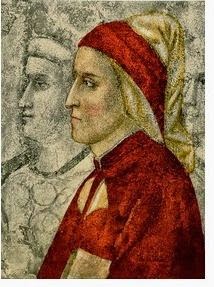
Dante


Jan Amos Komensky


Leibniz

Ramón Llull

  
John Wilkins


2014-01-01

Jonathan Swift, Gulivero, filozofiaj lingvoj, & Esperanto

Mi jam blogis (anglalingve) pri Jonathan Swift, aŭtoro de La Vojaĝoj de Gulivero. Tiu verko speciale interesus esperantistojn pro du kialoj.

La hungaraj verkistoj kaj esperantistoj Frigyes Karinthy kaj Sándor Szathmári utiligis la rolanton Guliveron en siaj romanoj Vojaĝo al Faremido & Kapilario, kaj Vojaĝo al Kazohinio.

La dua interespunkto estas ke, en la tria parto de La Vojaĝoj de Gulivero (Vojaĝo al Laputa, Balnibarbi, Luggnagg, Glubbdubdrib, kaj Japanio) Swift prezentas satiron de la siaepokaj filozofiaj artefaritaj lingvoj (el kiu la plej fama estas tiu de John Wilkins). Antaŭ pli ol duonjarcento aperis Esperanta traduko de tiu rakonto, en Angla Antologio, kaj lastatempe mi enretigis ĝin:

 La Granda Akademio en Lagado, el: Vojaĝo al Balnibarbi de Jonathan Swift, tradukis William Auld

En la sama antologio troveblas alia ĉerpaĵo el la sama verko, ankaŭ de mi enretigita:

 La Struldbrugoj; El: Vojaĝo al Lugnago de Jonathan Swift, tradukis William Auld

Swift povus esti taksata pioniro de sciencfikcio. Pri la revoj tiutempaj, rimarku ankaŭ:

 Ebleco de Vojaĝo al la Luno (el La Eltrovo de Nova Mondo) de John Wilkins, tradukis William Auld

Partoj de La Vojaĝoj de Gulivero ricevis Esperantajn tradukojn, el kiuj unu haveblas interrete:

El "Vojaĝoj de Gulivero," en: Legolibro por kursanoj (Tangerud, Odd), p. 25-31.

Gulliver en Liliputlando (mallongigita), trad. M. Inman, ilustrita de J. R. Monsell. Londono: Speaight and Sons, [proks. 1910]. 62 p. Re-eldono: Gulivero en Liliputo, lingve reviziita, Inko, 2002.

Unua vojaĝo de Gulivero: Liliputo, el angla lingvo trad. Ethel M. Prent, antaŭparolo de Edward Ockey. London: Maitland, 1961. 63 p.

La vojaĝoj de Gulivero. I: Vojaĝo al Liliputlando, esperantigis Jos. A. de Roos. Tilburgo: Smits, 1933. 112 p.

Ekzistas tradukoj de aliaj verkoj de Swift en Esperanto:

 Ĉiama Aktualaĵo (Bononcinni swears that Handel...), trad. AEW, La Brita Esperantisto, 1909, p. 109.

 Meditado pri balailo [ĉerpaĵo], trad. AEW, La Brita Esperantisto, 1911, p. 226.

2013-08-17

John Wilkins (1614–1672) : artefarita lingvo & vojaĝo al Luno

John Wilkins estas bone konata (ankaŭ inter esperantistoj) kiel pionira verkinto de artefarita aprioria 'filozofia lingvo'. Li estas eminenta ankaŭ kiel kunfondinto de la 'Royal Society' (t.e. Reĝa Societo, pionira brita scienca institucio) kaj promocianto de la nova scienco.

Oni povus ankaŭ konsideri lin pioniro de sciencfikcio kaj konceptigo de interplaneda vojaĝado. Jen lastatempe enretigitaj aferoj:

2013-08-04

Jonathan Swift: standardizing English vs. philosophical languages?

I blogged before on Swift's satire of the philosophical languages of John Wilkins and others in Gulliver's Travels. Part III. A Voyage to Laputa, Balnibarbi, Luggnagg, Glubbdubdrib, and Japan; Chapter V:

Jonathan Swift & philosophical languages

In that post I linked also to other studies of the relation of Swift to the linguistics and notions about language in his time.

Now I want to point out another facet of Swift's ideas about language. This essay can be found all over the web, presumably; here's one link:

A Proposal for Correcting, Improving and Ascertaining the English Tongue by Jonathan Swift

Various essays contextualize Swift's intervention:

An Introduction to: A Proposal for Correcting, Improving, and Ascertaining the English Tongue

"How barbarously we yet write and speak...": The 18th Century & the Origins of Prescriptive Grammar

Jonathan Swift and Language (Background): Notes on Swift and Language and Restoration History by John Dylan McNeill

Our Fallen Tongue: Jonathan Swift's Indictment of Humanity in Part IV of Gulliver's Travels by John Dylan McNeill

Swift and the English Language by suture

Language and the Hostility of Time: The Failure of Swift's Prescriptivism in A Proposal for Correcting, Improvingand Ascertaining the English Tongue by Jukka Tiusanen

My previous post links to articles that juxtpose Swift to Wilkins et al. This monograph does so as well, with an extensive treatment of Swift's ideas about language:

Language and Reality in Swift's A Tale of a Tub by Frederik N. Smith

Wilkins' founding role in the Royal Society and his speculations on a voyage to the Moon, in relation to Swift's satirical works, are also topics for investigation.

2013-06-29

Vladimir Nabokov, artefaritaj lingvoj, ars combinatoria, sciencfikcio, Ludmila Silnova, Survoje

Mi sentas pri Ekzisto la komprenon,
Eble de Ekzisto nu parteton,
Nur per mia arto, mia vojo
de kombinatoriko mia ĝojo;
Kaj se privata kosmo prave skandas
Do mi pri galaksi-versaro pravas:
Ĝi die laŭ supozo jambe ravas.

    — el Pala Fajro de Vladimir Nabokov, tradukis R. Dumain

Jen nova mia bibliografio:

Vladimir Nabokov: Science Fiction, Artificial Languages, Ars Combinatoria, Narrative Structure, Martin Gardner, Play: An Arbitrary Bibliography

Jen supre estas parto de poemo kiu estas parto de metafikcia romano Pala Fajro en la angla de la rusa elmigrinto Vladimir Nabokov. La koncerna fragmento kaptas mian atenton pro mia intereso pri la historia fenomeno de la kombinarto, ars combinatoria. Tio rilatas ankaŭ al aprioraj filozofiaj lingvoj.

Nabokov kreis en Pala Fajro artefaritan lingvon Zemblan, do en mia bibliografio aperas interalie analizojn pri tiu fikcia lingvo. La romano mem havas kompleksan strukturon de rakonto en rakonto, en kiu ambaŭ eroj prikomentas kaj kunkreas la signifon unu de la alia.

Lingva ludado, interpreta ludado, ankaŭ ŝakludado rolas en la vivo kaj verkaro de Nabokov. Lia romano Ada havas sciencfikcian dimension. Li ankaŭ en tiu romano aludas al Martin Gardner, kiu citis el Nabokov en sia popularscienca verko The Ambidextrous Universe [La ambaŭmana (simetria) universo]. Min mem inspiris Gardner precipe pro siaj verkoj pri "matematikaj ludoj" en revuo Scientific American kaj en libroj, ekde mia 14a jaro. Gardner agnoskis min inter multaj en tiu revuo pro solvo de iu kartluda problemo.

Do kie trovi Nabokov en Esperanto? Jen ĉio, kion mi ĝis nun trovis:

Vladimir Nabokov - Vikipedio

"Muziko," tradukis Grigori Arosev, en Rusaj amnoveloj (Jekaterinburg: Sezonoj, 2000), p. 19-22. (Rusa Literaturo; 7)

El Kosmo Vidas Mi Nenion de Ludmila Silnova, en Survoje, n-ro 5?, p. 27-29.

Se vi scias pri pluaj aferoj, bonvolu informi min.

La eseon de Silnova mi tute ne komprenas, sed enestas diskuto pri Nabokov analoge al la kultura problemo diskutata.

La eseo devenas de la revuo Survoje el Sovetunio. Mi havas tri numerojn, sed mankas datindikoj sur tiuj malfacile legeblaj numeroj.

Mi scias malmulton pri Silnova, sed mi trovis kelkajn poemojn interrete, kiujn mi kopiis:

“Hirundo” & Tankaoj: originalaj poemoj de Ludmila Silnova

En la revuo Survoje oni okupis sin pri teoriaj problemoj de kreado, literaturo, kaj literaturkritiko, do malgraŭ la kruda fizika formato, la nun morta revuo instigas intereson. Jen alia afero, kiun mi enretigis:

Pri Kelkaj Malnoviĝintaj Nocioj” de Alain Robbe-Grillet

 Robbe-Grillet estis pioniro de la fama "nova romano".  La tradukinto el la franca ne estas menciita.

Do, mi bonvenigas pluajn informojn pri Nabokov, Silnova, kaj Survoje.

2013-06-12

Ars combinatoria, Hegel & Marx

For the sake of complete cross-referencing, here is a post from another blog I have not previously referenced on this one:

Philosophical languages, Romantic historicism, Hegel, Marx (posted on 6 August 2008, from a piece originally written 8 July 2006)

. . . which is a commentary on:

Cook, Daniel J. “Marx’s Critique of Philosophical Language,” Philosophy and Phenomenological Research, 42 (June 1982): 530-554.

See also my web page:

Hegel on Ars Combinatoria & Characteristica Universalis 

There are many critiques of his historical phenomenon, but Hegel is rarely brought into the equation.

2013-05-30

Macedonio Fernández reviewed

Macedonio Fernández, The Museum of Eterna's Novel (The First Good Novel), translated from the Spanish with an introduction by Margaret Schwartz, preface by Adam Thirlwell (Rochester, NY: Open Letter, 2010).

In a previous blog post, I quoted briefly a couple of passages about Xul Solar. Here is a more extensive excerpt:

From “Prologue to the Never-Seen”

And here is my review of the novel, together with a table of contents I composed:

The First Good Meta-Novel?

Here is an excerpt from my review related to the prologue excerpted (see prior link):

He makes some tongue-in-cheek references to futurism. He jocularly ponders reader reception, the role of the audience. Without the seductive music of language and an audience, there would be more beautiful works of art, several Cervantes, Heines, etc. Again we find an attack on realism. I find this interesting, if unconvincing, not only for the reference to Heine and other great artists, but for my (and Borges’) interest in combinatorics. There is also an amusing musing about the creation of neologisms, with reference to the artist and language inventor Xul Solar. Invention for Macedonio precedes and supersedes what we call reality.
Jorge Luis Borges was greatly influenced by Macedonio, though I am not certain in what ways. What he thought about the multiplication of works of art as Macedonio indicates, I do not know. I can see how Borges used this idea, but I can also see how Borges would have found the mere manipulation of combinatorics wanting.  File this in The Twilight Zone under ars combinatoria.

2013-05-04

André Breton, Ramón Llull, & surrealism revisited

"Lully is surrealist in definition." — André Breton

This is one item in a list of persons characterized as surrealist in a particular way. This can be found in Breton's "What is Surrealism?", a lecture in Brussels on 1 June 1934. Breton here recapitulates what he wrote in the first Manifesto of Surrealism of 1924. I just realized that I've already blogged about this.

But here is an additional reference, a post on Breton's penchant for composing lists:

Alphabet of the Magnetic Field: Breton Lists his Surrealists, March 10, 2013.

Breton was indeed were very adept at making lists and canonizing various figures on the basis of a perceived common characteristic conducive to surrealist preoccupations, a practice predicated on an arbitrary, authoritarian, and intellectually undisciplined mode of thinking. This surrealist taxonomic imperative is sometimes useful in archiving the curiosa of the past, but it is ultimately simple-minded, unsystematic, self-indulgent, and dogmatic, as the organized surrealist movement ultimately was. The Chicago surrealists were even worse than Breton, but they did dredge up some interesting material in their anthologies. Surrealism, as I've written elsewhere  (no revelation there), thrived on juxtapositions and novel combinations, hence my relating it to the ars combinatoria. List-making doesn't quite measure up even to that, but there is implied taxonomy in making lists, and hence that too relates to the topic.

See also my essay Walter Benjamin and Ars Combinatoria.  Also "Surrealism: The Last Snapshot of the European Intelligentsia" by Walter Benjamin, 1929.

2013-04-28

Jorge Luis Borges, Stanislaw Lem, & ars combinatoria

My justification for writing about Borges on this blog is his tangential connection with artificial languages and their philosophical ramifications, that is, when not referencing the translation or appearance of Borges in Esperanto. Borges wrote about the philosophical language of John Wilkins, and there is his phenomenal story "The Congress." Otherwise, I would write about Borges in English elsewhere. But there is one more related aspect, taking off from the history of philosophical languages, the ars combinatoria or art of combinations. I write about this topic on this blog and refer elsewhere where my ideas are elaborated.  Here is my latest post on my Studies in a Dying Culture blog:

Stanislaw Lem on Jorge Luis Borges (Borges 16)

Lem admires Borges but finds him limited to constructing heretical versions of the intellectual heritage of the past. “The author therefore has the courage to deal with the most valuable goals of mankind just as mankind himself does. The only difference is that Borges continues these combinatory operations to their utmost logical conclusions.”

For the sake of completeness, here are the other Borges posts on that blog:

Little Tiny, Common Objects, & Jorge Luis Borges

Borges Revisited (14)

And here again is my overall guide to my work on Borges:

Jorge Luis Borges: Selected Study Materials on the Web

As both Borges and Lem have been translated into Esperanto, perhaps Lem's essay on Borges should also be translated into Esperanto. And perhaps also some of what I've been writing in English.

2013-04-06

Jonathan Swift & philosophical languages

When my freshman honors English class in high school tackled Gulliver's Travels, I recognized something my teacher did not:

Gulliver's Travels. Part III. A Voyage to Laputa, Balnibarbi, Luggnagg, Glubbdubdrib, and Japan. Chapter V (extract) by Jonathan Swift

I knew what Swift was satirizing here, but the class persisted in its Pavlovian literary conditioning.

As it turns out, Swift was deeply engaged in the linguistic issues of his time. Here are some juicy references on the subject:

Bishop, Julie Alexandra. Language at Work in Jonathan Swift. PhD thesis, Dept. of English Literary and Linguistic Studies, University of Newcastle, December 1998.

Francus, Marilyn. The Converting Imagination: Linguistic Theory and Swift's Satiric Prose. Carbondale, IL: Southern Illinois University Press, 1994.

McKenny, John. "Swift's Prescience: a Polite Precursor of Corpus Linguistics," Journal of Language and Literature, Volume 2, Number 1, 2003.

Mulhall, Anne. "Gulliver’s Travels and the Language Debates of Swift’s Time," in Les voyages de Gulliver: Mondes lointains ou mondes proches, ed. Daniel Carey and François Boulaire (Caen: Presses universitaires de Caen, 2002), pp. 63-79.

And sure enough, Swift, Wilkins, and Borges are cited in connection with ars combinatoria:

Het combinatorisch perspektief op de wereld en de kunst (@ Institute of Artificial Art, Amsterdam)

2013-03-10

Magritte, ars combinatoria, Borges

Les affinités électives (1933)
Written 5 September 2011:

One should not be hasty in assuming that all surrealists held to the party line of the movement. Magritte was more circumspect about the arbitrary juxtapositions that Breton celebrated in Lautréamont. Here's an excerpt from a piece [On “Pierre Menard, Author of the Quixote” by Jorge Luis Borges] I wrote recently on Borges & his tacit attitude towards surrealism:
I mentioned the propensity of surrealism to capitalize on exotic juxtapositions. Shock effects can easily be produced by juxtaposing two incongruous objects. But how original is this? René Magritte had caveats about such casual juxtapositions, and he considered his artworks exercises in problem-solving, exemplified in his Les affinités électives (1933). In addition to how he solved the particular problem of this work, Magritte in a lecture of February 1937 contrasts arbitrary and essential juxtapositions:
There is a secret affinity between certain images; it is equally valid for the objects which those images represent . . . We are familiar with birds in cages; interest is awakened more readily if the bird is replaced by a fish or a shoe; but though these images are strange they are unhappily accidental, arbitrary. It is possible to obtain a new image which will stand up to examination through having something final, something right about it: it’s the image showing an egg in the cage.

2013-01-14

Harry Harrison & Ramón Llull

Harry Harrison (March 12, 1925 – August 15, 2012) was a noted science fiction writer, also an Esperantist. Here is the Esperanto version of his Wikipedia entry:

Harry Harrison - Vikipedio

Esperanto appears in several of Harrison's works, particularly in the Stainless Steel Rat and Deathworld series, according to Wikipedia. According to Vikipedio, several of Harrison's works have been translated into Esperanto.

I am not conversant with other references to the history of universal/artificial languages, but I was randomly alerted to this reference to Ramón Llull, the godfather of the ars combinatoria, a precursor of Leibniz and the philosophical language movement of the early modern period:

The Ethical Engineer - Chapter III by Harry Harrison (Deathworld 2)
(at The Linguist)

Here is the one reference:

"Shouldn't have thrown the Ramon Lull book," Jason said. "The ship can't stomach it any more than I could." 
How this fits into the chapter I do not understand. Perhaps one of you knows, and knows more about comparable instances of this sort of thing in Harrison's work. 

In any case, you can not only read this narrative, but you can listen to a reading of it thanks to LibriVox. There you will also find several recordings in Esperanto.