Showing posts with label faŝismo. Show all posts

2025-01-20

Pri Sándor Szathmári kun Éva Tófalvy en 2024

Blazio Vaha raportetis pri prelego de Éva TÓFALVY kaj iom ampleksigis pro mia peto. Do jen kunmetitaj afiŝoj liaj el Facebook, 27-28 septembro 2024:

Hieraŭ, la 26an de Septembro 2024a, mi aŭskultis interesan prelegon de Éva TÓFALVY pri la vivo kaj verkoj (romanoj, noveloj) de Sándor SZATHMÁRI. Ŝi emfazis gravecon de socia kritiko en liaj verkoj.

Estis interese vidi kontrastojn de la ideoj, kiujn esprimas liaj verkoj, kaj la vivopraktiko, politika agado, konduto de la aŭtoro. Éva TÓFALVY sukcesis veki en la publiko simpation al la verkisto, kiu ŝajne suferis pro la kontraŭdiroj, kiujn li spertis inter politikaj idealoj, aspiroj, celoj, idealoj kaj ilia tordado — kun misrealiĝo kaj do kun deprimaj rezultoj.

S-ro Ralph DUMAIN estis min demandinta pri kontraŭdiroj en la vivo de Sándor SZATHMÁRI (li konas kontraŭdirojn en la verkaro, sed — jen la esenco de lia demando — temas pri kiuj kontraŭdiroj en lia vivo, en la vivo de Szathmári mem?). —

Mi rememoris fragmentojn el la prelego de Éva, kaj mi reagis surbaze de tio. Mi kopios mian reagon ĉi tie. [….] Jen do.:

1) Eva TÓFALVY prezentas Vojaĝo,n al Kazohinio (la romanon de SZATHMÁRI) mem, kiel spegulon de ia duobla rilato al ebloj de homaj socioj. Hinoj volas igi ĉion racia. Behinoj igas ĉion ĥaose konvencia, kun superstiĉoj. Eble iuj interpretas tion, kiel homajn sociojn pozitivan kaj negativan, respektive, sed laŭ prezento de Eva TÓFALVY la du "flankoj" reciproke kritikas sin, neniu flanko estas bona, pozitiva.

2) Szathmári simpatiis al (komunisma) maldekstro, liaj idealoj estis maldekstraj (antaŭ la dua mondmilito), sed pseŭdonime li verkadis a

rtikolojn por dekstraj, faŝismema(j) revuo(j) — mi mem bezonus pliprecizigon, mi demandos Éva-n TÓFALVY pri la konkreta(j) gazeto(j).

3) SZATHMÁRI verkis trilogion kun titolo Hiába (Vane), en kiu li prezentas estontan (kvazaŭ)-komunismon, kies socio konsistas el tre subremata kaj tre subpremantaj socio-partoj (klasoj), do ni diru li prezentas (estontan) socion, kiu konsideras sin egalisme justa (komunismo), sed, efektive estas faŝisma, plena de subpremado kaj ekspluatado kaj centra perforto. — Estas kontraŭdiro ankaŭ, ke Szathmári estis sin pensinta maldekstrema, tamen post la dua mondmilito, kiam la ŝtato deklaris sin maldekstra, liaj verkoj ne povis aperi en Hungario, li devis "fuĝi" al Esperantlingva eldonado de sia verko.

Éva TÓFALVY (preleginto),
István SZABOLCS
(sub kromnomo Steĉjo, en blanka ĉemizo, doninto de la foto)
& Balázs WACHA, post prelego de Éva TÓFALVY.

2022-01-08

Alfred Jarry en Esperanto (8)

Jen artikolo en kiu menciiĝas Alfred Jarry:

Kakistokratio de Ibrahim WARDE, Le Monde diplomatique en Esperanto, junio 2020.

Verkistoj en diversaj medioj—teatro, kino, ktp.—utiligas absurdecajn kaj komediajn rimedojn por satiroj pri fiaskaj socioj kiuj enkorpigas malutopiajn koŝmarojn. Ekzemple: Eugène Ionesco, Charlie Chaplin, Dario Fo, Giuseppe ("Beppe") Grillo, Volodomir Zelenski,estas menciataj, kaj fine, kun longa priskribo, la kreaĵo Ubu Roi [Ubu Reĝo] de Alfred Jarry. Ubu estas ligata al kakistokratio kaj Donald Trump.


2018-11-11

Éva Tófalvi pri Sándor Szathmári (3)

Jen en mia retejo:
  • Je la centjara datreveno de naskiĝo de Sándor Szathmári” (1997) de Éva Tófalvi, en Memorlibro: kolekto de la prelegoj dum la solena internacia konferenco organizita okaze de la tridekjariĝo de la universitata fako Esperantologio (Budapeŝto, 17/18-04-1997), ĉefred. Tamás Gecső, red. Zsuzsa Varga-Haszonits & Lariko Golden, kunlaboris Anita Renkecz (Budapest: Universitato Eötvös Loránd, Katedro pri Ĝenerala kaj Aplikata Lingvistiko / Eötvös Loránd Tudományegyetem, 1998), p. 346-350.
Tófalvi ĉi tie kaj alie resumas la skemon de la perdita, neeldonita, malutopia romano Hiába (Vane), laŭraporte verkita 1931-1932, sed ĉi tie, ŝi rakontas, kiel ŝi eltrovis kaj publikigis la manuskripton. Interalie, ŝi mencias, ke ŝi kunfondis la asocion Hungara Protestantisma Kultura Unuiĝo, kaj en 1989 ŝi prelegis pri tiu perdita romano de Szathmári.

Rilate, en mia retejo:
Restas al mi enretigi:

Éva Tófalvi, “Kontribuaĵo al la demando pri la estiĝo de Vojaĝo al Kozohinio,” Fonto, julio 1989; 9 (103): 3-11.

Jen en la hungara:

Szathmári, Sándor. Hiába: Jövő: Regény [Vane / In Vain]. Budapest: Szépirodalmi Könyvkiadó, 1991.

Galaktika, Jun 1987, #81
    38 Tófalvi Éva: Az író, mérnök és próféta
    40 Szathmári Sándor: Az asztrálfluidum
    47  Szathmári Sándor: Káin és Ábel

Por pluaj informoj preter ĉi tiu blogo, jen:

Sándor Szathmári (1897–1974): Bibliografio & Retgvidilo / Bibliography & Web Guide

2018-09-20

Carnap, Esperantisto

La 14-an de septembro, okaze de la datreveno de la morto de la filozofo Rudolf Carnap (1891-1970), Antonio De Salvo afiŝis:

Rudolf Carnap (14 Septembro 2018)

Troveblas tie biografieto kun intelekta kaj politika kunteksto. Rimarku, ekz.:
Kuriozaĵo: forkurinte el Germanio pro siaj maldekstraj ideoj, Carnap spertis similajn malfacilaĵojn ankaŭ en Usono, kiam, en 1953, li devis rifuzi la nomumon ĉe la Universitato de Kalifornio por ne subskribi la ĵuron de fideleco en la erao de la tiel dirita Makartiismo
Tion sekvas ĉerpaĵo el mia traduko de Sekcio 11, “Lingvoplanado” de “Intelekta Aŭtobiografio” de Rudolf Carnap, kiun vi trovos ĉe mia retejo.

Referencoj:

Mikronovelo: 'La viro kaj la hundo' de Jaime Grau Casas

"Mallely Martínez Mateos deklamas la mikronovelon 'La viro kaj la hundo' de Jaime Grau Casas, aperinta en la libro Tagoj kaj ruinoj. La prezento estas parto de la programero "Vivu la teatro" de la 77a Hispana Kongreso de Esperanto, okazinta kune kun la 51a ILEI-Kongreso en Madrido en julio 2018."


2018-09-11

Verda Majo: Esperanto kaj demokratio

"Mireille Grosjean deklamas tekston de Verda Majo (Hasegawa Teru), aperinta en Lernilo de Esperanto n-ro 11-12 ; nov.-dec., 1943, sub la titolo 'Esperanto kaj demokratio'. La deklamo okazis en la 77a Hispana Kongreso de Esperanto kaj la 51a Kongreso de ILEI, okazintaj en Madrido en 2018."

2018-09-05

Miyamoto Masao: Susura maro

"Yasuo Tabuchi kaj Lee Jungkee deklamas la poemon 'Susura maro' [el Invit' al japanesko] de Miyamoto Masao, kadre de la programero "Vivu la teatro" de la 77a Hispana Kongreso de Esperanto, okazinta kune kun la 51a ILEI-Kongreso en Madrido en julio de 2018."

Verda Majo: Du pomoj perditaj

"S-aninoj Hideko Huzimoto, el Japanio, kaj s-anino Yu Jianchao, el Ĉinio deklamas fragmenton de la poemo de Verda Majo [HASEGAWA Teru] "Du perditaj pomoj" en la programero 'Vivu la teatro' de la 77a Hispana Kongreso de Esperanto, okazinta kune kun la 51a ILEI-Kongreso en Madrido en julio 2018."

2018-07-12

Karel Čapek: la vivo & epoko

Jen interesa, bela video, kiu priskribas la medion kaj provizas ioman kuntekston al la verkoj de Čapek:

La vivo kaj epoko de Karel Čapek


Atentu menciojn de verkoj: romano Krakatit, teatraĵo R.U.R., infanliteraturo, romano Ordinara vivo, romano Milito kontraŭ salamandroj. Rimarku ankaŭ lian amikecon kun Tomáš Masaryk, kaj liajn hobiojn de fotografado kaj kolektado de gramafondiskoj.

Jen informoj en Esperanto fine de la filmo. La filmo estis produktita en 2007...
Kunlabore kun la studio Grant kaj kun la subteno de Mezbohemia Regiono por Memormuzeo pri Karel Čapek produktis Josef Císařovský

Retejo de la Memormuzeo pri Karel Čapek: http://www.capek-karel-pamatnik.cz/

Al Esperanto tradukis kaj teknike laboris Vladimír Türk
Virina voĉo Pavla Dvořáková
Vira voĉo Vladimír Türk

Esperanto-versio de la filmo realiĝis kadre de la projekto "Karel Čapek" de Ĉeĥa Esperanto-Asocio

capek@esperanto.cz 2015

2018-04-14

On Carnap as an Esperantist & cosmopolitan (vs Heidegger)

As the philosopher Michael Friedman has recently shown, Carnap knew Heidegger’s work and standpoints well, and had read him quite seriously. He attended the debate between Heidegger and Cassirer at Davos in 1929 and took a walk with Heidegger and conversed with him in a café. He studied Sein und Zeit (Being and Time) and expounded its philosophical purpose to the Vienna Circle around Moritz Schlick as an entrée to the group. Heidegger represented a rival means and approach to “overcoming metaphysics,” the task that this magician of the Black Forest promised to accomplish by going back to a more primordial, prerational sense of human existence, its elementary Dasein, which stood as the opposite of the progress of science and cosmopolitan modernity. Once Heidegger had turned Nazi, Schlick had been murdered, and Carnap, Neurath, and Philipp Frank—along with their allies Hans Reichenbach and Carl Hempel in Berlin— began to migrate West, away from anti-Semitic repression, their political conflict with the forces of the xenophobic Right filled out and extended the terms of the methodological conflict.

This was the original “linguistic turn.” Recent biographies have strongly humanized Rudolf Carnap away from the image of a stern logician and into a true man of enlightenment and a utopian of international cooperation. Carnap favored the construction of “ideal languages” both in logic and in reality, artificial languages that could overcome the errors and historical demerits of natural language, not from any disapproval of human history but because he maintained the cosmopolitan Enlightenment ethos of Kant’s “Perpetual Peace,” as in his love of Esperanto. Friedman has pointed out the touching rhapsody in Carnap’s intellectual autobiography when he recounts teaching himself the language at the age of fourteen and attending a performance of Goethe’s noble Iphigenia performed in the rationalized international language. “It was a stirring and uplifting experience for me to hear this drama, inspired by the ideal of one humanity, expressed in the new medium which made it possible for thousands of spectators from many countries to understand it.” After the tragedy of World War I, young man Carnap hiked through Finland, Estonia, Latvia, and Lithuania with a Bulgarian friend: “We stayed with hospitable Esperantists and made contact with many people in these countries. We talked about all kinds of problems in public and in personal life, always, of course, in Esperanto.”

SOURCE: Greif, Mark. The Age of the Crisis of Man: Thought and Fiction in America, 1933–1973 (Princeton University Press, 2015), chapter 10--Universal Philosophy and Antihumanist Theory, pp. 288-289.

2017-11-28

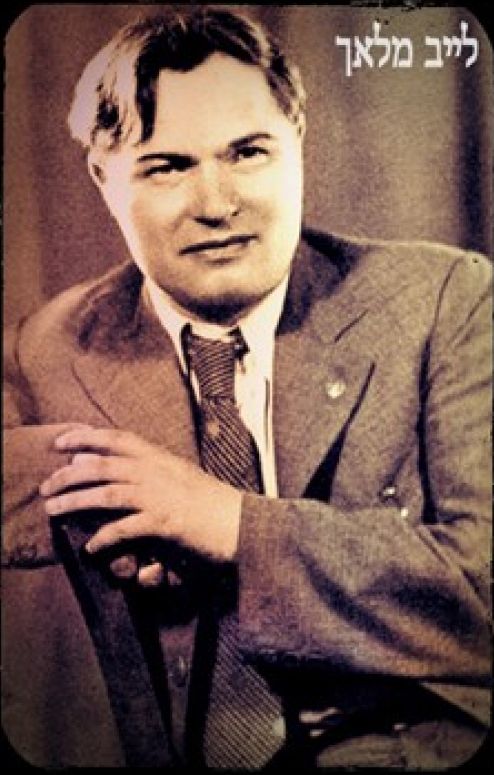
Leib Malach 27 November 1894 - 18 June 1936


I was surprised to find a tribute to Yiddish writer Leib Malach (originally Leib Salzman = Lejb Zalcman), posted on his birthday on Yiddishkeit's web site. It begins:
Leib Salzman (Lejb Zalcman), better known by his adopted name Leib Malach, was born November 27, 1894 in Zwoleń, Radom Gubernia. He moved as a teenager to Warsaw and worked at a variety of odd jobs there. Taken under the wing of the Yiddishist writer H.D. Nomberg, his writing began appearing in the Warsaw press.

He left Poland in 1922, settling and writing for the most part in Argentina, but traveled the world posting dispatches from his travels in the Yiddish press. He died suddenly after an operation in Paris on June 18, 1936.
None of Malach's works have ever been translated into English, except for one fragment of a notorious play. I learned of him via a 1939 Esperanto translation of his last play Mississippi (1936). I documented Misisipi on this blog and digitized a small part of the publication on my web site. But Yiddishkeit found this publication in the UCLA library and posted the image on the cover with its tribute and a caption:


"Malach's final and most performed play was Mississippi (cover of Esperanto translation shown here), which dealt with the 1931 Scottsboro trial. The play was written for Mikhl Weichert's Yung Teater in Warsaw, known for staging contemporary events like the trial of Sacco and Vanzetti."

And here is the original Yiddish play, in various formats: לייב מלאך

On the lower half of the tribute page is the following text, facing Phil Ochs' recording of his famous anti-racist song "Here's to the State of Mississippi":
In honor of Leib Malach’s most famous play, Mississippi, written in the immediate aftermath of the Scottsboro trial, listen to a song from Phil Ochs, written 30 years after the play’s Warsaw production. Here, Ochs brings the theme of justice denied in Mississippi up to 1965.
The slide show also features:
"Amol, Amol" (Once, Once)”: The cover of Malach’s epic poem "Amol, Amol," published in Warsaw, shortly before his emigration. Malach was a successful writer in a number of different genres.

From Spain to Holland: One of Malach’s many travel dispatches, this posthumously-published 1937 book describes Spain on the brink of civil war, fascist Germany, the leftist resistance in Vienna, and other travels throughout Western Europe.
Incidentally, the punchline to Phil Ochs' "Here's to the State of Misssippi" is "Mississippi find yourself another country to be part of."

2017-04-16

Boxer, Beetle (5)


The Boxer Beetle web site has disappeared, so here is the best I can give you, from the ghost web: Boxer, Beetle. I reproduce the images below:


2016-09-01

Karel Čapek en 'Balkana Verda Stelo'

Aboneblas la trimonata revuo Balkana Verda Stelo, kaj elŝuteblas senpage la numero de septembro 2016. Ĉi tie mi aperigas la jenan artikolon:

Teatro: DOMA – El la vivo de insektoj

Divadlo DOMA (“Tute malgranda teatro”), konsistas el tridek membroj inter 12- kaj 25-jaraĝaj, kiun administras la Centro de kulturaj servoj en Svitavy, Ĉeĥijo. Ĝi performas sub gvido de d-rino Radka Oblouková. Hodiaŭ ĉiuj estas studentoj de la loka gimnazio. En 2013 ili preparis esperantlingvan version de la teatraĵo R.U.R. aŭ terura sonĝo 7 de Karel Čapek, kiun ili prezentis en simpligita formo dum la 98-a UK en Rejkja-viko kaj pluraj aliaj kunvenoj. Por la UK en Nitro ili preparis alian tea-traĵon de Čapek kaj lia frato Josef, El la vivo de insektoj (Ze života hmyzu). Ĝi estas la plej fama verko de la du fratoj kaj unue sursceniĝis en 1922.

En la ludo vaganto ekdormas en arbaro kaj sonĝas observi aron da insektoj kiuj reprezentas variajn homajn ecojn kiuj koncernas vivmanieron kaj moralecon: la kaprica, vana, sed poezia papilio, la idolservema, dung-avida skarabo, la griloj servantaj al konsumo, kaj la formikoj, kies kreskante meĥaniĝanta konduto muldas militarisman socion. En la fino la vaganto mortas kaj novnaskito estas baptata.

La antropomorfaj insektoj ebligas la verkiston komenti alegorie al la vivo en Ĉeĥoslovakijo post la Unua Mondmilito. 8

Jarka M. Burien 9 skribas pri ĝi Čapek donis viglecon kaj koloron al la teatraĵo kiuj faris ĝin pli malenua teatra sperto ol R.U.R. 10 Kontraŭe la produktaĵo de BBC-a Televido en 1960 estis recenzita neniige, de kritikanto John Wyver 11 kiu nomis la tekston pretendema kaj nekohera. 12

En Nitro la reago de la spektantoj estis io de ne-kompreno kaj ne-kohero. La voĉoj de la junaj aktoroj ofte estis malfacile aŭdeblaj kaj oni demandas sin, ĉu tia abstrakta ludo pri la senco de la vivo en 1922 povis entute esti trasentebla de la trupanoj. Almenaŭ, se la reĝisorino volas, ke la publiko kaptu iom la sencon de la dramo, ŝi enkonduku la performadon per historia ekspliko pri Ĉeĥijo kaj la aŭtoro.

----

7 Enhavo: Artefaritaj laboristoj, “robotoj”, ekribelas kontraŭ homoj, elmurdas ilin, sed poste konstatas, ke ili ne kapablas produkti novajn robotojn. Ili petas la lastan, ankoraŭ vivantan homon pri helpo, sed tiu estas senespera ĝis la momento, kiam aperas du laste fabrikitaj gerobotoj, kiuj sin amas reciproke, ee kapablas riski la vivon unu pro la alia kaj tiel pruvas sian homiĝon. La dramo avertas, ke la tekniko povas likvidi nian civilizon. La verko estis tradukita en trideko da lingvoj. Kompleta teksto ee http://i-espero.info/files/elibroj/eo - capek, karel - r.u.r..pdf

8 En tiu tempo la montrado de la ludo kondukis al diversaj politikaj diskutoj, ekzemple en Britijo (The Insect Play) pri la konflikto inter la faŝismaj kaj komunismaj partioj aŭ ĝi estis konsiderata kiel reflekto de la vivo en Stalina Rusijo.

9 profesoro en la fakultato de podiaj artoj en Ŝtata Universitato de Novjorko

10 The Columbia Encyclopedia of Modern Drama, Volume 1. Columbia Univ. Press, 2007

11 mem verkisto, filmisto, produktanto por TV kaj historiisto de TV, ĉe Universitato de Vestminstro (Westminster)

12 John Wyver, Twentieth Century Theatre: The Insect Play (BBC, 1960), 14 June 2011

FONTO: Balkana Verda Stelo, 1a de septembro 2016,

2014-01-05

Idiot's Delight, Esperanto, & Hollywood's collusion with fascism

The use of Esperanto in cinema has been discussed, for example: Esperanto and Cinema. One example, which has been documented in various places, is the film Idiot's Delight. (The Esperanto version of the Wikipedia article does not give an adequate explanation for the use of Esperanto in the film).  In a recent historical work, the political context is outlined:

Throughout the film industry's relatively brief existence, moviemakers—protective of their profits and worried about private pressure groups and government censorship—had done their best to avoid controversy. They were particularly concerned about not offending important foreign markets, which accounted for at least half their annual revenues. In the 1930s, Germany and Italy were key outlets for American movies, and studio heads were reluctant to do anything that might anger those countries' totalitarian leaders.

Robert Sherwood was made aware of that fact when his Pulitzer Prize-winning play, Idiot's Delight, was optioned by Metro-Goldwyn-Mayer in 1936. Both antiwar and anti-Fascist, Idiot’s Delight, set in a small Italian hotel on the Swiss border, focuses on a disparate group of international travelers who are stranded when Italy launches a surprise air raid on Paris. To avoid annoying Italy, the head of MGM, Louis B. Mayer, ordered the story's setting changed to an unnamed country whose inhabitants spoke Esperanto instead of Italian. There also was to be no mention of Fascism. The Italian consul in Los Angeles was given final script approval, and MGM previewed the film for representatives of the Italian government.

When Sherwood, who wrote the screenplay, was asked if he had had any collaborators, he ruefully replied, "Yes—Mussolini." Expurgated and defanged, Idiot's Delight was roundly panned by the critics when it was finally released in early 1939. And despite all MGM's efforts to placate Italian sensibilities, Italy ended up banning it, as did Spain, France, Switzerland, and Estonia.

SOURCE: Olson, Lynne. Those Angry Days: Roosevelt, Lindbergh, and America's Fight Over World War II, 1939-1941 (New York: Random House, 2013), pp. 362-363.

2013-10-02

Hitler's surprising obsession

Actually, it's not surprising at all to those who have known for decades about Hitler's targeting of the Esperanto movement for persecution as a Jewish conspiracy, and the Nazis' murder of all three of Zamenhof's children. But here's another reminder, with links:

Hitler's surprising obsession

One of the links given is to this blog. Note also:

Speech at the US Holocaust Memorial Museum about Esperanto

I participated in this event, sharing my knowledge with the Holocaust Museum in Washington.

Review of the book La Danĝera Lingvo

This is Don Harlow's review, in English, of "The Dangerous Language," the most thorough documentation of fascist and Stalinist persecution of the Esperanto movement.

New to me though is the reference to Valdemar Langlet, a Swedish Esperantist who saved many Jews from the Nazis.

Charlie Chaplin used Esperanto as the language of the Jewish ghetto in his landmark 1940 film The Great Dictator. I have known about this for decades but never attempted to research what motivated Chaplin. The blogger links this to Nazi persecution of Esperantists. Chaplin could have known about the Nazis' opposition to Esperanto and Esperanto's internationalism which Chaplin would have endorsed.

The blogger does not explain the poster reproduced on his post, and above. It is one of the anti-fascist posters in Esperanto produced during the Spanish Civil War.

2013-07-18

Albert Einstein en 1933 pri la futuro de civilizacio

“Kial la civilizacio ne bankrotos,” tradukis el la angla C. Rosen, Literatura Mondo, februaro 1934, n-ro 2, p. 26-27; el la originalo "Why Civilization Will Not Crash," Liberty Magazine, August 12, 1933.

Einstein deklaras sian optimismon malgraŭ opremaj kondiĉoj. Li emfazas kaj la interdependecon de homoj kaj la bezonon de individua libereco. Maljusteco kaj platigo de individuoj instigas degeneradon de la belartoj kiel de la politiko. La civilizacio disvolviĝis malsimetrie, teknologie progresis sen reĝustigo de sociaj rilatoj. Tamen Einstein fidas, ke la homaro superos la aktualan krizon kaj efektivigos pli altan celon.

Estas multaj interesaj anglalingvaj retpaĝoj pri Einstein miareteje; la jena estas la unua en Esperanto. Eble ekzistas pluaj verkoj en Esperanto pri aŭ de Einstein, preter la retligoj troveblaj en mia blogo kaj  retpaĝoj. Konsultu mian retpaĝon pri la kreinto de la apuda desegnaĵo de Einstein:

Ludovic Rodo Pissarro

Notu ankaŭ, ke Einstein estis la honora prezidanto de la 3a SAT-Kongreso en 1923:

Albert Einstein, Esperanto kaj SAT

Ha, kia bona kombinaĵo: Esperanto kaj mia heroo ekde infanaĝo Albert Einstein.


2013-06-16

Humura Holokaŭsto?

Humuro estas stranga besto. Ĝia kaŝlogiko ne estas ĉiam klare perceptebla. Sed ĝi komercas per ironio kaj absurdo. El ia angulo eble ĉia temo povas generi ridon, malgraŭ la risko.

Unu fonto por Esperantistoj estas la Neciklopedio. Ĉi-kaze juĝu mem:

Holokaŭsto

2012-11-21

Boxer, Beetle (4)

Boxer, Beetle has been blurbed as hilarious. I would call it satirical in the extreme, but I haven't been laughing.

There are no redeeming characters in the book. Not only are the fascists obnoxious and stupid, but their would-be victims, the underclass East Ender Jews of London, are primitive and crude. Seth "Sinner" Roach is the crudest of them: a malformed boxer who lives to fight, who hates Jew-haters but has no political perspective, only selfish interest. His bizarre symbiosis with the anti-Semitic fascist entomologist and amateur eugenicist Philip Erskine and their mutual fate is the focal point of the mystery Kevin Broom is trying to solve under extreme duress in the present. As the narrative toggles between tracking down vanished persons and the obscure events of 1936, we descend further and further into the pit.

Erskine not only names a beetle he has bred after Hitler, he receives an effusive letter from Hitler. Sinner becomes a mercenary in a brewing battle in the East End as Mosley's fascists storm the area to confront the Jews, who are poised for battle.

Well, Broom and his kidnapper (and the latter's mysterious boss) finally solve the mystery of the boxer and the beetles, as do we in a flashback to October 1936. Both halves of the story conclude with no justice meted out to the bad guys, no good guys to win or lose, no redemption and no moral. This satiric portrait of degradation and fascism is a brilliantly written tour de force, well worth reading, but don't expect any wisdom to be gotten from it.

What this young man is about I do not know, or if this novel bespeaks a trend in Jewish fiction, but you can learn more about the author and his work at Ned Bauman's web site, which also links to his blog "Oh my god look at its little face!". Bauman, born in 1985, studied philosophy in Cambridge. Make of that what you will. There is also a bibliography for this novel. The references for artificial languages are:

The Artificial Language Movement by Andrew Large (1985)
Esperanto: Language, Literature and Community by Pierre Janton, ed. Humphrey Tonkin (1993)


2012-11-19

Boxer, Beetle (3)

In the present (Chapter 12 of Boxer, Beetle) the narrator is kidnapped to Claramore, where the key to the quest is thought to be: an incident suspected to have taken place at a fascist conference in 1936.

Then we are back in 1936, at Claramore, the bizarre estate of the Erskine family. William Erskine, inheritor of the estate, rigged it up with high-tech (for 1936) inventions and gizmos in accordance with his vision of the technological future.

Sinner (Seth Roach) and Philip Erskine arrive for the upcoming conference. Pangaean gets mentioned a few more times (145, 149, 163). Philip's father William reads the son's manuscript and decides to have it bound. Later on as the drama at the household reaches a macabre climax, Erskine--which Erskine I'm not certain--has a morbid fantasy involving the third Pangaean Grammar and Lexicon.

It also bears mentioning that Evelyn, Philip's sister, is an aficionado and composer of atonal music, which she ends up attempting to justify to Sinner (171). I mention this noting that one of the prefatory quotes to the novel comes from Adorno on dissonance.

Chapter 13 (August 1936) teaches us that the entire family and the assembled fascist guests all belong in a looney bin. It's a bizarro Addams Family world, only truly morbid. And each fascist we encounter is crazier than the next; each insists on the peculiarities of his own cobbled together world view, such that none can agree and all end up bickering.

Chapter 14 begins with footman Alex Goodman obsessed with two goals: marrying Evelyn's maid, and securing a "top-class conjugal safety coffin." But that's normal compared to what transpires by the end of Chapter 15, as the insanity at Claramore reaches a climax, in more ways than one.