Showing posts with label rasismo. Show all posts

2022-01-06

La Diplo 2018-2021

Temas pri Le Monde diplomatique en Esperanto. Mi kontrolis la esperantajn numerojn de 2018 tra 2021 kaj listigas ĉi tie artikolojn pri kulturaj, filozofiaj, ideologiaj, k.s. aferoj ne efemeraj,

Ĉu la ideoj sufiĉas por ŝanĝi la mondon? (Razmig KEUCHEYAN) marto 2018

Karlo Markso kaj la ekspluatado de la naturo (John Bellamy FOSTER) junio 2018

La revolucio laŭ Marc Chagall (Lionel RICHARD) julio 2018

Kion celas la mito de transhumanismo? (Charles PERRAGIN kaj Guillaume RENOUARD) aŭgusto 2018

Klasikuloj por la popolo (Anthony GLINOER) oktobro 2018 : Pri “Little Blue Books” ktp. & popolklerigo

Laŭ la spuroj de George Orwell (Gwenaëlle LENOIR) januaro 2019 : Pri Orwell & Wigan Pier

Laŭdo al la kosmopolitismo (Tom STROHSCHNEIDER) aprilo 2019

La kanibala maldekstro − universitata simptomaro (Rick FANTASIA) aŭgusto 2019 : Pri identec-politiko

La rifuzo de Sartro [Jean-Paul Sartre] (Anne MATHIEU) aprilo 2020

La revmondo de la hobitoj (Evelyne PIEILLER) junio 2020 : Pri J.R.R. Tolkien

Kakistokratio (Ibrahim WARDE) junio 2020 : Pri Alfred Jarry, Chaplin, Ionesco, k.a.

La intelekta burĝaro, hereda elito (Pierre RIMBERT) aŭgusto 2020 : Pri meritokratio

Simmel kaj la “niatempa dio” (Nidal TAÏBI) aŭgusto 2020 : Pri Georg Simmel

La Panteonon oni eniras, de ĝi oni eliras (Alain GARRIGOU) novembro 2021 : Pri enpanteonigo de Josephine Baker

Ĉe la rasradikoj (Barbara J. FIELDS, Karen E. FIELDS) decembro 2021: Pri Racecraft (Raskonstruado)

2017-11-28

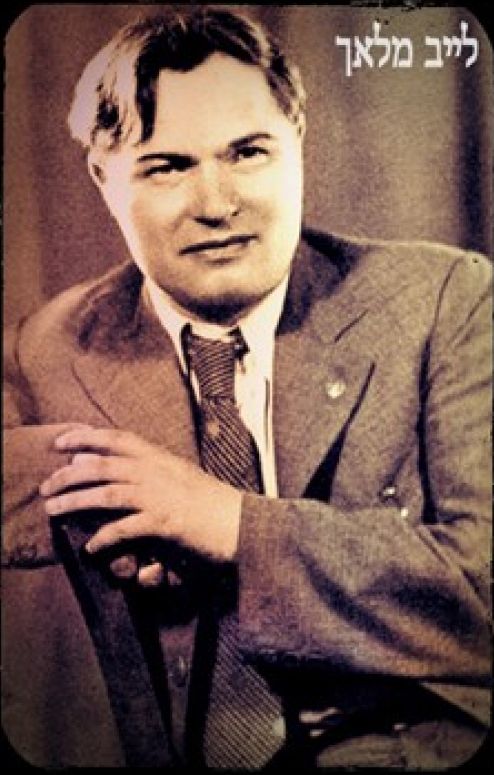
Leib Malach 27 November 1894 - 18 June 1936


I was surprised to find a tribute to Yiddish writer Leib Malach (originally Leib Salzman = Lejb Zalcman), posted on his birthday on Yiddishkeit's web site. It begins:
Leib Salzman (Lejb Zalcman), better known by his adopted name Leib Malach, was born November 27, 1894 in Zwoleń, Radom Gubernia. He moved as a teenager to Warsaw and worked at a variety of odd jobs there. Taken under the wing of the Yiddishist writer H.D. Nomberg, his writing began appearing in the Warsaw press.

He left Poland in 1922, settling and writing for the most part in Argentina, but traveled the world posting dispatches from his travels in the Yiddish press. He died suddenly after an operation in Paris on June 18, 1936.
None of Malach's works have ever been translated into English, except for one fragment of a notorious play. I learned of him via a 1939 Esperanto translation of his last play Mississippi (1936). I documented Misisipi on this blog and digitized a small part of the publication on my web site. But Yiddishkeit found this publication in the UCLA library and posted the image on the cover with its tribute and a caption:


"Malach's final and most performed play was Mississippi (cover of Esperanto translation shown here), which dealt with the 1931 Scottsboro trial. The play was written for Mikhl Weichert's Yung Teater in Warsaw, known for staging contemporary events like the trial of Sacco and Vanzetti."

And here is the original Yiddish play, in various formats: לייב מלאך

On the lower half of the tribute page is the following text, facing Phil Ochs' recording of his famous anti-racist song "Here's to the State of Mississippi":
In honor of Leib Malach’s most famous play, Mississippi, written in the immediate aftermath of the Scottsboro trial, listen to a song from Phil Ochs, written 30 years after the play’s Warsaw production. Here, Ochs brings the theme of justice denied in Mississippi up to 1965.
The slide show also features:
"Amol, Amol" (Once, Once)”: The cover of Malach’s epic poem "Amol, Amol," published in Warsaw, shortly before his emigration. Malach was a successful writer in a number of different genres.

From Spain to Holland: One of Malach’s many travel dispatches, this posthumously-published 1937 book describes Spain on the brink of civil war, fascist Germany, the leftist resistance in Vienna, and other travels throughout Western Europe.
Incidentally, the punchline to Phil Ochs' "Here's to the State of Misssippi" is "Mississippi find yourself another country to be part of."

2017-04-16

Boxer, Beetle (5)


The Boxer Beetle web site has disappeared, so here is the best I can give you, from the ghost web: Boxer, Beetle. I reproduce the images below:


2015-08-07

Baghy kondamnas la blankan homon / Baghy condemns the white man

Nu, mi ĵus sidis en la necesejo trafoliumante ekzempleron (pruntita de mia amiko de 55 jaroj Harry, ĉefredaktoro de la plej ampleksa jida-angla vortaro) de Ora Duopo, serĉante interesajn poemojn de Julio Baghy, kaj retrovis la jenan poemon kiun mi ne rememoris. Baghy en 1961 en revuo Hungara Vivo kondamnas la krimojn fare de la blanka homo kontraŭ nigruloj, evidente pensante pri la afrika liberiga movado. Hura, Baghy!

Sklavokanto [Slave song]

So I'm sitting on the toilet with my childhood friend Harry's copy of Ora Duopo, looking over Julio Baghy's Esperanto poems, and I find one I had totally forgotten: "Sklavokanto" (Slave song). Of course I was entirely familiar with this Hungarian poet's humanism, but it was interesting to read a poem written in 1961 condemning the white man's crimes against black people, apparently with the anticolonial movement in Africa in mind. Julio tears the white man a new one. You learn something old every day.

2015-01-07

100 jaroj de Poul Thorsen

Dankon al Paulo Silas, el lia blogo Originalaj Poemoj en Esperanto, okaze de la centjara datreveno de Poul Thorsen:


Legu ankaŭ miajn antaŭajn afiŝojn pri Thorsen. Mi unue rimarkis je Thorsen liajn kontraŭrasismajn poemojn.

2014-09-17

Jules Verne & Esperanto (4): Esplorvojaĝo

Jules Verne, "Esplorvojaĝo," traduko de Voyage d'étude fare de István Ertl, Franca Esperantisto, n-ro 452, aprilo 1994, p. 3-36, & p. 2, 38-40 pri Jules Verne & Esperanto.

Pluaj informoj troveblas en antaŭaj afiŝoj. Ĉi-okaze mi diskutas la tradukon mem. La nefinverkita romano konsistas el 5 ĉapitroj; la 5-a estas nur fragmento. Esperanto rolas jam komence de la romano. Afiŝo ĉe Libreville ("ĉefurbo" de franca Kongo) pri pasaĝerŝipo aperas.
"La tekston de la afiŝo ĉiuj komprenis pro tio ke ĝi estis en Esperanto, la internacia lingvo tiutempe pli kaj pli disvastiĝanta inter la popoloj de Centra Afriko." [p. 3]
La kapitano prezentas kvin eminentulojn; la lasta nomita estas S-ro Nicolas Vanof, delegito de la Internacia Esperantista Societo [4].

Iom poste okazas festeno. Indiĝenaj ĉefoj aldonis sn al interparolado "kiam ĝi flugis en la lingvo Esperanta" [8].

Ĉapitro 2a donas historian fonon de la Franca Kongo, ekz. menciante esplorojn fare de eŭropanoj.

En ĉapitro 3a ni trovas priskribojn de la ĉefaj ĉi-rakontaj esploristoj. Do aperas longa pritrakto--fakte duono de la  ĉapitro-- de Esperanto, la movado, kaj Nicolas Vanof, "membro de Touring Club kaj delegito de la Esperantista Kongreso". Troveblas favora komparo de Esperanto kontraŭ Volapük. Konstateblas, ke Esperanto floras en ĉiuj landoj; Francio plej kontribuas al la sukceso. Do Vanof partoprenas por determini la progeson de Esperanto en kolonio Franca Kongo, inspirite de gazeto "Belga Sonivolo" (en realo Belga Sonorilo). Li konvinke propagandas al la kunvojaĝantoj la eventualan neceson lerni Esperanton. [p. 22-26; vidu ankaŭ piednotojn 28-36 ĉe p. 36.]

 Ĉapitro 4a temas pri lastaj preparoj por la esplorvojaĝo. Okazas debato pri rajtigo de voĉdonrajto de la indiĝenoj en Parlamento. En tiu debato oni konsideras la supozatan nivelon de civilizacio en Kongo kompare al tio de aliaj francaj kolonioj. Iu timas eventualan partoprenon de kanibaloj en Parlamento. [29-31]  Vanof funkcias kiel interpretisto inter la francoj kaj afrika ĉefo, ĉar la sola komuna lingvo estas Esperanto inter li kaj la ĉefo. [31] Vanof partoprenas la lastan kunvenon antaŭ ol foriro [33].

Oni komencas la esplorvojaĝon en la nefinverkita ĉapitro 5a, kie la rakonto haltas.

Sekvas notoj. La kuna eseeto interalie mencias la instigan influon de La Belga Sonorilo al Verne.

Do jen resumo de la rakonto rilate al Esperanto. Vi devos se eble legi la rakonton mem por aliaj detaloj, aŭ instigi reeldonon de la traduko en akirebla eldonaĵo, ekz. ĉe Mondial / Beletra Almanako.

2014-08-06

William Sanders Scarborough & the First Universal Races Congress

I have blogged on both these subjects. For reference, first my bibliography:

First Universal Races Congress, London, July 26-29, 1911: Selected Bibliography

The conference proceedings can be accessed online. I see no contribution by Scarborough in it, though he did participate:

Papers on Inter-Racial Problems, Communicated to the First Universal Races Congress, Held at the University of London, July 26-29, 1911; edited by Gustav Spiller. London: P. S. King & Son; Boston: The World’s Peace Foundation, 1911. xlvi, 485 pp.

In his autobiography Scarborough gives an account of his participation in the First (and last) Universal Races Congress in London in July, 1911:

Autobiography of William Sanders Scarborough: An American Journey from Slavery to Scholarship, edited and with an introduction by Michele Valerie Ronnick, foreword by Henry Louis Gates, Jr. Detroit: Wayne State University Press, 2005. (Contents.) See chapter 19: Second Trip to Europe -- Delegate to the First Universal Races Congress -- [A] Rhine Trip; pp. 214-224. There is a prefatory remark on p. 213. The relevant information can be found on pp. 214-219, and in the final paragraph of p. 224. See also footnotes, pp. 378-380.

Following the commencement, I made preparations for my second trip to England as a delegate to the First Universal Races Congress to be held at the University of London in July where I was to present a paper. [p. 213]
Scarborough mentions his correspondence with W.E.B. Du Bois, who organized a Negro American delegation. Scarborough describes his sea journey with his wife to England, and his encounters on board, e.g. with Albert Bigelow Paine, designated biographer of Mark Twain, a friend of the Negro cause. Scarborough sketches the proceedings of the Congress, participants, and papers, and a press report.
But the keynote of this wonderful assembly was the unity of the human race and the brotherhood of man. Whatever the subject discussed the brotherhood of man was never lost sight of. It was advocated and emphasized by the followers of every sect and creed and all from the same platform. With this as a basis of equality of rights and opportunity, fair play in the race of life was urged by both Jew and Gentile. [217]
Scarborough continues to outline the other functions and encounters connected with the Congress. After visiting Cambridge University, he and the wife are off to Paris.  He returns to the theme of the Congress at the end of the chapter.
In the end we were at home again to receive a glad welcome and to report the Congress to school and friends, back from the great Races Congress, hoping that the men and women who claim to be such firm believers in the brotherhood of man will practice what they preach, and will help hasten the day when there will be no race problem. The future will show whether there has been any real substantial gain by such a concerted movement. [224]
Ouch!

2014-07-08

Jules Verne & Esperanto (3)

Jules Verne, ĉu rasisto?

Kompreneble ne, tia racia, teknikeca, fikciema menso ne povas esti rasista, sed eble iom tro fantaste realisma. Ŝajnas ke la lasta verko de Jules Verne, bedaŭrinde ne finskribita pro morto estis Esplorvojaĝo, ĝuste vojaĝo en Afriko, kie tiam multaj homoj parolis Esperanton kun la fama Nicolas Vanof (eble avo de Giorgio Silfer, ĉu ne?). Tiam oni ne parolis pri rasismo (en 1905) sed la realismo ne bezonus, esti tiom reala, ĉar J. Verne ne hezitis (paĝo 12) tiel priskribi la tribojn, “ . . .m’fana aŭ pauena, raso grava, sed bruema, mensoga, rabema, tute ne fidinda.” Kiu dirus tion nuntempe nepre estus kondamnita je morto precipe de tiuj kiuj estas fanatike kontraŭ mortpuno! J. Verne eĉ diris (paĝo 23) ke la “kunmetaĵoj eble taŭgus por la saksaj rasoj, sed jam la latinaj rasoj ilin ne komprenas.” Povraj latinidaj esperantistoj!

Ankaŭ por J. Verne universaleco, estas malfacila, ekz. paĝo 31: “Mi ripetas ke ekzistas ankoraŭ kanibaloj en iuj kongaj triboj; venkintoj volonte manĝas venkitojn. Kaj kion vi dirus se—kiel ja povus okazi—la universala voĉdonado sendos unu aŭ du hommanĝantojn al la. Parlamento?” kaj li aldonas: “. . . eĉ se ne fizike, sed ja morale—la politikaj grupoj foje voradas tie unu la alian kun apetito!”

Komitatanoj de Universala Esperanto-Asocio — Atenton!

FONTO: Ledon, Gilbert. “Preter la kuracoservo”: sekcio “Jules Verne, ĉu rasisto?”, La Kancerkliniko, n-ro 93, januaro-marto 2000, p. 27.

2014-06-11

Minoritatoj en sciencfikcio & fantasto

Jen la nova numero de gazeto Kontakto:

Minoritatoj kaj diskriminacio en fikciaj universoj - Kontakto 2014:3 en la reto!

Nur abonantoj povas aliri la enhavon. Jen ĉi-teme:

"Ĉi-numere, la du ĉefartikoloj prezentas tiujn sociajn problemojn, sed el la vidpunkto de la fikcio. André Müller kaj Clarissa Lohr analizas la fikciajn seriojn Star Trek kaj Harry Potter, kaj plukas el ĝi diskriminaciajn situaciojn kaj minoritatajn problemojn, kiuj, spegule de nia reala mondo, retroveblas en tiuj verkoj."

2014-01-05

Poul Thorsen kontraŭ rasismo (2)

Mi jam blogis pri poemoj kaj eseoj de Poul Thorsen pri rasismo. La poemo pri Josephine Baker mi memoras de kvar jardekoj; la aliajn mi trovis pli lastatempe.

Lastatempe mi trovis pluajn poemetojn (inkluzive de la poemetoj "pluk"-aj) pri rasismo. Ili troveblas inter enretigitaj poemoj de Thorsen miareteje. Mi republikigas ilin jene:

Afriko

La trakto en novaj landoj
al blankaj, pli fruaj regantoj
laŭ plene egalaj reguloj
estas pli ol meritas blankuloj.

Blankalogio

Usona blankulo delklaris sen honto:
Malŝatas mi du malĝustaĵojn de l' mondo:
Diskriminacion pro rasa integro
kaj devon dividi bufedon kun negro.

2013-12-30

Poul Thorsen revizitata

Retejo poulthorsen.dk ne plu funkcias. Dankon al "Wayback Machine" ĉe archive.org pluraj ties retpaĝoj troveblas komence ĉe:

http://web.archive.org/web/20130617005931/http://poulthorsen.dk/

Pluraj retpaĝoj ne troveblas en la arkivo do tute malaperis.

Mi rekreis miareteje kelkajn ĉefajn alirpaĝojn, de kiuj vi povos rekte aliri specifajn verkojn:

Plue, mi enretigis kelkajn verkojn el tiu eksretejo:
Ĉe miaj retpaĝoj troveblas ligoj al aliaj retpaĝoj pri Thorsen kaj ties verkoj, precipe:
"Pluk" estas miniatura poemspeco, verŝajne neologisme de Poul Thorsen. Thorsen tradukis volumon da Gruk-oj, speco de poemetoj kreitaj de matematikisto Piet Hein. Rimarku recenzon:

Recenzo: Gruk de Kumbel (Piet Hein), eldanigita de Poul Thorsen de Gaston WARINGHIEN

La Pluk-poemoj devenas de poemkolekto Pluk de Thorsen. Mi ĵus akiris ĉi tiun poemaron kaj plukis plurajn por enretigo:

Pluaj Plukoj: Miniaturoj de Poul Thorsen

Temoj de ĉi tiuj amuzaj aŭ pikaj plukoj inkluzivas politikon, rasismon, religion, sekson, trajtojn, difektojn kaj la sorton de l’homaro.

Antaŭ jardekoj mi legis kaj admiris la jenan poemon de Thorsen:

"Al Josephine Baker" de Poul Thorsen

2013-10-02

Hitler's surprising obsession

Actually, it's not surprising at all to those who have known for decades about Hitler's targeting of the Esperanto movement for persecution as a Jewish conspiracy, and the Nazis' murder of all three of Zamenhof's children. But here's another reminder, with links:

Hitler's surprising obsession

One of the links given is to this blog. Note also:

Speech at the US Holocaust Memorial Museum about Esperanto

I participated in this event, sharing my knowledge with the Holocaust Museum in Washington.

Review of the book La Danĝera Lingvo

This is Don Harlow's review, in English, of "The Dangerous Language," the most thorough documentation of fascist and Stalinist persecution of the Esperanto movement.

New to me though is the reference to Valdemar Langlet, a Swedish Esperantist who saved many Jews from the Nazis.

Charlie Chaplin used Esperanto as the language of the Jewish ghetto in his landmark 1940 film The Great Dictator. I have known about this for decades but never attempted to research what motivated Chaplin. The blogger links this to Nazi persecution of Esperantists. Chaplin could have known about the Nazis' opposition to Esperanto and Esperanto's internationalism which Chaplin would have endorsed.

The blogger does not explain the poster reproduced on his post, and above. It is one of the anti-fascist posters in Esperanto produced during the Spanish Civil War.

2013-09-29

Langston Hughes en Esperanto

Ĵus aperis Esperanta traduko de fama poemo de negra-usona verkisto Langston Hughes:

Harlemo (Harlem), tradukis Joshua "Sproŝŭa" Birns-Sprague

Estas iomete plu da Hughes en Esperanto:

Kvar Poemoj de Langston Hughes, tradukis Carlos A. Castrillón
La poemoj: Ankaŭ Mi Prikantas Amerikon, Negraj Laboristoj, La Minejoj de Johannesburg, Mi Estas Negro
. . . Kaj mia traduko:

"Adiaŭ Kristo" [Goodbye Christ], tradukis R. Dumain

Mi eltrovis forgesitan recenzon en Literatura Mondo:

Observo: Negraj Poetoj en Ameriko [Recenzo de “L.”]

Mi memoras, ke en 1987, mi diskutis kun la tiama vicprezidanto de la Esperanto-Societo de Vaŝingtono komunan deziron traduki verkojn de Hughes, li prozajn, mi poeziajn. Eble de tempo al tempo mi provetis. Mi memoras nur provojn traduki la faman poemon "The Negro Speaks of Rivers" [La Negro Rakontas pri Riveroj].

Mi ne plenumis tiun aferon, sed ĉe mia retejo vi trovos miajn Esperantajn tradukojn de verkoj de Paul Robeson, Duke Ellington, LeRoi Jones/Amiri Baraka, kaj miajn proprajn Esperantajn poemojn pri ĵazmuzikistoj John Coltrane, Hilton Ruiz, kaj Miles Davis.

2013-09-28

John McWhorter on conlangs

 John McWhorter is a linguist specializing in creole languages and a political reactionary focused on problems of race. In more recent years he has been addressing the public also on matters of language. In this video, he turns his attention to conlangs:

Are Elvish, Klingon, Dothraki and Na'vi real languages?


McWhorter affirms that these conlangs exhibit all the features of real languages including fully elaborated grammars, speech communities, and linguistic change over time.

Note also that the development of these languages is tied to, and most importantly originated in,  science fictional world-building. 

As I indicated in a previous post, McWhorter has confessed to knowing Esperanto. If these hobby languages can be justified as real languages, then Esperanto deserves linguistic legitimation all the more. I would like to see McWhorter do a video or podcast on this infinitely more important constructed language, Esperanto, which builds on the real world, has a speech community that functions in the real world (with unfortunate exceptions), serves a useful purpose, and can profit far more from validation from linguists.

2013-09-22

Carl Alpert remembers Lidia Zamenhof

 Thanks to Neil Blonstein for publicizing this article and attendant information:

 “Interesting People I Have Met: Lidia Zamenhof” by Carl Alpert

From this little piece alone one can see the idealism and naivete of Lidia. She thought she could solve social problems by propagating Esperanto and the Baha'i religion throughout the world. In a way, her thinking was a step backward from her father's, which itself did not sufficiently engage the world politically. Lidia's innocence extended to her sojourn in the USA, which was far more extensive than her father's, but it had a curious twist: Lidia innocently crossed racial boundaries in the USA in a way that others would not have. There are many black Bahai's in the USA—I've known many of them myself—and Lidia cultivated a number of them in the 1930s.

2013-07-04

Esperantisto recenzas "The Help"

The Help: Historio pri reciproka liberiĝo de Stanislao Belov, La Ondo de Esperanto, 2012, № 6 (212).

Mi ne spektis ĉi tiun filmon, do mi ne povas taksi la koncernan recenzon, kaj kompreneble ne la filmon mem. Mi ĝenerale estas malfidema pri ĉi-specaj filmoj. Do mi scivolas, ĉu fremdulo lertas analizi ĉi tiajn aferojn. Kaj se temas pri ideologie konstruata solidareco inter blankulinoj kaj nigrulinoj, mi estas duoble suspektema. Sed mi ne kapablas juĝi sole surbaze de recenzo. Ŝajnas, dankinde, ke la recenzinto estas sufiĉe perceptema.

2012-11-21

Boxer, Beetle (4)

Boxer, Beetle has been blurbed as hilarious. I would call it satirical in the extreme, but I haven't been laughing.

There are no redeeming characters in the book. Not only are the fascists obnoxious and stupid, but their would-be victims, the underclass East Ender Jews of London, are primitive and crude. Seth "Sinner" Roach is the crudest of them: a malformed boxer who lives to fight, who hates Jew-haters but has no political perspective, only selfish interest. His bizarre symbiosis with the anti-Semitic fascist entomologist and amateur eugenicist Philip Erskine and their mutual fate is the focal point of the mystery Kevin Broom is trying to solve under extreme duress in the present. As the narrative toggles between tracking down vanished persons and the obscure events of 1936, we descend further and further into the pit.

Erskine not only names a beetle he has bred after Hitler, he receives an effusive letter from Hitler. Sinner becomes a mercenary in a brewing battle in the East End as Mosley's fascists storm the area to confront the Jews, who are poised for battle.

Well, Broom and his kidnapper (and the latter's mysterious boss) finally solve the mystery of the boxer and the beetles, as do we in a flashback to October 1936. Both halves of the story conclude with no justice meted out to the bad guys, no good guys to win or lose, no redemption and no moral. This satiric portrait of degradation and fascism is a brilliantly written tour de force, well worth reading, but don't expect any wisdom to be gotten from it.

What this young man is about I do not know, or if this novel bespeaks a trend in Jewish fiction, but you can learn more about the author and his work at Ned Bauman's web site, which also links to his blog "Oh my god look at its little face!". Bauman, born in 1985, studied philosophy in Cambridge. Make of that what you will. There is also a bibliography for this novel. The references for artificial languages are:

The Artificial Language Movement by Andrew Large (1985)
Esperanto: Language, Literature and Community by Pierre Janton, ed. Humphrey Tonkin (1993)


2012-11-19

Boxer, Beetle (3)

In the present (Chapter 12 of Boxer, Beetle) the narrator is kidnapped to Claramore, where the key to the quest is thought to be: an incident suspected to have taken place at a fascist conference in 1936.

Then we are back in 1936, at Claramore, the bizarre estate of the Erskine family. William Erskine, inheritor of the estate, rigged it up with high-tech (for 1936) inventions and gizmos in accordance with his vision of the technological future.

Sinner (Seth Roach) and Philip Erskine arrive for the upcoming conference. Pangaean gets mentioned a few more times (145, 149, 163). Philip's father William reads the son's manuscript and decides to have it bound. Later on as the drama at the household reaches a macabre climax, Erskine--which Erskine I'm not certain--has a morbid fantasy involving the third Pangaean Grammar and Lexicon.

It also bears mentioning that Evelyn, Philip's sister, is an aficionado and composer of atonal music, which she ends up attempting to justify to Sinner (171). I mention this noting that one of the prefatory quotes to the novel comes from Adorno on dissonance.

Chapter 13 (August 1936) teaches us that the entire family and the assembled fascist guests all belong in a looney bin. It's a bizarro Addams Family world, only truly morbid. And each fascist we encounter is crazier than the next; each insists on the peculiarities of his own cobbled together world view, such that none can agree and all end up bickering.

Chapter 14 begins with footman Alex Goodman obsessed with two goals: marrying Evelyn's maid, and securing a "top-class conjugal safety coffin." But that's normal compared to what transpires by the end of Chapter 15, as the insanity at Claramore reaches a climax, in more ways than one.


2012-11-16

Boxer, Beetle (2)


In the past two days I have read 11 chapters (133 pages) of Ned Beauman's novel Boxer, Beetle. It's a real page-turner, compelling reading, superbly written, and highly absurdist.

Chapter 10 (Autumn 1881), on which I reported in my previous post on this book, is actually a historical digression from the main two plots. incorporates the real history of artificial languages into the fiction. Erasmus Erskine appears to be the grandfather of Philip Erskine, entomologist, eugenicist, Nazi sympathizer. His main occupation is finding and breeding beetles, until he secures the cooperation of gay, nine-toed Jewish Boxer Seth "Sinner" Roach to serve as a guinea pig for a eugenics experiment. This scenario takes place in Britain in the 1930s.

The other main plot takes place in the present, in which Kevin Broom, a collector of Nazi memorabilia, is sucked into a nefarious intrigue involving the sordid past just described.

At the end of chapter 9, Philip Erskine is forced by his father to leave beetles and boxers be for a time in order to complete another project:

"It was time to write the history of Pangaean--the Erskine dynasty's greatest pride, and greatest embarrassment."

So the chapter on artificial languages, though seemingly out of place, is a historical flashback from the 1930s, and pits not only artificial languages against one another, but anti-Semite against Jew.  Erasmus Erskine, creator of Pangaean, wants to abolish adverbs as well as Jews. In 1881, "on the same day that the Jews were driven out of Fluek, the adverbs were driven out of the English language." Meanwhile, far away in Poland, Seth Roach's grandparents prepare to fight off a pogrom.

Erskine, bigoted and obsessed, makes Pangaean so complicated and difficult, that even he can't master his language.

"He was even forced to consider putting the adverbs back in, but concluded that he had left himself no room for them, on the same day in June 1882 that Sinner's grandfather returned with his wife and daughters to Fluek, where they were told by local officials that, according to Alexander III's new Temporary Regulations, no Jews were allowed to settle in the countryside of Russian Poland."

So they left Fluek and ended up in Bialystok (in real life, the birthplace of Zamenhof, creator of Esperanto), where Sinner's father "was born on the same day that Erskine completed the 998-page first draft of the Pangaean Grammar and Lexicon."

Pangaean, of course, never existed, but the real history of the international language movement, with some historical distortions, serves as the backdrop for the unhappy fate of Pangaean. Erskine opposes Esperanto as a Jewish language, as did Hitler later on, but as fate would have it, Hitler ends up banning Pangaean as well as Esperanto.


2012-06-25

Kontraŭ Rasismo kaj Behineco

Enestas en miaj malnovaj numeroj de Sennacieca Revuo multaj rimarkindaj artikoloj, ankaŭ la jena. Surprize, meze de bonega analizo pri rasismo, mi trovis referencon al Sándor Szathmári. Jen ĉerpaĵo.


Tiu infana naiveco estas amuza, sed ĉu ni, plenkreskuloj, estas malpli naivaj? Ĉu ne ankaŭ ni pli malpli konscie supozas, ke certaj kategorioj de homoj ĝuas specialajn kapablojn, kiuj metas ilin ekster kaj super la ordinaran homaron? Ĉu ni ne forgesas ofte, ke ankaŭ ili estas submetitaj al la plej humilaj fiziologiaj bezonoj?

En sia verko “Vojaĝo al Kazohinio”, S. Szathmari tre bone kritikas kaj karikaturas tiun tro kutiman pensmanieron. La priskribo de li farita pri la vivo ĉe la Behinoj kruele prilumas la malvirtojn de nia socia vivo. Ĉe la Behinoj ekzistas absoluta tabuo, kiu malpermesas paroli pri la bezono manĝi kaj pri la nutraĵoj (kiujn oni dece nomas, per kaŝvorto, la spiritualaĵojn). Sed se oni kelkfoje honte konfesas, nur per aludo, ke manĝi estas neceso, al kiu oni submetiĝas pro la malforteco de la homa kondiĉo, oni tamen neniam konsentas agnoski pri la ekzisto de tiu bezono rilate la Betikojn. (Tiuj Betikoj konsistigas klason, ĉu de pastroj, ĉu de filozofoj, ĉu de altrangaj ŝtatoficistoj, laŭ la interpretado de la leganto). Oni do en tiu lando kredas sincere aŭ ŝajnigas kredi, ke la Betikoj tute ne bezonas manĝi. Iun tagon, la rakontanto, kiu furioziĝas pri tiu hipokriteco, krude deklaras, ke homo—eĉ se li estas Betiko—ne povas vivi ne manĝante. Kaj pro tio tribunalo kondamnas lin, ĉar li insultas la Betikojn.

Kvankam ni ne estas Behinoj, ĉu ni tiel malsame kondutas? Ĉu multaj homoj ne opinias, ekzemple, ke nepre instruisto ĉion scias aŭ ke nepre profesia soldato estas heroo, kiu neniam sentas timon? Estus maldece diri la malon. Eĉ diri, ke juĝisto eraris, estas ne nur maldece sed danĝere, ĉar la leĝo tion malpermesas kaj persekutas.

Tiu mensa sinteno havas do kompensan kaj simetrian flankon. Se oni kredas pri supereco de iu socia grupo, oni konsekvence kredas pri malsupereco de aliaj. Kaj tio kreas kvazaŭ specon de revenĝo.

FONTO: Michaud, Roger (21.370). “Pri rasismo, konscia kaj nekonscia,” Sennacieca Revuo, n-ro 97, 1969, p. 1–6. Ĉi tiu citaĵo: p. 4.