Showing posts with label Ramón Llull. Show all posts

2018-12-11

Novalis and ars combinatoria

I had some harsh words for Novalis--in Esperanto--when I blogged about his Notes for a Romantic Encyclopaedia: Das Allgemeine Brouillon (published in English translation in 2007) eight years ago. It turns out though, that there is quite interesting philosophical content in Early German Romanticism. Here is an essay that highlights among other things Novalis' philosophical engagement with the ars combinatoria:

Redding, Paul. "Mathematics, Computation, Language and Poetry: The Novalis Paradox," in The Relevance of Romanticism: Essays on German Romantic Philosophy edited by Dalia Nassar (Oxford; New York: Oxford University Press, 2014), pp. 221-238.

Various essays in this book demonstrate that Novalis and his colleagues (note especially Friedrich Schlegel) were not mere mathematical and philosophical dilettantes. Early German Romanticism is now being taken seriously in the anglophone world for its philosophical and not merely literary and literary-critical contributions. Its engagement with German idealism is receiving concentrated attention. I am not prepared to comment on his use of the ars combinatoria. This essay though is a must-read on the subject.

2014-06-18

Artefaritaj lingvoj per Maria

Artefaritaj lingvoj ĉe blogo Esperanto de Maria ne montras freŝajn informojn, sed montras belajn bildojn en eleganta prezento de projektoj el la epoko de filozofiaj lingvoj.


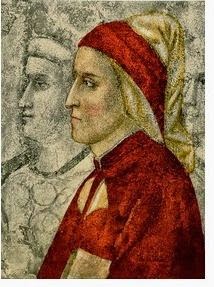
Dante


Jan Amos Komensky


Leibniz

Ramón Llull

  
John Wilkins


2013-05-04

André Breton, Ramón Llull, & surrealism revisited

"Lully is surrealist in definition." — André Breton

This is one item in a list of persons characterized as surrealist in a particular way. This can be found in Breton's "What is Surrealism?", a lecture in Brussels on 1 June 1934. Breton here recapitulates what he wrote in the first Manifesto of Surrealism of 1924. I just realized that I've already blogged about this.

But here is an additional reference, a post on Breton's penchant for composing lists:

Alphabet of the Magnetic Field: Breton Lists his Surrealists, March 10, 2013.

Breton was indeed were very adept at making lists and canonizing various figures on the basis of a perceived common characteristic conducive to surrealist preoccupations, a practice predicated on an arbitrary, authoritarian, and intellectually undisciplined mode of thinking. This surrealist taxonomic imperative is sometimes useful in archiving the curiosa of the past, but it is ultimately simple-minded, unsystematic, self-indulgent, and dogmatic, as the organized surrealist movement ultimately was. The Chicago surrealists were even worse than Breton, but they did dredge up some interesting material in their anthologies. Surrealism, as I've written elsewhere  (no revelation there), thrived on juxtapositions and novel combinations, hence my relating it to the ars combinatoria. List-making doesn't quite measure up even to that, but there is implied taxonomy in making lists, and hence that too relates to the topic.

See also my essay Walter Benjamin and Ars Combinatoria.  Also "Surrealism: The Last Snapshot of the European Intelligentsia" by Walter Benjamin, 1929.

2013-01-14

Harry Harrison & Ramón Llull

Harry Harrison (March 12, 1925 – August 15, 2012) was a noted science fiction writer, also an Esperantist. Here is the Esperanto version of his Wikipedia entry:

Harry Harrison - Vikipedio

Esperanto appears in several of Harrison's works, particularly in the Stainless Steel Rat and Deathworld series, according to Wikipedia. According to Vikipedio, several of Harrison's works have been translated into Esperanto.

I am not conversant with other references to the history of universal/artificial languages, but I was randomly alerted to this reference to Ramón Llull, the godfather of the ars combinatoria, a precursor of Leibniz and the philosophical language movement of the early modern period:

The Ethical Engineer - Chapter III by Harry Harrison (Deathworld 2)
(at The Linguist)

Here is the one reference:

"Shouldn't have thrown the Ramon Lull book," Jason said. "The ship can't stomach it any more than I could." 
How this fits into the chapter I do not understand. Perhaps one of you knows, and knows more about comparable instances of this sort of thing in Harrison's work. 

In any case, you can not only read this narrative, but you can listen to a reading of it thanks to LibriVox. There you will also find several recordings in Esperanto.

2012-01-14

Logiko & la Memorarto / Logic and the Art of Memory

Pri:

Rossi, Paolo. Logic and the Art of Memory: The Quest for a Universal Language; translated with an introduction by Stephen Clucas. London; New York: Continuum, 2006. (Translation of the 2nd ed., 1983; orig. 1960)

Vi povas legi ĉerpaĵon ĉe la retejo de Continuum. Jen bonega faka libro pri la tuta intelekta fono de la movado por filozofia universala lingvo, kun pluraj gravaj tradukitaj tekstoj el tiu periodo. La memorarto estas malaperinta intelekta "teknologio", kun radikoj en la Mezepoko kaj koneksoj al la burĝonado de scienco kaj sistemigo de scioj: ĝi gravis antaŭ la amasa presado de libroj en la moderna periodo. Kaj jen (anglalingve), la enhavtabelo:

Translator's Introduction
Preface
Preface to the second edition
I. The Power of Images and the Places of Memory
II. Encylopaedism and Combinatoria in the Sixteenth Century
III. Theatres of the World
IV. The Imaginative Logic of Giordano Bruno
V. Artificial Memory and the New Scientific Method: Ramus, Bacon, and Descartes
VI. Encyclopaedism and pansophia
VII. The Construction of a Universal Language
VIII. the Sources of Leibniz's Universal Character
Appendices
I. The Liber ad memoriam confirmandam of Ramon Lull
II. An anonymous vernacular treatise of the fourteenth century
III. Two fifteenth-century manuscripts on the ars memorativa
IV. Documents on the activities of Pietro de Ravenna
V. Three late sixteenth-century manuscripts on the ars memorativa
VI. Petrarch as teacher of the art of memory
VII. An unpublished text by Giulio Camillo
VIII. Memory exercises in seventeenth-century Germany
IX. The article on 'L'art mnemonique' from Diderot's encyclopaedia
X. D'Alembert and 'real characters'
Notes
Index

2011-11-06

Descartes to Mersenne on universal language, Ramón Llull

It is well known that Descartes is a pioneer in having provided inspiration for the universal language idea, in an era when the scientific revolution was accompanied by a philosophical revolution and the attempt to perfect human thought via the construction of logically ordered languages. An entry point for this literature can be found in my bibliography, with web links:

Philosophical and Universal Languages, 1600-1800, and Related Themes: Selected Bibliography

Descartes' key letter on the subject can be found in English translation on my web site:

Descartes to Mersenne, 20 November 1629 

It is also well known that the medieval mystic Ramón Llull was a pioneer of the ars combinatoria, which inspired the philosophical language program as well as modern developments in logical calculi. Descartes himself was not so charmed by him:

Descartes to Mersenne, 25 December 1639

2011-08-14

Ars combinatoria, Ramón Llull, Leibniz: reminder / rememorigo

This is a reminder that my documentation of this subject matter is to be found in a variety of places in addition to this blog. Esperanto versions of this text follow the English-language text.

Jen rememorigilo pri mia dokumentado de ĉi tiu temaro diversloke interrete. Vi trovos la Esperantajn teksterojn post la anglalingvaj.

My blog Studies in a Dying Culture exists in two incarnations. I customarily refer only to individual posts or the first in a series in the older version, from the newer version or my various bibliographies and web guides, individual web pages, and newer blog posts. I have not posted relevant entries for some time in the current version. The relevant categories, in any case, are:

ars combinatoria
artificial languages
Jorge Luis Borges
Leibniz

You will also notice a number of entries on Marcelo Dascal. There are also stray references to Esperanto on that blog.

Mia anglalingva blogo Studies in a Dying Culture ekzistas en malnova, statika versio kaj aktuala dinamika formato. Ĝenerale oni trovos referencojn al individuaj afiŝoj aŭ al komenca afiŝo en serio en la malnova blogo. En la aktuala referencu la kategoriojn listitajn supre. Notu ankaŭ la afiŝojn pri filozofo Marcelo Dascal kaj kelkajn pri Esperanto.

My main bibliographies, web guides, and other main pages of relevance are / Jen miaj precipaj gvidiloj, bibliografiaj, kaj alispecaj retpaĝoj:

Also of relevance are these / Jen rilataj retpaĝoj:

2011-08-13

Ars combinatoria in contemporary art & literary theory & practice

Here is a sampling of recent projects in the visual arts, literary creation, literary and cultural theory incorporating ideas from the legacy of the ars combinatoria.

Jen kolekteto de lastatempaj projektoj de arto, literaturo, kaj kulturteorio (per legaĵoj anglalingvaj) kiuj utiligas la intelektan heredaĵon de ars combinatoria.

Orderly disorder: post-human creativity
Dr. Rolf Hughes

On the 'death of the author', 'metacreation', emergence, creativity, complexity. Opposes the Romantic, creative individual to the ars combinatoria of these post-humanist conceptions.

Spring Cleaning: from Bad to Rotten Words Project
Lulú De Panbehchi
Ars Combinatoria Project, Dr. Artur Matuck
May 5th, 2009

Combining Llull, Oulipo, Lyotard, et al in the Internet environment.

On the Dissolution Through Sameness in Emptiness In: Decodierung:Recodierung, Triton Verlag Wien, 2000.
Toni Kleinlercher

On literary forms inspired by Llull, Leibniz, etc.

Between a Creative Scotland and a Cultural Scotland: Pat Kane chapter for 'Radical Scotland: Arguments for Self-Determination
Thoughtland (blog), 11 March 2011

On the question of "creative industries" in Scottish cultural policy. The ideas of Paulo Virno are referenced, apparently pertaining to the vacillation between indeterminate, chaotic nature of human experience and the retreat to stereotypical formulae, i.e. "reaction-halting behaviours, obsessive tics, the drastic impoverishments of the ars combinatoria".

Ars Combinatoria at Transmediale

Jonathan Gray, 7 February, 2011

Ars Combinatoria (Transmediale)

Inspired by Leibniz, "The Ars Combinatoria project is about creating new works with public domain or openly licensed images, sounds and texts. it was launched at Transmediale in 2011 by Jonathan Gray and Adam Green."

Leibniz’s Funny Thought
Jonathan Gray, 30 August, 2009

Inspired by Leibiz's conception of "knowledge theater". ". . . Leibniz’s idea for a ‘new sort of exhibition’ is laid out in a short piece from 1695 called Drôle de Pensée, or ‘a funny thought’, which was written after he saw a machine which ‘walked on water’ at an exhibition in Paris."

Ars Combinatoria
Jens Hoffmann

On the German artist John Bock.

2011-08-11

Ars combinatoria, Ramón Llull, & surrealism

"Lully is surrealist in definition."

     — André Breton

First, a note in Esperanto, and then back to English.


"Llull estas surrealisma je dinifado." — André Breton

Mi ne scias ĝuste, kiuj surrealistoj aperas (traduke) en la Esperanta medio. Ekzistas tradukitaj du verkoj de rumano Gellu Naum: Patro mia laca kaj L’ekzakto de l’ombro. Cetere, mi konas nur vikipedierojn, plej gravaj ĉi-momente:

Superrealismo
Manifesto de la Superrealismo (1924)
André Breton

Ekzistas almenaŭ kelkaj ligoj inter surrealistoj kaj ars combinatoria, notende Ramón Llull.


In my previous post on Jorge Luis Borges, I connected Borges, the ars combinatoria, and surrealism. As it happens, Breton lists Lull (spellings vary) as a surrealist predecessor at least as early as his Manifesto of Surrealism of 1924. Breton reiterates this in What is Surrealism? ("a lecture given in Brussels on 1st June 1934 at a public meeting organised by the Belgian Surrealists, and issued as a pamphlet immediately afterwards"). Aside: In 1934 you see Breton reiterating his earlier principles but now with a shift of emphasis and concern with the fascist threat.

2010-11-22

Ars combinatoria, speculative computing, & creativity

Lately, and for some time, I've been writing about some loosely related topics drawing in the history of interlinguistics, ars combinatoria, steampunk, 'pataphysics, Oulipo, alternative history . . . In the past I've covered the mathematical, logical, scientific strain of thought that comes out of this, from Leibniz and his contemporaries on. I've also covered the literary/artistic side, but this time I want to focus on very interesting work combining the formal sciences, particularly computing theory, and the creative literary and other arts. Speculative computing is one of the buzzwords to attend to. The most interesting links in this area are referenced below.

Alfred Jarry's 'Pataphysics and its descendant Oulipo form a significant part of the story of creative applications of combinatorics in literature. Otherwise, the most oft repeated, cited, and influential thinkers and writers are Ramón Llull, Hermann Hesse, and Jorge Luis Borges.

REFERENCES:

Ars Combinatoria: Or, Hegel’s Logic as Chronotope for the Digital Age by Christopher Vitale, 22 Nov 2009

Ars Combinatoria: Mystical Systems, Procedural Art, and the Computer by Janet Zweig

Recombinant Poetics: Emergent Meaning as Examined and Explored Within a Specific Generative Virtual Environment (1999) by William Curtis Seaman
An Eternal Engine by Wayne Clements [on Llull, Swift, Borges, & computer-generated writing]

“Ludic Algorithms” [PDF] by Bethany Nowviskie

July 2010 draft [DOCX format]
Comments by Bill Turkel
Imaginary Solution #1: Dr. Kremlin’s Disc
Playing With Technology in History, April 29-30, 2010, Niagara-on-the-Lake, Canada. Abstracts with links to papers
Playing History

Speculative Computing: Instruments For Interpretive Scholarship by Bethany Paige Nowviskie
PhD dissertation, Department of English, University of Virginia, May 2004
(Progenitors: Ramon Llull, Hermann Hesse, Peter Suber’s Nomic; nods to Swift & Leibniz)

"Text" and "Network", Reconsidered (2007)
by Florian Cramer

2010-08-17

'Pataphysics & ars combinatoria

The combination of these two concepts just occurred to me. Why now, or why not earlier? Why now? Here's my guess. First, there was my recent reading of Borges' "The Aleph". Then there was reading about Novalis' Romantic Encyclopedia. All of this recapitulates in some way the earlier history from Raymond Lull to Leibniz, but in each epoch the ars combinatoria play a different role. Now, divorced from "serious" purposes, it becomes a device of self-conscious art for making a point without taking the enterprise literally, i.e. for what it purports to be. The ars combinatoria has historically become playful with the delineation between reality and the artifice of imagination. It finally popped into my head to combine one aspect of avant-garde literature with another.

'Pataphysics, the science of imaginary solutions, a playful notion concocted by Alfred Jarry. Once science itself has been solidified and differentiated from myth, poetry, and the symbolic use of language, we not only have the possibility of creating symbolist poetry in a secularized environment, and avant-garde play with language and myth (to culminate in Joyce), but play with science and other systems of thought, eventually surrealism and surrationalism (Gaston Bachelard) and Borges, and Oulipo, and now virtuality of all sorts, but first Jarry. Once it occurred to me that Jarry might be engaged in combinatorial play, I connected 'pataphysics to ars combinatoria. Has anyone else made that connection? (Or Jarry himself? I don't recall Jarry's own work.) Well, Oulipo, which is founded on combinatoric play, is a descendent of 'pataphysics, so a connection is obviously there.

Here's what I've found, mostly classifiable under the rubric of avant-garde arts.

Speculative Computing: Instruments for Interpretive Scholarship (2004) by Bethany Paige Nowviskie

Oulipo packet (several works by noted authors: Calvino, Queneau, Motte, Mathews, et al)

Deformography: the poetics of cybridised architecture (2005) by Neil Spiller

The Clinamanic Medusa, with a hole for its face causes the first order aesthetics of form finding to coagulate into stone and seduces the viewer into a world of vicissitudes and attitudes of chance, of joy, of sweet and sweaty embrace of an ars combinatoria, so dear to Jarry, Roussel and Ramon Lull. Here ‘Pataphysics joins with the mathematic of Oulipo to construct an all too few example of Ouarpo - a miniature architecture of potential.

Recombinant Poetics: Emergent Meaning as Examined and Explored Within a Specific Generative Virtual Environment (1999) by William Curtis Seaman

The Aesthetics of Paradoxism (2nd ed., 2002) by Titu Popescu, translated from Romanian by P. Georgelin, F. Smarandache, and L. Popescu

[+Kanexfaucher + Matinastamatakis + Johnmoorewilliams+] [Lysicology /. See also @ Scribd.com.

kinema ikon

Miscellanies (2008) by Raymond Belluga

At some point I think these exercises become pointless and excessively self-indulgent, but this is what happens when society, not just art, becomes more abstract. Now, in the Internet age, we become fully conscious or completely disoriented.

2010-08-04

Novalis, filozofia reakciulo

Mi ne scias, kiom oni tradukis aŭ verkis pri Novalis (Georg Philipp Friedrich von HARDENBERG, 1772-1801) en Esperanto. Estas artikolo en Vikipedio. Estas ankaŭ ĉi tiuj tradukoj:

Elektitaj Poemoj kaj Fragmentoj, trad. Willi Nüesch. Berno, 2007.

"Maria-kanto," en Kantoj kaj Arioj tradukitaj de Heino Lorenz. Luzern, 1980. 
 Nu, lastatempe oni eldonis en angla traduko (unuafoje), filozofia ĉefverko de Novalis. Jen la informoj kaj recenzoj (pardone, anglalingve):

Novalis [Friedrich von Hardenberg]. Notes for a Romantic Encyclopaedia: Das Allgemeine Brouillon; translated, edited, and with an introduction by David W. Wood. Albany: State University of New York Press, 2007. (Intersections: Philosophy and Critical Theory)
Adler, Jeremy. "Novalis and Philo-Sophie," The Times Literary Supplement, April 16, 2008.

Kneller, Jane. Novalis, David Wood (ed., tr.), Notes for a Romantic Encyclopaedia: Das Allgemeine Brouillon [review], Notre Dame Philosophical Reviews, 2008.09.05.
La verko estas Notoj por Romantika Enciklopedio. Temas pri lia projekto “magia idealismo”, t.e. la poezigo de scienco. Mi ĉerpe tradukas el la recenzo de Adler:
Kune kun Friedrich Schlegel, Novalis taksis la mision de Germanujo en moderna Eŭropo dialektika renverso de la Franca Revolucio: la meditema ĝermana Geist respondu kaj transcendu la materiismajn troigojn de la Teroro. . . . La prelego de Novalis “Kristanujo aŭ Eŭropo” (1799), kvankam laŭ konsilo de Goethe ne publikigita en la fonda revuo de germana Romantismo Athenaeum, konsistigas la plej potencan politikan manifeston de la unua Romantika skolo. Kerne sidas enciklopedia vizio de eŭropa diverseco kies radiko estas Mezepoka, kiam kontraŭaj ŝtatoj estis spirite unuiĝintaj sub Katolika hegemonio, epoko kiun Novalis taksas ora epoko. . . .
La nomo de ĉi tiu “scienco de la sciencoj” reeĥas la Encyclopédie de Diderot, sed Novalis celas superi la francan modelon per enmeto de dinamismo . . . studi la "rilatojn" . . . efikojn de la sciencoj unu al la aliaj al kreo de “scienca Biblio” . . . . La metodo renversas sciencan metodon, ekz. en pretendo de Novalis transformi la induktismon de Bacon al dedukta metodo . . . . Kiel la notlibro de Freiberg notas: “La kombina analizado de fiziko eble estus la pera arto de inventado kiun celis Francis Bacon”.

La “cirkloj” kiujn imagas Novalis en sia “kombina analizado” estas inspiritaj de la mezepoka ars combinatoria, kiu daŭre allogis germanajn pensulojn ĝis Leibniz kaj Kant. La samcentraj radojn kiujn Ramon Lull konstruis kiel inventilo de novaj ideoj ankaŭ servas kiel modelo Novalis kaj provizas motoron por rekombinado de ekzistantaj ideoj por krei novajn.

Do jen programo de reakcia mistika obskurantismo en moderna epoko. Preferinda estas la ludado per ĉi tiaj ideoj fare de verkisto Jorge Luis Borges. Kontrolu en ĉi tiu blogo pri Borges en Esperanto (kaj en Ido!), kaj ankaŭ konsultu miajn gvidilojn:


Philosophical and Universal Languages, 1600-1800, and Related Themes: Selected Bibliography

Jorge Luis Borges: Selected Study Materials on the Web [Elektitaj Verkoj por Studado]

Hermann Hesse, Esperanto, Klera Utopio, Universala Lingvo / Intellectual Utopia, Universal Language